
- Photos
- Specs
- Advantages
- Value
- Media Map
| Area:International | Type:airport | Frequency:380 |
| Address:Incheon International Airport, South Korea | Format:led | Duration:15s |
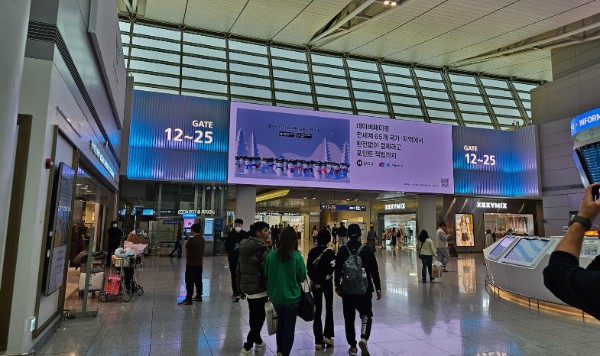
| Location:T1 Departure Area East-West Deer Path Entrance | Min Qty:2 | Operating Time:0-24o'clock |
| Size:15.4 x 4.5 m | Min Period:month |
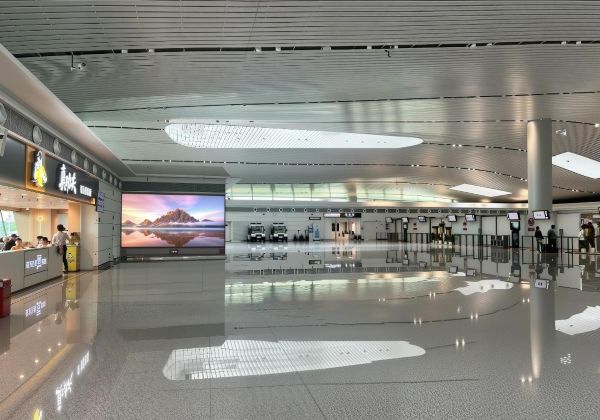
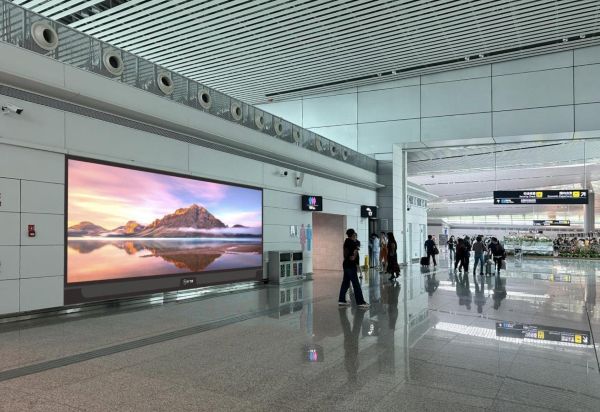
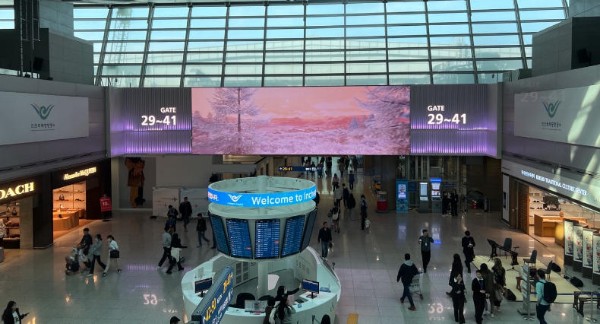
Located at the east and west dual entrances of the T13F departure security isolation area, it serves as the main core passage to the satellite hall boarding gates and duty-free area. Passengers pass through without diversion or detours, resulting in extremely high exposure. With synchronized dual screens and bi-directional coverage forming a closed-loop exposure, it effectively increases the frequency of brand reach. The advertising display seamlessly connects with the consumer scenario, the chain from seeing the ad to decision-making to purchase is very short, resulting in outstanding conversion. There is no cluttered advertising inside the airport, the media environment is clean and high-end, and information exclusivity is strong.
Passengers’ average dwell time through the passageways and surrounding duty-free area is 8–12 minutes, far longer than in ordinary outdoor advertising scenarios, allowing brand information to deeply penetrate. In the isolation area, there is no distracting advertising, and information exclusivity is strong. The large screens provide strong high-definition visual impact and 180° unobstructed visibility, significantly enhancing brand recall and credibility. By leveraging the advantages of synchronized east-west screens and bi-directional closed-loop exposure, frequency and memory of brand reach are increased, strengthening brand communication effectiveness.
The LED media at the east and west land side entrances of Incheon Airport T1 departure area is not only the 'gateway' in physical space but also the 'gateway' for brands to reach the minds of high-net-worth travelers worldwide. With a large viewing area of 15.4x4.5 meters, 100% passenger flow, and the unique timing of the journey's starting point, it forms an irreplaceable media advantage. Passengers' attention is more easily focused on the enormous LED screen ahead, and the efficiency of advertising information reception is extremely high.
The East-West Deer Path is the core traffic hub of the T1 duty-free area, adjacent to the Airstar Avenue duty-free shopping area, covering passenger flow in both eastbound and westbound directions. Before stopping to shop, travelers actively pay attention to the large screen information, achieving mandatory reach and high-frequency exposure. As the core media of the best airport, it is deeply integrated with high-end travel scenarios, enhancing the international image of brands and strengthening a premium positioning.
The extra-large high-definition LED screen has high brightness and clarity suitable for the bright airport environment, supports video and dynamic content playback, provides strong visual impact, and achieves outstanding brand display effects with high memorability. Airport passenger flow is stable, continuous, and large, resulting in frequent ad exposure and consistent communication efficiency. Leveraging Incheon International Airport's status as a global hub, the media has strong credibility and brand endorsement, effectively enhancing a brand's premium image.
It is a place that travelers must pass through after security, with a daily passenger flow of over 150,000 and annual reach exceeding 70 million. The LED screen has a wide field of view with no column obstructions, allowing simultaneous reach to two-way traffic, with an active view rate exceeding 85%. Travelers pass by multiple times while shopping, waiting, and boarding, with each individual reached 3–5 times daily on average, significantly enhancing memorability. Some brands have seen a 30% increase in in-store visits after advertising.
With its unique scene positioning and precise value delivery, it has become a golden resource that distinguishes itself from other airport media. Its advantages are not only reflected in hardware capability and scene adaptation but also in deeply integrating media value with traveler scenarios and the airport’s brand tone, forming an irreplaceable communication competitiveness.