
- Photos
- Specs
- Advantages
- Value
- Media Map
| Area:Guiyang | Type:high-speed railway | Frequency:120 |
| Address:Guiyang East Station, East Second Ring Road, Wudang District | Format:led | Duration:10s |
| Location:Exit Security Checkpoint | Min Qty:1 | Operating Time:7-23o'clock |
| Size:7.6*1.5 | Min Period:month |
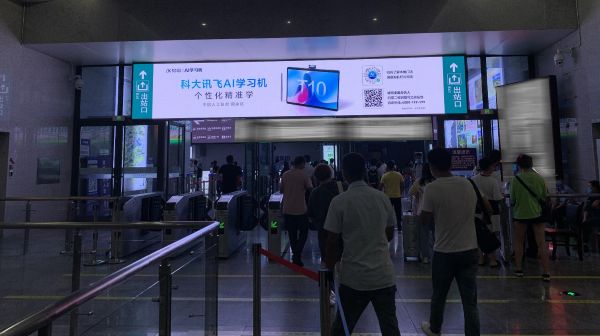
This LED screen is mounted directly above the security checkpoint turnstiles on the arrival floor of Guiyang East Railway Station. It sits at the core visual spot on the only mandatory passage for all high-speed rail arriving passengers, connecting the platform exit corridor, security verification area, and the transfer hall for ride-hailing vehicles, taxis and buses with no alternative diversion routes. After alighting from trains, passengers must pass through the security checkpoint to exit the station, making this an irreplaceable prime core advertising position on the arrival floor.
Passengers spend a steady 2 to 8 minutes queuing for exit security screening. Unlike hurried inbound passengers rushing to catch trains, arriving travelers move at a slower pace with relaxed moods, giving them ample time to view dynamic advertisements and fully absorb complete information including brand selling points, promotional offers and store addresses. The message retention rate here is far higher than that of spots only briefly passed by. This enclosed indoor space eliminates distractions such as outdoor traffic and store signage competing for attention, leaving the screen display as the sole visual focal point in the queuing zone. Dynamic videos deliver over 30% better memorization effect than static light boxes.
Boasting high-definition picture quality and striking visual impact, the screen not only stands out as a prominent visual highlight in the busy exit hall but also delivers an immersive, stunning visual experience for passengers. Each traveler views advertisements an average of 6 to 9 times throughout their entire exit process, boosting information penetration efficiency by more than 15 times. It enables mandatory, in-depth and long-term exposure, achieves far superior ad memory retention compared to advertising media along rushed inbound passages, and effectively strengthens brand recognition among audiences.
The core areas of exit security checkpoints and exit passages are mandatory routes for passengers leaving the station. The exit passages see extremely heavy foot traffic, and passengers tend to linger for a long time while clearing security, looking for meeters or transferring to other transport, which draws exceptionally high media attention. This creates ample exposure windows for brands, enabling full capture and coverage of all exiting passenger flows to efficiently deliver brand messages the moment passengers step out of the station.
The large screens stand adjacent to taxi, ride-hailing and bus transfer lobbies. After queuing for security checks, passengers head straight for all connecting transport services. The advertisements reach all groups including city commuters, short-distance travelers and inter-provincial visitors, forming a complete communication chain spanning "high-speed rail arrival to urban travel". They cover not only arriving passengers but also people seeing them off or picking them up, boosting exposure volume. A single advertising placement can reach multi-tier consumer groups, making this premium indoor dynamic media ideal for capturing arriving passenger flows and precisely targeting potential consumers.
This critical choke point that all high-speed rail passengers must pass upon exit hosts the first core dynamic media passengers encounter after arriving in Guiyang. As the eastern gateway hub where the Shanghai-Kunming, Guiyang-Guangzhou and Chongqing-Guiyang high-speed railways converge, Guiyang East Station accommodates major passenger flows traveling to and from Guizhou nationwide for business, tourism and family visits. All arriving passengers have to queue through exit security checks before transferring and leaving. This spot has no split passenger flows or blind visual zones, holding exclusive access to core foot traffic on the arrival floor.