Germany Airport Advertising 2026: Premium Reach for Global Brands
2026-07-11Tianci MediaViews:81
Highlights
If you're a brand manager or marketer looking to break into the European market, you've probably asked yourself one question: where do I put my message where it actually gets seen? Not skipped, not scrolled past, but genuinely noticed. That's exactly what Germany airport advertising delivers. And in 2026, it's bigger and smarter than ever. The German out-of-home and digital-out-of-home advertising market is projected to grow from USD 1.58 billion in 2025 to USD 1.72 billion in 2026, with forecasts reaching USD 2.65 billion by 2031. Airports are driving a big chunk of that growth. Why? Because travelers aren't distracted by notifications or endless feeds. They're physically present, often with time to kill, and they're actually looking at their surroundings.
Why Germany? The Market Context You Can't Ignore
Germany isn't just Europe's largest economy—it's also one of the most stable, high-trust environments for brand investment. The country's luxury market alone is projected to hit €17.41 billion in 2025, with consistent annual growth. For premium brands targeting high-net-worth consumers, German airport advertising offers a controlled, high-impact environment that simply doesn't exist on social media or search engines.
What makes this channel so effective? Think about the audience. Airports concentrate international business travelers, decision-makers, and affluent tourists in one place. At Frankfurt Airport, more than 60% of passengers in the non-Schengen area show above-average spending behavior, with around 20% spending up to 20 times more than the average traveler. Those aren't just impressions—those are qualified leads walking past your ad.
Frankfurt Terminal 3: A New Era for Airport Advertising
If there's one place that symbolizes the future of Germany airport advertising, it's Frankfurt's Terminal 3. Opened in April 2026, this €4 billion project isn't just an infrastructure upgrade—it's a brand-new canvas for advertisers.
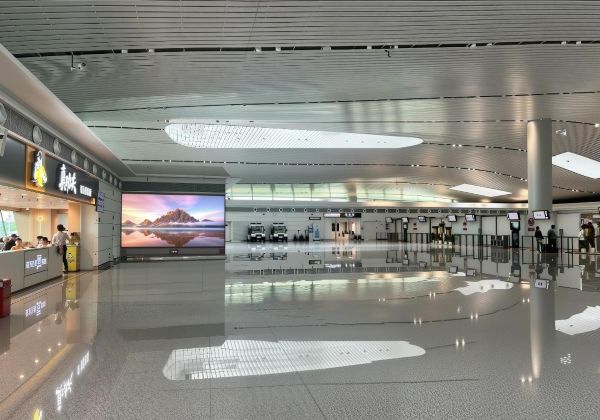
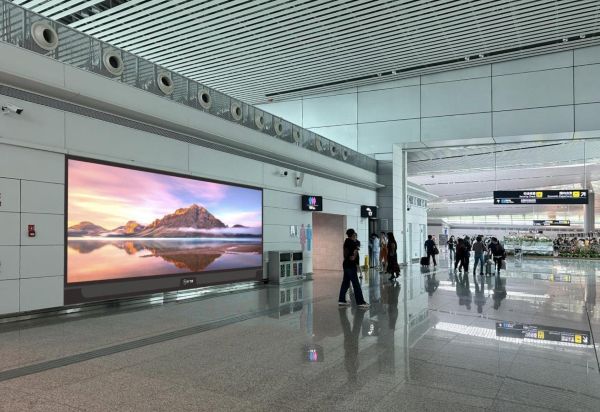
Terminal 3 features around 230 advertising assets covering 2,500 square meters, most of them digital. The Digital Check-In Icons alone are two LED screens, each measuring 120 square meters, making them among the largest indoor digital out-of-home displays in Europe. Then there are the Digital Plaza Stars—two nearly 60-square-meter screens positioned right in the heart of the Non-Schengen Marketplace, where long-haul travelers linger before heading to their gates.
What does this mean for your brand? It means you can place your message exactly where your audience stops, looks around, and actually pays attention. Not in a sidebar. Not between posts. Right in front of their eyes.
Berlin Brandenburg Airport (BER): Reaching the Capital's Influencers
Frankfurt isn't the only game in town. Berlin Brandenburg Airport (BER) is Germany's capital gateway, and it serves a very different—but equally valuable—audience. BER handles around 26.1 million passengers annually, connecting Berlin with over 140 destinations worldwide.
What makes BER unique is the character of its travelers. Frankfurt draws banking and corporate wealth. Munich draws automotive and engineering executives. But Berlin? Berlin is where tech founders, startup investors, creative industry leaders, and government officials converge. If your brand targets decision-makers in technology, policy, or culture, German airport advertising at BER puts you in front of Europe's most consequential influencers.
BER recently expanded its programmatic offerings, making 57 digital advertising screens available for automated, data-driven booking. These screens generate more than 7.5 million viewed impressions in an average week. That's scale, precision, and efficiency all in one package.
Programmatic DOOH: Smarter Than Traditional Media
Here's where Germany airport advertising gets really interesting. Programmatic Digital Out-of-Home (pDOOH) is transforming how brands buy and measure airport inventory. Instead of guessing which format works best, you can now target specific audiences based on time of day, traveler type, or even flight data.
Take flight triggering, for example. Your creative can change based on where a flight is headed—showing Japanese-language content to passengers boarding a Tokyo flight, or promoting Gulf destinations to travelers heading to Dubai. McDonald's Germany has already embraced this approach, partnering with The Trade Desk to turn real-time flight data into contextual messaging that connects with travelers the moment they land.
Hannover Airport joined Media Frankfurt's programmatic network in February 2026, adding to an existing roster that includes Hamburg, Cologne/Bonn, and Stuttgart. This means you can plan, control, and evaluate campaigns across multiple German airports from a single dashboard—with consistent targeting and comparable KPIs.
Creative Formats That Actually Get Noticed
Beyond digital screens, German airport advertising offers a surprising variety of formats. Jet bridge branding—where you wrap the passenger boarding bridges with your creative—is one example. Revolut recently ran a year-long campaign on 16 jet bridges at Hamburg Airport, creating unmissable brand contact for every arriving and departing passenger.
Then there are the giant posters. BER offers formats like Giant Poster P7 at 31.18 by 11.04 meters, with monthly rates starting from €69,000. These aren't just ads—they're brand takeovers. They dominate the visual environment in a way that no digital banner ever could.
Munich Airport, with over 700 advertising spaces, offers everything from digital take-off boards to full-area branding and event-based presentations. The airport's clean advertising concept ensures exclusive attention through carefully selected locations along passenger walkways and in high-dwell areas.
What This Means for Your Brand in 2026 and Beyond
The bottom line? Germany airport advertising isn't just about putting up a billboard. It's about placing your brand in a premium, distraction-free environment where your audience is actually paying attention. Whether you choose Frankfurt's new Terminal 3 for global reach, BER for access to Berlin's influencer class, or programmatic DOOH for data-driven precision, the options are more sophisticated and more measurable than ever.
With the German OOH market expected to reach USD 2.65 billion by 2031 and digital formats gaining ground every year, now is the time to lock in your presence. The travelers passing through German airports today are the decision-makers, investors, and premium consumers you want to reach tomorrow.