Airport Advertising in 2026: Why It Works and How to Get Started
2026-07-12Tianci MediaViews:69
Highlights
You know the feeling. You pour money into digital ads, but click-through rates keep dropping. Social media algorithms change overnight. Your target audience? They are scrolling past your message without a second glance. Meanwhile, your competitors seem to be everywhere, and you are left wondering where your marketing budget actually went. Here is the thing most brands overlook: your ideal customers are not sitting at home staring at screens waiting for your ad. They are traveling. They are standing in security lines, waiting at gates, and killing time before boarding. And that is exactly where airport advertising comes in. Unlike the cluttered digital landscape, airports offer something digital channels cannot—a captive audience with time to spare. Travelers spend anywhere from 60 to 90 minutes navigating terminals, and research shows they are actually paying attention. A Nielsen study found that 82% of frequent flyers read airport advertisements, 61% recall seeing them, and 57% took action after viewing an ad—that is an 8% jump from just a few years ago. So why does airport advertising work so well? Let us break it down.
The Airport Audience Is Different
Here is what makes airport advertising launch truly effective. The people walking through terminals are not just any crowd—they are high-income professionals, frequent travelers, and decision-makers. Frequent flyers are more than twice as likely to hold C-suite titles compared to the general population. They have money to spend and decisions to make.
And here is the kicker: 71% of flyers agree that the airport experience feels special, and 70% actually enjoy looking at the advertising around them. That is a level of receptivity you simply do not get from a banner ad on a news website. When travelers are in an airport, they are in a mindset that is open to inspiration, discovery, and brand messaging.
What Airport Advertising Looks Like Today
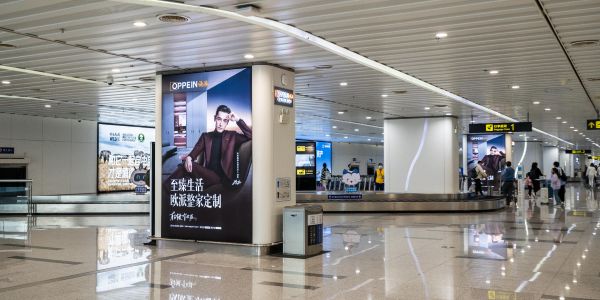
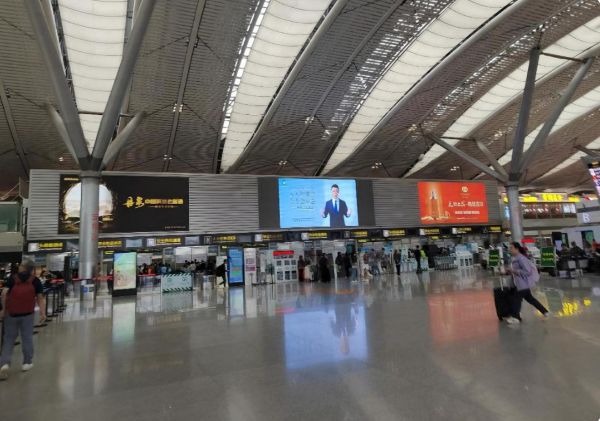
Gone are the days when airport advertising meant a few static posters on the wall. Modern airport advertising投放 has evolved into something much more dynamic.
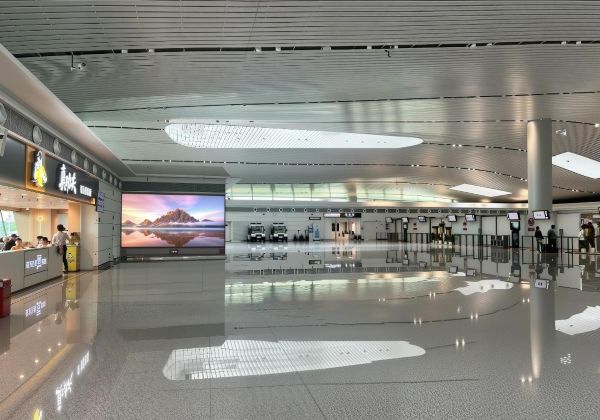
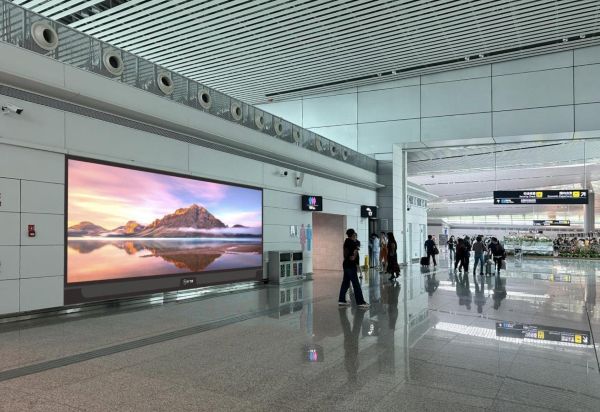
Digital Out-of-Home (DOOH) is taking over. LED video walls, dynamic digital screens, and interactive kiosks now dominate terminal spaces. These formats allow brands to change messages instantly—no more waiting weeks for print updates. You can run different creatives at different times of day, target specific traveler segments, and even trigger ads based on real-time conditions like flight delays or weather.
Programmatic buying is another game-changer. Major airports are now offering programmatic DOOH inventory, meaning you can buy ad space the same way you buy digital display ads—automated, data-driven, and highly targeted. Berlin Brandenburg Airport recently launched programmatic booking across 57 digital screens, and JCDecaux rolled out a global programmatic DOOH solution covering over 30,000 premium digital screens.
Experiential formats are also on the rise. Think augmented reality ads, 3D video walls, interactive touchscreens, and even gamified brand experiences. Brands are turning airport advertising into immersive experiences rather than just static messages.
Is Airport Advertising Worth the Investment?
This is the question every marketer asks, and the data says yes. According to an Ipsos study, 77% of flyers take action after seeing airport advertising. Among those who act, 61% visit the advertised location, 53% visit the website, and 45% scan QR codes.
The global airport digital signage market alone was valued at USD 5.35 billion in 2025 and is projected to grow at 6.20% CAGR. That growth tells you something: brands are voting with their budgets, and they are seeing returns.
What about cost? Airport advertising launch does come with a premium price tag compared to standard OOH. But the ROI calculation changes when you factor in audience quality, dwell time, and conversion rates. You are not paying for impressions from people who are distracted or ad-blind. You are paying for access to an audience that is engaged, affluent, and ready to act.
How to Get Started with Airport Advertising
If you are ready to explore airport advertising, here is a practical roadmap.
Start with your objectives. Are you building brand awareness? Launching a new product? Driving traffic to a specific location? Your goals will determine which airport formats make sense for you.
Know your airport. Different airports serve different audiences. A business hub like LAX attracts creative professionals and tech executives. A leisure destination like MCO in Orlando draws families and vacationers. Match your airport to your target customer.
Consider domination strategies. Instead of buying a single ad placement, think bigger. Full terminal or airport-wide domination turns your campaign into an immersive brand experience. Adobe did this at LAX with their "Made to Create" campaign, running alongside Adobe MAX 2025. Blockchain Mint executed multi-market domination across six airports, reaching about 30 million passengers.
Leverage programmatic buying. If you want flexibility and data-driven optimization, programmatic DOOH is your friend. You can adjust campaigns in real-time based on performance data, passenger flow, and other variables.
Measure everything. The old excuse that OOH cannot be measured no longer holds water. New tools like Billups' Airport Dashboard now cover over 700 international airports across 37 countries. You can track reach, frequency, and even attribution.
Looking Ahead: Airport Advertising in 2026 and Beyond
The trend lines are clear. Airports are becoming fully digital ecosystems powered by IoT, sensors, and automation. Real-time content updates, passenger-flow-based ad triggers, and AI-driven optimization are becoming standard. Programmatic OOH is scaling rapidly, giving brands campaign agility that was previously limited to digital channels.
Sustainability is also entering the conversation. Brands and media owners are prioritizing eco-friendly materials, energy-efficient DOOH, and green-powered installations. This matters not just for the planet but for brand perception—consumers increasingly expect responsible advertising practices.
The bottom line? Airport advertising is no longer a nice-to-have for luxury brands and airlines. It is a strategic channel for any business that wants to reach high-value audiences in a distraction-free environment. The travelers passing through terminals today are your customers tomorrow. The question is not whether you can afford airport advertising launch—it is whether you can afford to ignore it.
Want to learn more about out-of-home advertising strategies? Check out our other guides on OOH media planning and programmatic DOOH buying.