
- Photos
- Specs
- Advantages
- Value
- Media Map
| Area:Guiyang | Type:airport | Frequency:64 |
| Address:Guiyang Longdongbao International Airport | Format:led | Duration:10s |
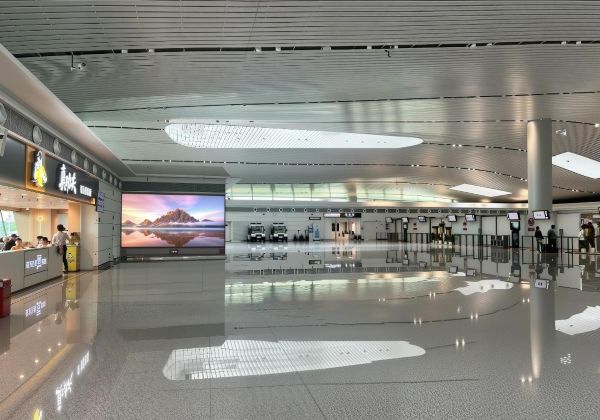
| Location:T2 Departure Check-in Hall | Min Qty:25 | Operating Time:0-24o'clock |
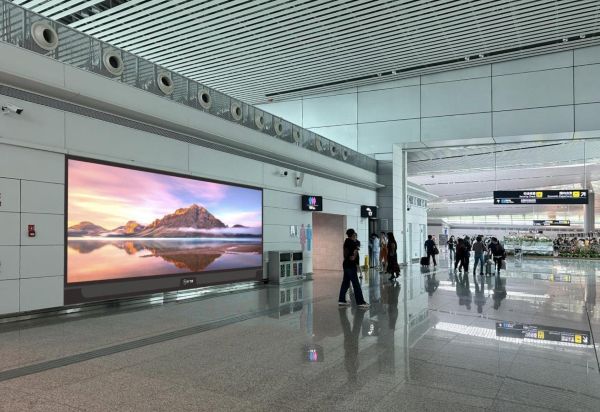
| Size:55英寸 | Min Period:week |
Located directly above the security checkpoint, in the only unavoidable path for passengers after completing check-in and before entering the restricted area, it covers all domestic departing passengers at Terminal 2, serving over 60,000 passengers daily. Passengers spend an average of 30 minutes in the security queue, creating a 'golden 60-second' memory window, during which advertising messages are viewed compulsorily without escape.
The check-in hall is the central gathering area before passengers enter security. Here, passengers check in and drop off their luggage, spending an average of 15-30 minutes. It is the best opportunity for brands to establish a 'first impression' before the start of the passenger's journey. While queuing or waiting for companions, passengers have nowhere to fix their gaze, and dynamic TV screens naturally become the visual focal point, with a very high active reading rate for advertisements.
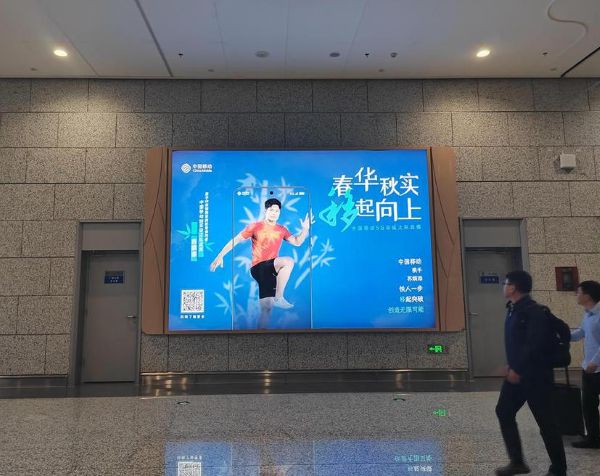
The core area of the Terminal 2 domestic departure check-in hall is distributed around check-in islands A-D and the main passage where passengers handle flight procedures. It is the only unavoidable route for all domestic departing passengers, covering every passenger without blind spots. 55-inch TVs are evenly distributed, creating a '360° no-blind-spot' communication matrix. Passengers encounter the advertising content multiple times throughout the queue, inquiries, and self-check-in process, reinforcing brand memory.
Airport media inherently carries attributes of 'internationalization, high quality, and authority,' effectively enhancing brand credibility and image, empowering brand value. Video advertisements, combining sound and visuals, leave four times deeper memory impressions than static ads, making them suitable for new product launches, brand story dissemination, and promotional activities.
With its irreplaceable scene advantages, 100% coverage of domestic outbound passenger flow, ultra-long stay time of 15-20 minutes, precise reach to high-net-worth business travelers, enforced attention in a closed environment, and integration with flight information to enhance acceptance, the core media resource that enhances high-end brand image and achieves precise marketing is the golden media touchpoint for high-end brand marketing in Southwest China.
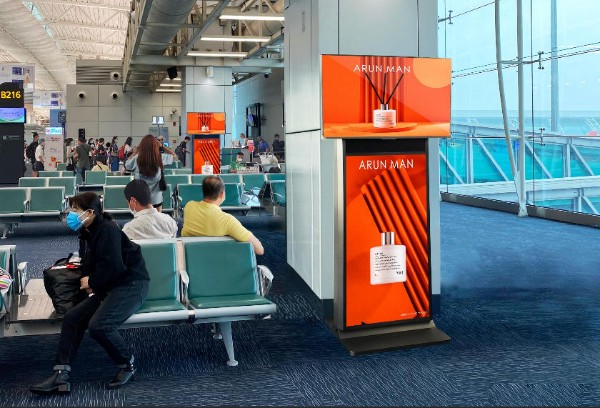
As a high-frequency stop before travelers' journeys with sufficient waiting time and low environmental interference, travelers’ eyes naturally focus on the screen, allowing television ads to achieve stable and enforced exposure. The information is not easily diluted, and the communication efficiency is far higher than ordinary media. Leveraging hub traffic and scene value, it forms a unique communication advantage, making it an efficient and high-quality carrier for television advertising.
Television ads achieve 24-hour repeated exposure, covering travelers throughout all times of day—morning, afternoon, and evening. Its communication efficiency far exceeds that of traditional media, with daily coverage of over 50,000 travelers, and during the peak of the Spring Festival travel season reaching over 80,000 in a single day. Television ads achieve 100% passenger reach with no communication blind spots, directly reaching the core consumer market, enhancing brand conversion, and supporting brands in achieving the dual communication goal of local cultivation and national expansion.
Relying on hub-level traffic, high-net-worth audiences, and scenario-based communication as core advantages, TV advertising becomes a value-rich investment area. Television ads are no longer simply a means of information transmission, but a deep communication between brand and travelers, an organic integration of service and commerce, and a strategic pivot radiating across the country.