
- Photos
- Specs
- Advantages
- Value
- Media Map
| Area:Beijing | Type:airport | Frequency:0 |
| Address:Beijing Daxing Airport | Format:Light box | Duration:0 |
| Location:Second-floor corridor area | Min Qty:8 | Operating Time:0-24o'clock |
| Size:7m×3m×2面 | Min Period:year |
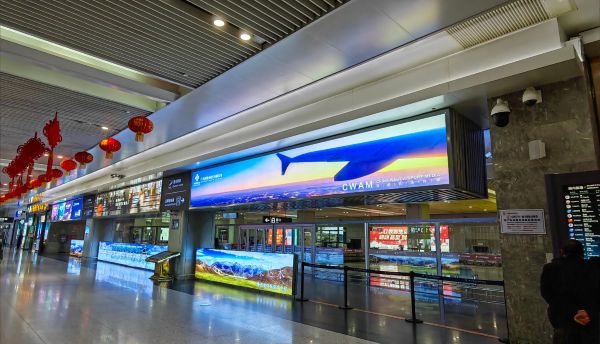
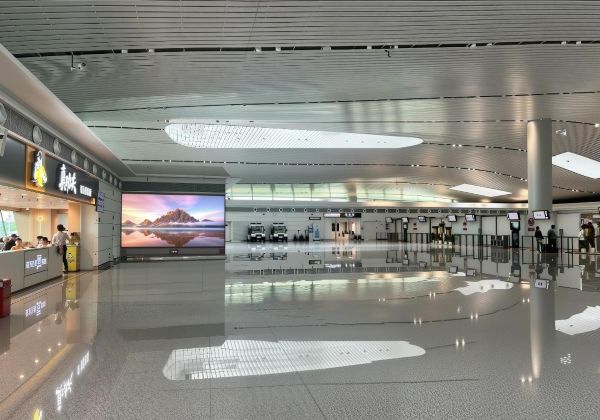
Located on the second-floor departure concourse, it is the only passage passengers must take after completing security checks to reach the boarding gates. The average stay time is 8–12 minutes, during which passengers are in a relaxed, open state for receiving information. It does not affect passenger flow while achieving 360° unobstructed visual coverage.
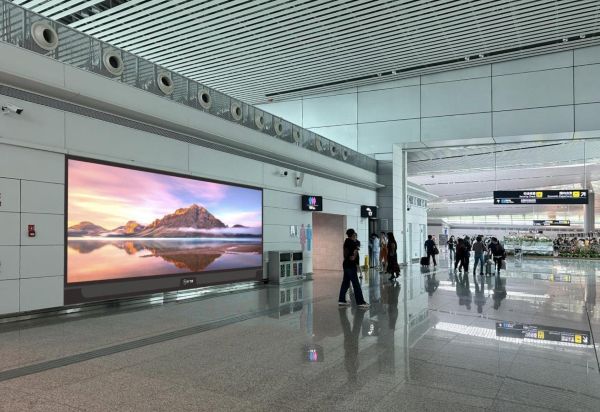
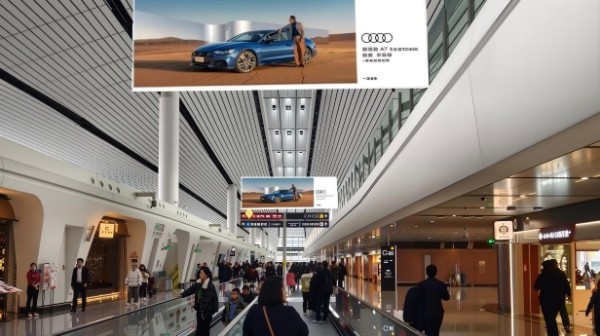
As a rare high-altitude hanging banner airport lightbox in the station, there are only 8 giant screens in the entire area. The double-sided large screens float in the central space with a 5-meter ceiling height, providing 360° unobstructed, multi-directional visibility. The concourse space is pure, without interference from other large screens or dense advertisements, allowing a brand to exclusively occupy the entire high-altitude visual field. Information reaches the mind directly, enhancing visual impact by 3 times, and the memory retention rate is 30% higher than traditional media, with communication efficiency far exceeding conventional lightboxes.
The second-floor concourse is the only core traffic path in the Daxing Airport concourse area, covering all domestic flight boarding passengers. The daily reach is 147,000 people, with an annual throughput exceeding 53 million and continuously expanding at a rate of 8.45%. The hanging banner lightboxes have no diversion or blind spots, locking in the mandatory pedestrian flow. Compared to non-core area media, effective reach increases by 40%, making it a traffic hub for brands to directly access high-end audiences.
Passengers in the concourse area stay an average of 25–35 minutes, in a relaxed, low-interference state that makes them highly receptive to advertisements. The 8 hanging airport lightboxes are arranged continuously along the route, forming an immersive brand corridor. Passengers are repeatedly exposed 5–8 times throughout walking, waiting, and boarding, building a deep mental chain of 'seeing — familiarizing — remembering — recognizing.' This effectively addresses the fragmentation issue of advertisements, where short-term exposure is quickly forgotten, making the effect of a single campaign equivalent to multiple exposures, with more stable investment returns.
Located above the main passage from the domestic mixed flow area on the second floor to the boarding gates of the fingers, it connects the entire process of passengers waiting after security check, walking, and boarding. With a suspended double-sided giant screen design, it occupies the aerial visual focus in a floating posture. The images are transparent and bright, with sharp edges, maintaining a stable and clear display effect. It has become the core visual touchpoint and brand communication benchmark for high-value passengers after security at Daxing Airport.
As passengers walk toward the boarding gate or pause and wait, their gaze naturally seeks a visual anchor. The height and angle of the hanging flag light boxes, as well as their placement, are actually set along the mandatory path of high-net-worth individuals, creating an exclusive brand display space. This greatly increases the reach and memorability of the advertising message, achieving a harmonious coexistence of commercial value and spatial aesthetics, not just serving as a commercial advertising medium.
Multiple sets of hanging airport light boxes are arranged in an orderly array along the finger corridors, forming a coherent, immersive brand display. As passengers move from the mixed flow area into the fingers and walk slowly toward the boarding gate, they repeatedly see the same content along the way. The long duration, high frequency, and continuous exposure break the limitations of single, short-term exposure, gradually strengthening brand retention far beyond scattered individual light boxes, making the communication more refined and improving audience goodwill.
The design uses a suspended double-sided display above the high-ceiling corridors, occupying no ground passage space. Without columns or wall obstructions, it differs from conventional wall-mounted airport light boxes, offering multi-angle visibility. Passengers naturally look up while walking or waiting, and the screen can be clearly seen, creating a strong visual focal point and allowing the brand image to be remembered at a glance.