Airport Advertising & Duty-Free Retail Synergy: Building the Passenger Conversion Funnel
2026-08-29Tianci MediaViews:5
Highlights
For decades, airport advertising and duty-free retail operated as separate silos: media teams bought billboards and light boxes to build brand awareness, while retail teams managed in-store promotions and merchandising. That separation is ending. Airports worldwide are converging advertising and retail into an integrated "travel retail media" ecosystem, where a single ad exposure can be attributed to a specific in-store purchase, and where creative shown on a concourse screen can be synchronized with a product display in the duty-free store 50 meters away. This convergence creates a measurable conversion funnel that bridges the gap between brand awareness and purchase — something traditional out-of-home advertising has always struggled to achieve. This guide breaks down the passenger conversion funnel, attribution methods, and practical strategies for aligning airport advertising with duty-free retail.
1. The Convergence: Why Airport Media and Retail Are Merging
Three forces are driving the convergence of airport advertising and duty-free retail:
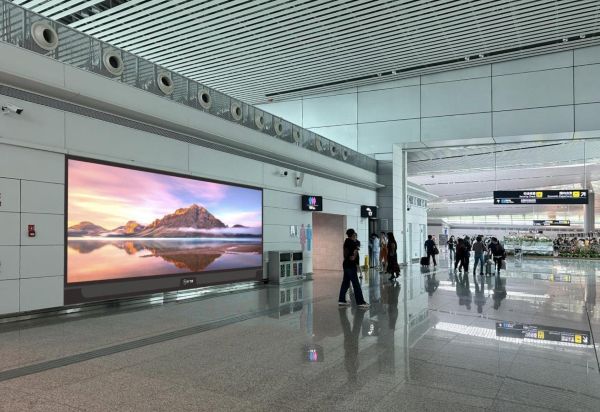
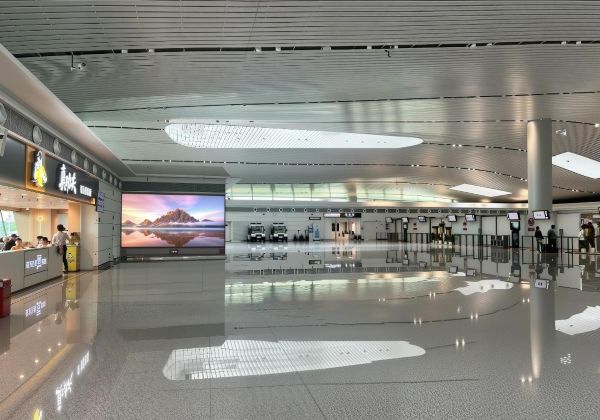
Digital screens everywhere: modern airports are saturated with digital displays — concourse screens, gate screens, baggage claim screens, and even digital shopping walls. These screens are network-connected and can be programmed to synchronize with in-store promotions in real time;
Connected passenger journey: loyalty apps, digital boarding passes, and airport Wi-Fi create a data layer that links a passenger's ad exposure to their retail behavior. When a passenger connects to airport Wi-Fi or uses a loyalty app, their journey becomes partially trackable — from concourse screen exposure to duty-free store visit to purchase;
Revenue pressure: airports worldwide are under pressure to grow non-aeronautical revenue (retail, food, advertising) as airline margins thin. Integrated media-retail campaigns deliver higher revenue per passenger than standalone advertising or retail alone, giving airports a strong incentive to facilitate convergence.
Strategic implication: brands that treat airport advertising and duty-free retail as one integrated campaign — rather than two separate budgets — will capture significantly higher conversion rates and more accurate attribution.
2. The Passenger Conversion Funnel: Five Stages
The airport retail conversion funnel has five distinct stages, each with different media touchpoints and conversion drivers:
Key insight: the funnel is not linear. Passengers may see a concourse screen, enter the duty-free store, leave without buying, see a gate screen reminder, and return to purchase. The media-retail integration must account for this non-linear path by maintaining message consistency across all touchpoints.
3. Awareness to Consideration: Concourse Screens as Retail Drivers
The first two stages of the funnel — awareness and consideration — are where airport advertising traditionally operates. The shift is in how these screens are used:
From brand-building to product-specific messaging: traditional airport ads focused on brand logos and taglines. The integrated approach uses concourse screens to showcase specific products available in the duty-free store — with pricing, a "available at Gate B3 duty-free" callout, and a directional cue;
Synchronized creative: the product shown on the concourse screen matches the product featured in the duty-free store's window display and end-cap. This synchronization creates a "I saw it on the screen, and there it is in the store" recognition moment that significantly shortens the consideration-to-purchase gap;
Scarcity and urgency: concourse screens can display real-time inventory or time-limited offers — "Only 12 bottles left at Gate B3 duty-free" or "20% off until boarding of Flight CX889." This transforms awareness advertising from passive to active, driving immediate store visits.
Implementation: this requires the DOOH content management system to be integrated with the duty-free store's point-of-sale and inventory system. When inventory drops below a threshold, the creative automatically updates; when a flash sale launches, all nearby screens synchronize to promote it.
4. Consideration to Intent: The Storefront Transition Zone
The zone between the concourse and the duty-free store entrance is the highest-friction point in the funnel — passengers walk past the store without entering. Media in this transition zone is critical:
Digital storefront displays: screens mounted at the store entrance can display dynamic content — featured products, current promotions, bestsellers, or even a "today's top 3 duty-free picks" carousel. These displays act as a digital extension of the store window, pulling passersby inside;
Interactive wayfinding: some airports now feature interactive shopping walls — large touchscreens that let passengers browse the duty-free catalog, check prices, and even pre-order for pickup at the gate. These walls bridge the gap between digital browsing and physical purchase;
Personalized triggers: for passengers connected to the airport's loyalty app or Wi-Fi, the transition zone screens can display personalized content — "Welcome back! Your favorite whisky is 15% off today." This level of personalization requires explicit passenger consent and data integration, but it delivers conversion rates 3-5x higher than generic creative.
5. Intent to Purchase: In-Store Media as the Final Trigger
Inside the duty-free store, media serves as the final conversion trigger:
Shelf-edge digital displays: small screens at the product shelf can display rotating messages — product origin story, tasting notes, limited-edition availability, or cross-sell suggestions ("pairs perfectly with [Product B]"). These displays influence the final purchase decision at the moment of maximum intent;
Impulse zone creative: the checkout queue is a high-dwell impulse zone. Screens above the queue promote last-minute add-ons — travel-sized products, exclusive airport editions, gift sets. Conversion rates in the impulse zone can reach 15-25% of shoppers who pass through;
Cross-promotion screens: in-store screens can promote products in adjacent categories — a fragrance brand's screen promoting the matching body lotion in the next aisle. This cross-merchandising drives basket-size uplift of 10-20%.
6. Attribution: Measuring the Media-to-Retail Pipeline
The greatest advantage of integrated airport media-retail is the ability to attribute ad exposure to purchase. Three attribution methods are emerging:
Method 1: Wi-Fi/location-matched attribution. Passengers who connect to airport Wi-Fi can be anonymously tracked from screen exposure zones to store entry to purchase. This method provides a direct exposure-to-visit-to-purchase pipeline, though it requires Wi-Fi opt-in and covers only the connected passenger subset (typically 30-50% of passengers).
Method 2: Promo-code attribution. Concourse screens display a unique promo code or QR code that passengers scan and present at the duty-free checkout. This provides a direct, deterministic attribution from screen to purchase. Redemption rates are typically 2-8% of exposed passengers — low in percentage but high in precision and ROI clarity.
Method 3: Transaction correlation. When a flash sale or featured product is promoted on screens, the duty-free store's POS data is compared for the promoted product versus baseline. If the promoted product's sales spike 40-60% during the campaign window versus the pre-campaign baseline, the uplift is attributed to the media. This method is less precise (it cannot confirm individual exposure) but covers 100% of passengers and is easy to implement.
Best practice: use a combination — Method 3 for campaign-level ROI, Method 2 for creative effectiveness testing, and Method 1 for funnel-stage drop-off analysis.
7. Campaign Framework: Aligning Creative with Retail Calendar
A successful integrated media-retail airport campaign aligns creative with the duty-free retail calendar:
Seasonal campaigns: synchronize screen creative with seasonal retail themes — Chinese New Year gifting, summer travel essentials, back-to-school, year-end luxury. The screens build awareness of the seasonal collection; the store delivers the purchase;
New-product launches: when a brand launches an exclusive airport edition, the concourse screens act as the launch platform — teaser creative 7 days before launch, reveal creative on launch day, and "now available at Gate B3" directional creative for 14 days post-launch;
Flash-sale integration: the duty-free store runs a 4-hour flash sale; all nearby screens synchronize to promote it in real time. The creative includes a countdown timer, product image, price, and directional cue. This real-time integration is the most powerful conversion driver in the integrated model — flash-sale campaigns typically see 50-100% sales uplift versus non-promoted periods.
Conclusion
The convergence of airport advertising and duty-free retail into an integrated media ecosystem transforms the airport from a place where brands build awareness into a place where brands drive measurable purchase. The passenger conversion funnel — from concourse screen awareness to gate-area consideration to duty-free store purchase — provides a pipeline that traditional OOH cannot match. Brands that master the alignment of screen creative with retail merchandising, implement rigorous attribution methods, and synchronize campaigns with the retail calendar will turn airport advertising from an awareness line item into a measurable revenue driver. The future of airport media is not just bigger screens — it is screens and stores working as one.