The Creative Lifecycle of Airport Advertising: The 'Less-but-Refined' Refresh Philosophy
2026-08-24Tianci MediaViews:6
Highlights
Airport advertising occupies the most distinctive realm in out-of-home: audiences are high-net-worth, high-decision-power business and outbound travelers, with long dwell time, relaxed mindset, and high receptivity. That also means airport creative decays differently—slower, yet a fatigue episode damages "premium feel" hardest to recover. Many brands treat the terminal as a prestige monument and let a single placement run for half a year untouched, only to find the brand reads as stagnant rather than established. This article uses the attention wear-out curve and dynamic optimization to unpack terminal-media refresh cadence, so your airport advertising stays alive without looking restless. The goal is a calm, confident rhythm that matches the mindset of people who choose how and where they spend.
1. Why "always-on" backfires: the attention wear-out curve
Airport travelers are receptive but "low-frequency revisitors"—the same passenger may pass through only 1–2 times a quarter. The exposure-effect curve is flatter: single-exposure memory lasts long, but repeated stimuli are few. The backgrounding risk comes from another side: an unchanged creative for too long is read as "terminal fixtures," losing the brand's sense of "present and alive." Airport advertising must avoid not fast fatigue but "dull constancy."
2. The unique attention-lifecycle profile of airport media
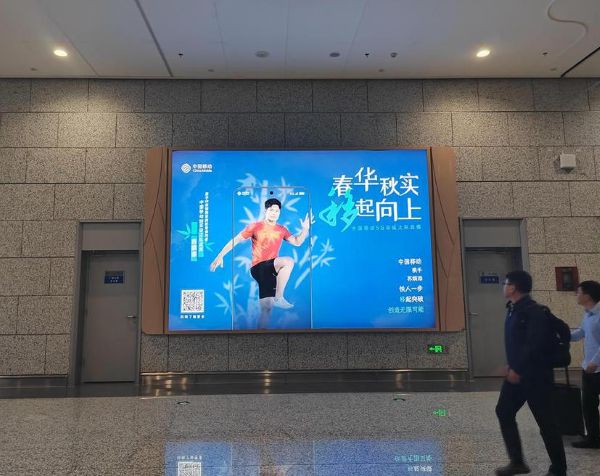
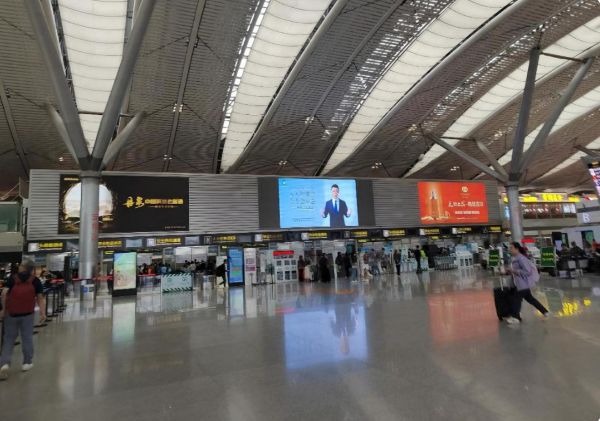
- Post-security digital/LED: Walking pass, half-life 8–12 weeks—good for brand-asset long narrative.
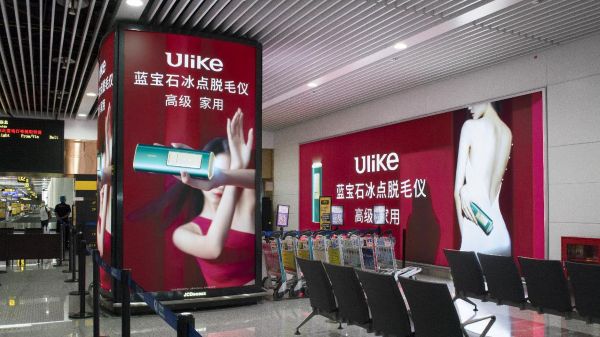
- Gate light boxes/columns: Waiting dwell, high gaze, half-life 6–10 weeks.
- Baggage claim/arrival corridor: Pleasant arrival mood, half-life 8–12 weeks—ideal for destinations.
Lounge media: Ultra-high frequency but tiny audience—exquisite, low-frequency swaps. Airport advertising's keyword is "restrained and precise."
3. Saturation point, inflection, and optimal flight length
The inflection is later than billboards: brand-asset creative 8–12 weeks per cycle; nodal (summer/winter travel, expos) follows the calendar. Beyond 12 weeks fully unchanged looks stale; adopt "quarterly big swap + monthly micro-tune": main visual iterates quarterly, offers/destinations update monthly.
4. Early signals of creative fatigue
- Traveler check-in decline: Airports are high-share scenes; flattening social volume warns early.
- Branded-search/visit lift stagnation: Tie to destination activities.
Operator feedback: Hub operators hold flow and interaction data. Premium venues rely more on "quality audits"—periodic human review of whether the creative still feels premium.
5. Refresh cadence: version rotation and theme iteration
Airport advertising fits "constant master brand + rotating sub-themes": an automaker keeps the master visual but rotates "flagship model / service promise / user story" quarterly. Digital screens can run time-of-day content (morning business, afternoon leisure), splitting a long cycle into perceptible change without dull constancy.
6. Industry-specific refresh playbooks
- Automotive/Watches/Luxury: Quarterly film-grade iteration, texture over frequency.
- Wealth management/Banks: "Professional trust" anchor, semi-annual micro-tune + nodal offers.
- OTA/Travel: Swap destinations by flight season (summer/autumn, winter/spring).
Duty-free/Gifting: Short bursts aligned to duty-free promotional windows. Airport advertising's refresh is a "premium feel" maintenance project.
7. A/B multi-version and programmatic auto-swap
Terminal digital networks support zone- and time-based swapping. Airport advertising can show different sub-themes to different route passengers (international → outbound travel, domestic → business) and auto-switch by flight waves. Programmatic makes "same space, personalized" compliant and fresh even in long cycles.
8. Common pitfalls
- Treating the airport as a monument—one placement for half a year, losing vitality.
- Frequent big changes to prove presence, hurting brand recognition.
- Using low-price promotional visuals that cheapen the premium tone.
Ignoring departure vs. arrival mindset, running one creative everywhere.
9. FAQ
Q: How often to refresh airport advertising?
Brand-asset 8–12 weeks, nodal by calendar; quarterly big + monthly micro.
Q: Is promotion suitable at airports?
Yes, but wrap in premium language to avoid cheapness.
Q: Small budget approach?
Focus one high-value path (post-security), long cycle, few swaps.
10. A practical decay-measurement cheat sheet
Premium venues reward restraint, but restraint must still be measured. Track three signals already available to most airport advertisers: (1) traveler social check-ins and tags near your placement; (2) branded-search or destination-visit lift tied to travel windows; (3) qualitative "premium feel" scoring from periodic brand-team reviews of the live creative. Plot them across a 12-week line. When check-in volume flattens while dwell time is unchanged, the creative has become fixture-like—execute the planned quarterly swap. For digital terminal networks, schedule sub-theme rotations in advance so the screen never goes stale between big refreshes. Over time you will learn your own airport half-life per zone, replacing "it feels fine" with "the data says refresh." That is how airport advertising compounds prestige instead of quietly eroding it.
Summary
Airport advertising's winning move is "staying refined-fresh within slow decay." Less-but-refined refresh beats frequent change for premium feel. Treat the terminal as the brand's high-end reception room, and maintain long-term allure with restrained iteration.