Airport Advertising: Configure Terminal Scenes into a Ritual-Driven Growth Asset for Your Brand Portfolio
2026-08-27Tianci MediaViews:4
Highlights
In allocation language, airport advertising is a "high-net-worth growth asset": expensive and gated, but precise, long-dwell and ritually certifying. It does not cover everyone like a landmark, nor feel domestic like an elevator; it picks the high-value audience "on the way out or back," certifying a brand at the most receptive, unhurried moment. This article uses portfolio theory to break down airport advertising's return, risk and correlation, and explains why it must relay with in-flight cabin media in a "two-leg" journey.
1. Why media budgets need "asset allocation" thinking
A mature mix has a legible "core real estate" (landmark), a "cash flow" (elevator) and a "growth asset" that proves status (airport). Airport advertising's return is not scale but quality — it places the brand in the window where travellers are most open to new information. As allocation thinking goes, treat airport as the mix's "credit enhancer": its presence tells the market "this is a brand with muscle." Uncorrelated with digital channels, it is a rare low-correlation, high-scarcity configuration for premium reach.
2. The return profile of airport advertising (where returns come from)
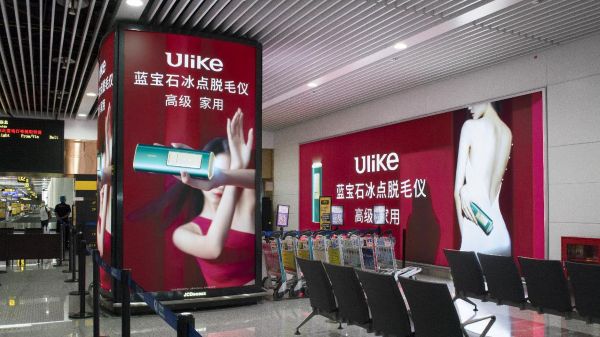
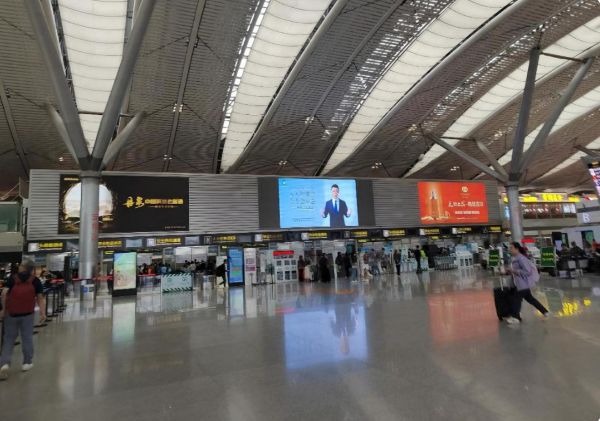
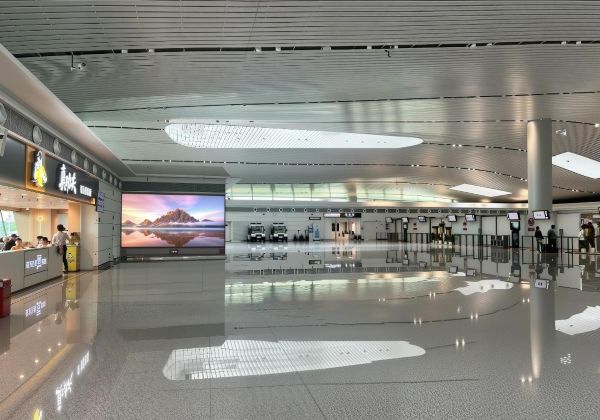
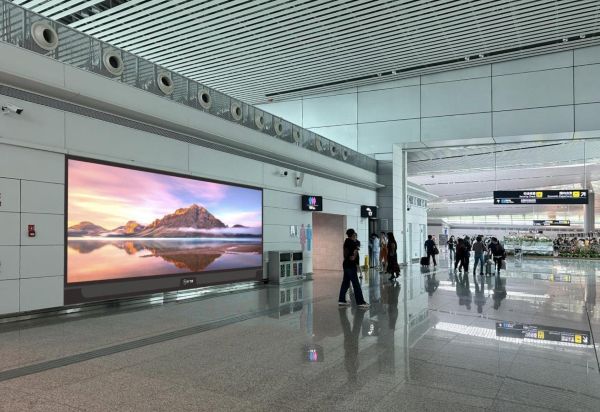
Returns come in three layers: first, high-net-worth precision — business travellers, outbound tourists and frequent flyers concentrate here, matching automotive, finance, travel and duty-free targets; second, long dwell and high gaze — check-in, security, lounge and baggage claim stretch 1–2 hours, wall and column media seen repeatedly; third, ritual certification — airports signal authority and class in public mind, a brand appearing here earns an officially endorsed trust. Stacked, airport becomes "let the scene speak for the brand," ideal for categories needing premium certification and trust leaps.
3. The risk profile of airport advertising (where volatility comes from)
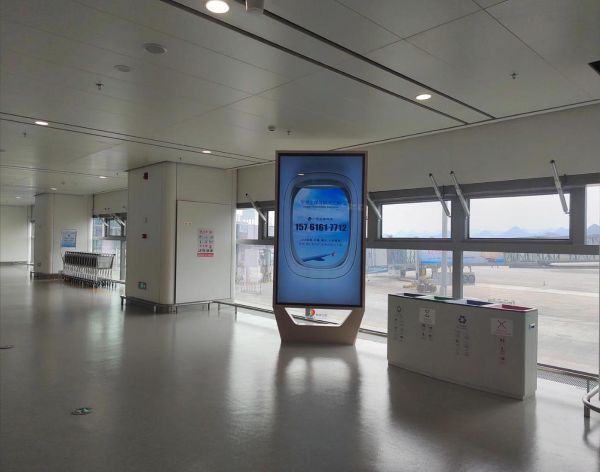
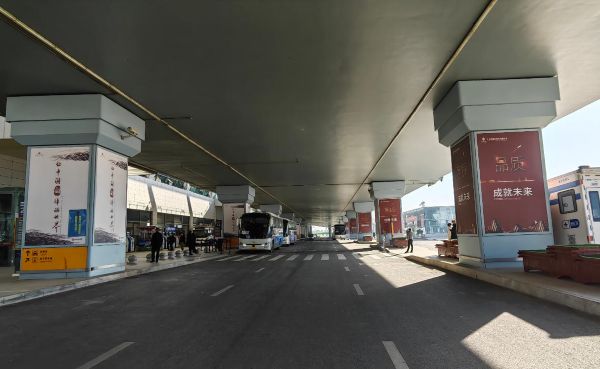
Risks are clear: long concession-bid cycles — prime sites need half-year-plus lead and high capital uncertainty; post-security premium — sterile-area media cost far more than departures; passenger and route seasonality — holidays, geopolitics and airline re-routing shift the audience; high sunk cost — wrong terminal or mismatched audience is slow to fix; creative and security compliance — materials and content need dual airport and civil-aviation review. The fix: lock sites early, choose by route OD, use short-cycle digital screens to lower occupancy cost.
4. Correlation: strongly complementary with cabin, low with digital
Airport advertising's correlation with in-flight cabin media (seatback, tray table, headrest, window) is high and complementary — the former covers "anticipation before departure," the latter "exclusive companionship in flight," forming a "two-leg relay" from check-in to landing, the mix's strongest synergy pair. It is low-correlated with feeds and search, a fine diversifier for premium reach. But its correlation with city landmarks is moderate (both "city-scale certification"), so avoid heavy overlap; better to split airport = premium, landmark = mass.
5. Industry allocation playbooks
Automotive and EV use airports as a "premium city-entry gift" at hub terminals; wealth management and credit cards touch business flyers as a long growth holding; OTA and destinations wake "departure impulse" by route, adding at peaks; duty-free and luxury put sterile-area media as the "last metre," near boarding gates; premium liquor builds brand momentum by business season. The playbook: weight airport by how much the category depends on premium certification and trust leaps — the more, the heavier, relayed with cabin media.
6. Building the efficient frontier: three steps to make airport a growth asset
First, choose by route OD not terminal size, locking true target density; second, split sterile-area and departures — conversion for post-security, certification for departures; third, sign a "two-leg relay" with cabin media so one trip is accompanied twice. Done, airport upgrades from "pricey and unclear" to a measurable, synergistic, premium growth asset, ideal for status-driven brands.
7. Rebalancing: when to add and when to trim
Add signals: new international route, business/holiday season, competitor scaling at the hub (defensive top-up). Trim signals: route rejig mismatches audience, sterile-area rate exceeds ROI threshold, creative fatigue, international flow shrinks externally. Review airport weight by IATA season (summer/winter) using passenger mix and store-visit/inquiry data. Rebalance so "premium" always means "right travellers," not the priciest terminal.
8. Common misconceptions
One: bidding only the biggest terminal, ignoring route OD and mismatching audience. Two: mixing departures and sterile-area without splitting certification vs conversion. Three: airport and cabin bought separately, missing the two-leg relay premium. Four: treating airport as a short impression, ignoring the premium equity it should compound. Five: ignoring security and civil-aviation content review, delaying launch with late materials.
9. FAQ
Q: What is the difference between airport and aircraft advertising?
A: Airport is terminal scenes (departure/arrival/lounge); aircraft is in-cabin media (seatback/tray/headrest/window); the two relay across the whole journey.
Q: Can a small budget do airport?
A: Lock one hub's sterile-area digital screen for peak add-ons, no full buyout.
Q: How to measure airport's portfolio contribution? A: High-net-worth store-visit/inquiry uplift and premium brand-search spillover.
10. Summary
Airport advertising is the high-net-worth growth asset of the media mix: scarce returns via premium precision, long dwell and ritual certification; risks in bid cycles, seasonality and high gating; strongest synergy with cabin media through the two-leg relay. Allocate it with portfolio thinking and you buy a brand credit enhancer "certified by a premium scene."