- Photos
- Specs
- Advantages
- Value
- Media Map
| Area:International | Type:airport | Frequency:342 |
| Address:Incheon International Airport, South Korea | Format:led | Duration:15s |
| Location:T2 Duty-Free Zone | Min Qty:4 | Operating Time:0-24o'clock |
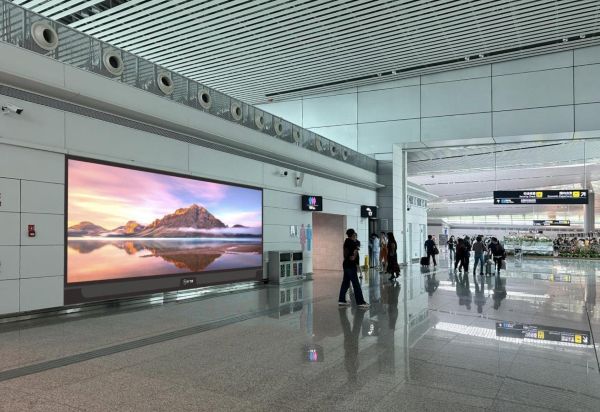
| Size:3.6 x 6.8 m | Min Period:month |
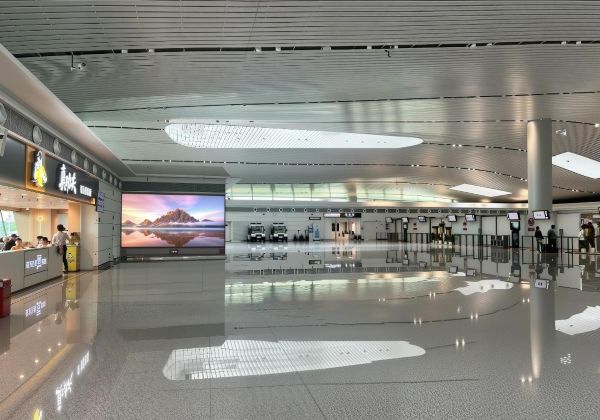
Located at the core entrance of the duty-free zone, it receives high attention, with a passenger throughput of 74.07 million, of which over 80% are international travelers. The T2 terminal sees an average daily passenger flow of about 200,000, with passengers staying for over 90 minutes on average. This golden waiting period allows for deep information transmission, increasing ad recall by 67%. It covers the main passages of the duty-free zone, forming a matrix effect and enhancing ad coverage.
The LED layout in the T2 departure duty-free area closely follows passenger movement patterns, precisely distributed along the only shopping passage after security, around luxury goods areas, and at checkout zones. This breaks the visual limitations of traditional media, forming a matrix-style communication pattern. It ensures that during the average 90-minute stay in the duty-free zone, passengers can naturally be exposed to the information conveyed by LEDs, with forced exposure rates exceeding 98%.
The core advantage of LED advertising lies in its ability to guide passengers' active focus, greatly improving the efficiency of ad information reach. It truly achieves full-area coverage without omission or dead angles. The efficiency of ad reach is significantly enhanced, with each play accurately delivering to every passenger present, genuinely ensuring full coverage without omissions or dead spots, making brand exposure more certain.
LED screens attract passengers into the duty-free zone, increasing store traffic. Passengers typically make 2-3 trips back and forth within the duty-free area, with ad exposure frequency ≥3 times, matching the high-end shopping environment, enhancing brand image and trust. They cover the duty-free zone's entrance, passages, and core shopping areas, creating 360° visual immersion.
The duty-free shopping atmosphere is strong, and travelers are in an active state of consumption decision-making, with a higher level of attention than in ordinary scenarios. Media and high-end retail environments integrate seamlessly, reinforcing the brand’s premium image, increasing brand premium by 20%, and boosting traveler social sharing by 30%. Travelers will photograph airport-specific advertisements and post them on social platforms, generating secondary dissemination that expands investment value and establishes a full-value closed loop from advertisement reach - memory - conversion - to dissemination.
Media relies on scenarios, centers on audiences, and is supported by technology, perfectly integrating brand exposure, audience reach, sales conversion, and brand endorsement. This not only enriches travelers' waiting and shopping experience but also makes every LED screen a digital asset with both communication and investment value, highlighting the unique charm and core value of airport hub media.
With five core advantages—global top-tier hub traffic, high-net-worth precise audience, instant conversion scenarios, immersive technological experiences, and authoritative brand endorsement—it becomes a strategic-level media platform for high-end brands to expand in Northeast Asia and enhance global influence. It is particularly suitable for global brands in luxury goods, beauty and skincare, fashion apparel, and jewelry and watches to achieve a win-win of brand exposure and sales conversion.