A Complete Guide to Advertising Prices in Shanghai Metro: Practical Strategies from Line Selection to Budget Control
2026-02-03Tianci MediaViews:121
Highlights
This article comprehensively analyzes the pricing system of Shanghai subway advertising, covering the pricing logic of all media forms such as lightboxes, columns, elevator signs, and interior packages. We will reveal how key factors such as route, location, and delivery cycle affect the budget, and attach the steps for obtaining quotes and guidelines for avoiding pitfalls. Read now and plan your Shanghai subway advertising placement accurately.
Shanghai, a super city with a globally leading total rail transit mileage. The daily passenger flow of over 10 million people makes its subway network not only a means of transportation, but also a large, precise, and dynamic "city level traffic platform". When companies consider advertising here, the first practical question is: what is the price of advertising on the Shanghai subway?
There is no standard answer to this question, as the price is backed by an extremely complex evaluation system. The price difference between a column advertisement at a People's Square station and a lightbox at a suburban terminal station can reach a hundred times. This article will thoroughly break down this pricing logic for you, transforming you from a completely unfamiliar "novice" to a "knowledgeable person" who can understand quotes, evaluate values, and control budgets.
1、 Firstly, what is the core value of Shanghai subway advertising?
Before discussing prices, one must first understand their value. The advantages of Shanghai subway advertising are:
Massive and stable passenger flow: millions of daily passenger flow, providing an unparalleled exposure foundation.
Accurate route and station positioning: Different routes (such as Line 2 running through the Puxi Pudong business core and Line 1 connecting the railway station and commercial district) carry passengers with different characteristics, enabling efficient customer group screening.
Compulsory reach in enclosed environments: Passengers have a long average stay time inside the station and train, are in a "boring period" of information reception, and have a high advertising reach rate.
Rich media format combination: from static to dynamic, from brand image to effect guidance, can meet diverse marketing goals.
These value points are the underlying support for the formation of their prices.

2、 Price composition decoding: 4 core dimensions that affect pricing
The quotation for Shanghai subway advertising is not an isolated number, but a product of four dimensions: "media form+line station+release cycle+procurement quantity".
Dimension 1: Media Form (Fundamental to Cost Differences)
This is the basis for determining the unit price. The main forms and price levels are as follows (estimated based on single point single cycle):
Brand image level (high price zone):
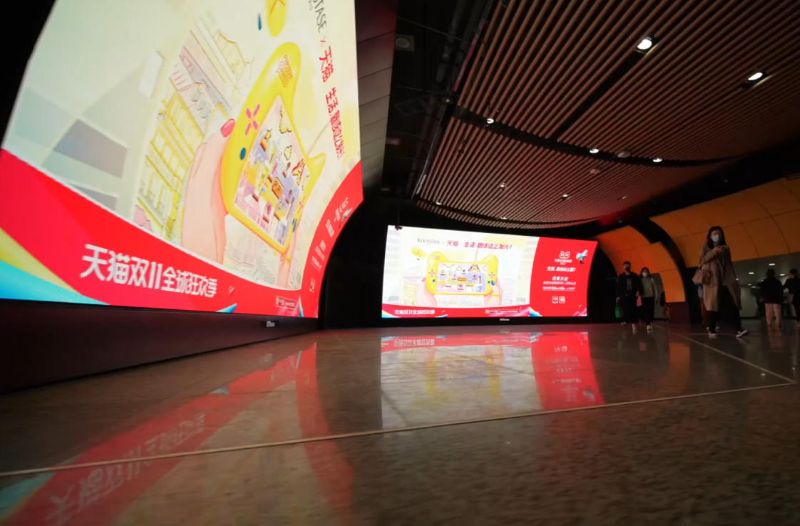
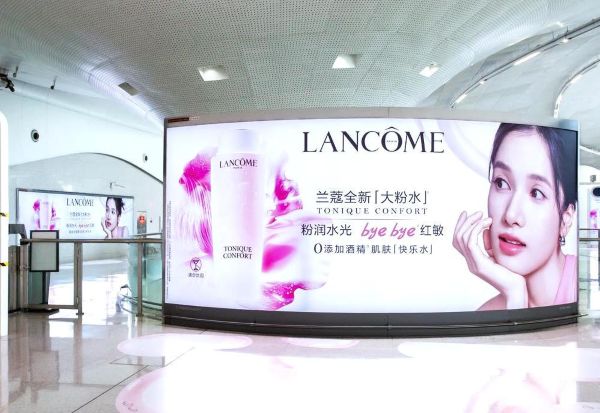
Large package columns in the station hall/passage: with the strongest visual impact, located in core hubs such as People's Square and Jing'an Temple, with the highest price, usually measured in "months/roots", ranging from tens of thousands to millions.
Brand Gallery/Theme Station: Contract the entire passage or station hall for creative packaging, which is a customized project with prices ranging from millions to tens of millions.
Mainstream exposure level (mid to high price range):
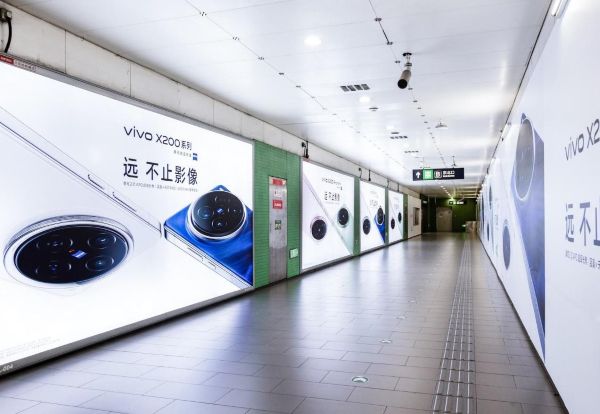
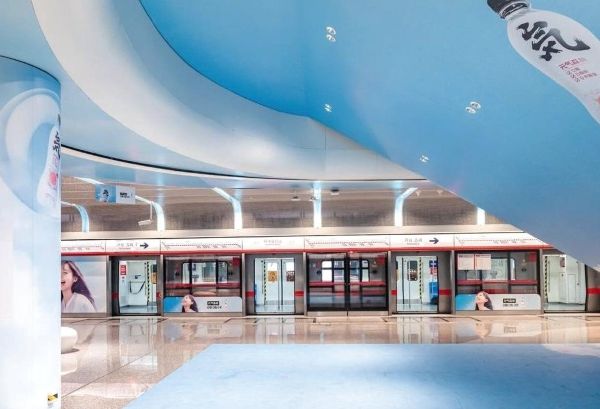
Platform/channel lightboxes (12/18): the most classic and numerous media. The price ranges from tens of thousands to tens of thousands per month per piece depending on the size and location (such as whether it is facing the train door).
Carriage package (whole train/single carriage): Dynamic mobile media with long contact time. The whole train contract price is high, and the price of a single section or single signboard is relatively affordable.
High frequency reach level (mid low price area):
Elevator and escalator side walls (ladder signs): accompanying passengers during the process of getting up and down, achieving close range and multiple touchpoints.
Poster inside the carriage: located above the car door or at the junction of the carriage, covering all passengers.
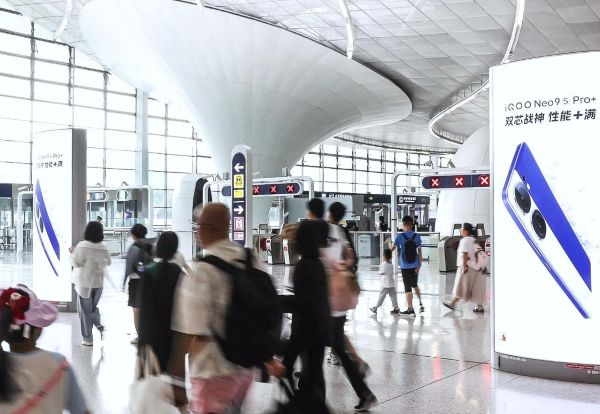
Entrance and exit lintels/directional signs: covering the entire passenger flow entering and exiting the station.
Digital media (flexible pricing):
Digital refresh screen (LED): located on the platform or channel, capable of rotating multiple advertisements. Usually sold on a weekly/monthly basis, with prices varying depending on location and duration.
Dimension 2: Line and Station Level (Key Variables of Value)
This is the main reason for the price difference of the same media format. The value of Shanghai subway stations can be roughly divided into:
S-level (top-level hub): People's Square, Jing'an Temple, Xujiahui, Lujiazui, Nanjing East Road, etc. The passenger flow is huge, the commercial atmosphere is extremely strong, and the price is at its peak.
A-level (core business district/transportation hub): Shaanxi South Road, Zhongshan Park, Century Avenue, Shanghai Railway Station, etc. Price comes second.
B-level (regional center/residential intensive station): such as Longbai New Village, Zhangjiang High tech, etc., covering specific working or living populations.
C-level (general station): Stations at both ends of the line or with relatively low passenger flow.
Core principle: The price of the same type of lightbox at People's Square Station may be more than 10 times that of a C-class station in the suburbs.
Dimension 3: Release cycle and publication time
Cycle: Usually based on "two weeks" or "four weeks" (one month) as the basic sales unit. Long term advertising (such as over 3 months) usually earns discounts.
Time period: For certain digital media or special events, advertising space during holidays and major events (such as the CIIE) may be at a premium.
Dimension Four: Procurement Strategy and Package Combination
Single point purchase: Purchase a single media from a single site, with the smallest bargaining space and the highest unit price.
Route package: Contracting all or part of a certain medium on a certain route (such as all train carriages on Line 2) can result in a better package price.
Networked package: Targeting specific audiences (such as white-collar workers and young people), selecting stations with corresponding characteristics from multiple routes for combined advertising is a common strategy that balances cost-effectiveness and accuracy.
3、 Four Steps: Obtain and Understand Your Accurate Quotation
After understanding the pricing logic, you can proceed as follows:
Step 1: Clarify marketing goals and target audience portraits
Do you want to increase brand awareness throughout the city or just influence white-collar workers around Jing'an Temple? The goal determines whether to choose a breadth strategy of "full network coverage" or a depth strategy of "precision sniping".
Step 2: Based on the objectives, preliminarily select the media combination and route range
Create a landmark brand image: Lock in the large pillars or brand corridors of S-level sites.
Realize high-frequency reach for commuters: choose a combination of platform lightboxes and in car packages for multiple routes.
To attract traffic to offline stores: Select all or major media from 3-5 subway stations around the store for saturation attacks.
Step 3: Inquire through official or professional agents
The advertising resources of Shanghai Metro are mainly dominated by a few official operators such as STDecaux. The way to obtain a quotation:
Direct contact with official sales: Standard quotes can be obtained, suitable for large brands with clear needs and sufficient budget.
Entrusting a professional advertising company: For most businesses, this is a more efficient choice. For example, as a professional subway advertising placement company, Tianci Media not only provides accurate official resource quotations, but also relies on its experience to plan more cost-effective route combinations for clients, assist in creative review, and handle complex publication execution and monitoring matters, providing one-stop services.
When inquiring, please provide a clear requirement brief as much as possible, including target audience, intended routes/regions, preferred media format, preliminary budget scope, and expected delivery period.
Step 4: Analyze the quotation and focus on core value indicators
After receiving the quotation proposal, focus on:
Total Coverage Per Person (GRP): Estimated total exposure.
Cost per thousand impressions (CPM): A core indicator for measuring media purchasing efficiency, used to compare the cost-effectiveness of different solutions.
Covering site list and attributes: Verify whether the site matches the target customer group.
Publication cycle and monitoring guarantee: Confirm the start and end time of publication and the effectiveness verification method.

4、 Common Misconceptions and Cost Control Suggestions
Misconception 1: Blindly pursuing top-level websites and ignoring overall frequency.
Suggestion: It is better to invest a sky high priced package pillar in People's Square than to invest a light box in each of the 10 A-level business district stations. Forming a "mesh encirclement" and "high-frequency reach" for the target audience is often more effective than a single "landmark check-in".
Misconception 2: Only focus on the total price, without considering CPM and audience matching.
Suggestion: A plan with a low total price but covering unrelated groups is a huge waste. The accuracy of CPM and crowd profiling must be evaluated.
Misconception 3: The advertising cycle is too short.
Suggestion: Subway advertising requires time to accumulate awareness. It is recommended to advertise for at least 4 weeks (a complete release cycle) to form effective memory.
Misconception 4: The disconnect between creative design and media purchasing.
Suggestion: The subway environment is noisy and passengers are in a hurry. The advertising screen must adhere to the "3-second principle": convey core information within 3 seconds. Poor creativity can render expensive media resources worthless.
Misconception 5: Neglecting the integration of online and offline.
Suggestion: Synchronize the visual symbols of subway advertisements (such as main visuals and slogans) to online social media, initiate check-in topics, or combine QR code interaction to attract offline traffic to online sedimentation, maximizing the integration value of one placement.
Conclusion: Pay precise premium for deterministic traffic
In the end, the advertising price of Shanghai Metro is the precise premium you pay for "deterministic urban mainstream passenger flow" and "forced attention in closed scenarios". Its value lies in its irreplaceable scale effect and scene attributes.
As a decision maker, your task is not to find the "cheapest" option, but to find the "most effective solution that matches the target". This requires a clear understanding of one's own needs and a basic understanding of the complex system of subway media.
For enterprises that hope to save time and effort, and pursue professional results, collaborating with professional partners like Tianci Media is undoubtedly a wise choice to quickly overcome the information fog and reach the core value. They can help you convert every budget into a precise tapping of the pulse of Shanghai city.