Introduction to Chengdu Metro Advertising Placement: Unlocking the Underground Golden Flow of Park City
2026-02-09Tianci MediaViews:122
Highlights
This article is an introductory guide to advertising in Chengdu Metro, providing a detailed analysis of the network value of Chengdu Metro, mainstream advertising forms, four step advertising strategies for beginners, and a guide to avoiding pitfalls. If you need professional one-stop service, Tianci Media, as a professional subway advertising platform, can provide customized solutions.
In Chengdu, a "park city" that has consistently topped the list of new first tier cities for many years, over 6 million people shuttle through a vast underground transportation network - the Chengdu Metro - every day. For businesses who want to establish brand awareness and reach mainstream consumers here, Chengdu Metro advertising is a tempting yet somewhat complex option. It looks ubiquitous: from the concourse of Chunxi Road to the passage of the High tech Zone, from train carriages to escalators. But as a beginner, how should I start? Which type of advertisement is suitable for me? What is the approximate budget? Don't worry, this article will help you clear the fog and provide you with a comprehensive understanding of Chengdu Metro advertising in the clearest and most understandable way possible.
Part 1: Why Chengdu Metro? ——Three irreplaceable core values
Before considering specific advertising placements, it is important to understand what unique benefits Chengdu Metro advertising can bring to you.
1. Covering the absolute mainstream "dynamic population" in the city
The passenger portrait of Chengdu Metro is the main force of urban consumption: young white-collar workers commuting to work, college students, shopping and leisure citizens, and tourists. They generally have high education, high activity, and high willingness to consume, making them the target customers that most brands dream of.
2. Precise scene screening under the "Park City" network
The Chengdu Metro has opened more than ten lines, each of which is like an "artery" of urban functions:
Line 1: runs through the north-south axis, connecting the North Railway Station, Tianfu Square, Financial City, and Science City, and is the core line of business, government affairs, and technology.
Line 2: The east-west main line passes through Xipu (university), Chadianzi, and Dongke Station, covering universities, transportation hubs, and residential areas.
Line 3: Connecting the Xinnan Tiandi commercial district and the core commercial district of Taikoo Li on Chunxi Road, it is an absolute "shopping and leisure line".
By selecting different routes and stations, you can achieve natural screening of the population at low cost.
3. "Compulsory Reading" and Deep Communication in a Closed Environment
Subway stations and train carriages are relatively enclosed spaces where mobile phone signals may be unstable. Passengers will naturally search for surrounding information while waiting, boarding, or transferring. Subway advertisements occupy the visual channels they must pass through, forming a high-frequency, low interference effective reach, and the advertising memory is very high.

Part 2: Get to know your "advertising stage" - the mainstream advertising form of Chengdu Metro
Walking into the Chengdu subway, you will see various types of advertisements, which are mainly divided into the following categories, each with its own "personality" and purpose.
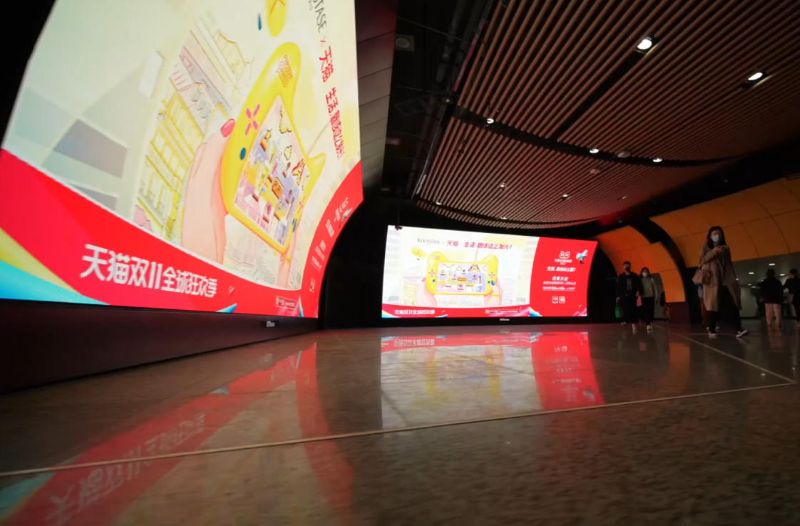
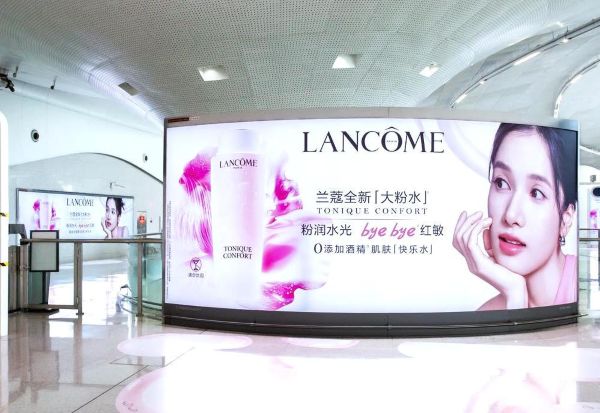
1. Brand Wall/Corridor: Creating a Stunning "First Impression"
What does it look like: Located in large transfer stations (such as Provincial Sports Center, Tianfu Square) or entrance/exit passages, with a huge area, a whole wall or multiple continuous light boxes form a complete picture.
Core advantage: Strong visual impact, suitable for telling brand stories, releasing new products, or creating immersive themed exhibitions, which can trigger passengers to take photos and spread the message.
Suitable for: A well-known brand that needs to quickly establish a high-end brand image and promote large-scale events.
2. In car media: Accompanying "deep communication"
Posters inside the carriage (above the car door, opposite the seat): Passengers have a long period of eye view while riding, which can convey more product information or series advertisements, suitable for selling point education.
In car electronic screen (PIS screen): dynamically playing video advertisements, with a combination of sound and image that is more attractive. Suitable for showcasing product features and short story advertisements.
Hand pulled advertisement: The closest distance to the passenger's line of sight (about 30 centimeters) is the absolute visual focus. Information must be extremely concise, one logo and one slogan are enough, suitable for brand logo reinforcement.
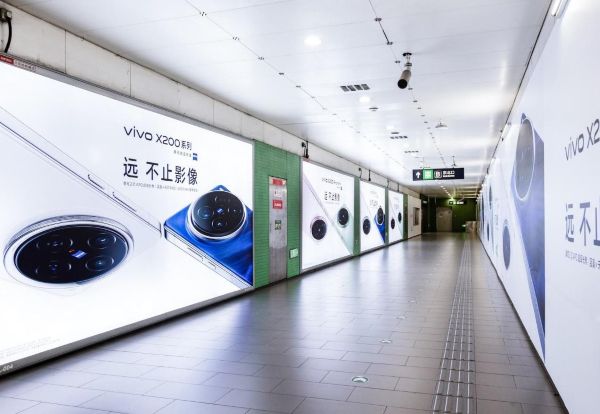
3. Station hall lightboxes and column advertisements: "repeated prompts" in the core area
What does it look like: distributed inside and outside the paid area of the station hall, on both sides of the passage, and on the pillars.
Core advantage: It is a must pass place for passengers to enter and exit the station and transfer, with extremely high exposure frequency. A standardized and clean media environment is the foundation for consolidating the core information of a brand.
Who is suitable for: Almost all brands that hope to establish a stable understanding can find a suitable position here.
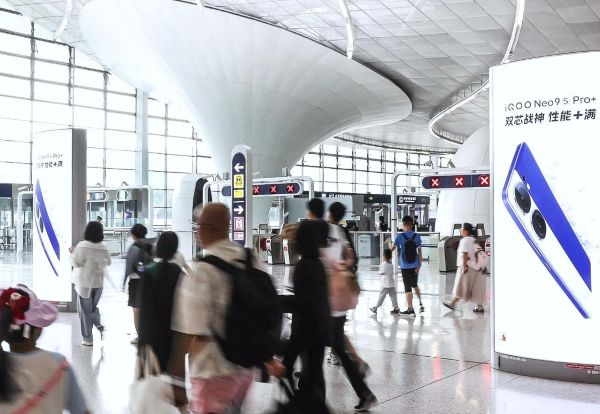
4. Security checkpoint/gate media: Seize the 'critical moment'
Core advantage: Located at the critical decision-making point for passengers entering the paid area, with highly concentrated pedestrian flow and focused visibility.
Suitable for: Suitable for advertisements that require real-time action guidance, such as promotional information, app downloads, and local lifestyle services.
Part 3: Beginner's Four Step Method: Launch Your First Chengdu Metro Advertising Campaign
Assuming you are a local new consumer beverage brand in Chengdu, let's take a step-by-step look at how to operate it.
Step 1: Clarify the goal - why should we invest?
A clear goal is a compass. For example:
Core objective: To enhance the brand's visibility among young white-collar workers in Chengdu before the arrival of summer, and to attract traffic to 5 newly opened commercial district stores.
Target audience: Young office workers aged 20-35 working in the city center commercial district.
Success indicators: Increase in store foot traffic, increase in online orders through mini programs, and increase in discussions about the brand on social media.
Step 2: Match Resources - Choose the Right Route and Form
Select the most suitable advertising combination based on the goal:
Preferred locations: Metro Line 1 and Line 3. These two lines run through densely populated white-collar areas such as the Financial City, Tianfu Square, and Chunxi Road.
Core point: Select station hall lightboxes and channel advertisements in the target business district for saturated coverage to establish brand presence.
Deep communication: Emphasize scenario based selling points such as "Workday Life Renewal Tool" on the posters inside the carriages of Line 1 heading towards the south of the city.
Action guidance: Set up advertisements with store location and coupon QR codes at the gate of the target site to complete the closed-loop from exposure to traffic flow.
Step 3: Creative Design - How to Make Passengers Remember at a Glance?
Subway advertising is a '3-second art', and the design must take effect instantly:
Visually eye-catching: using high saturation and strong contrast colors to "jump" out in busy environments.
Minimalist information: a big brand logo, a core slogan (such as "Is Chengdu spicy? Have a refreshing cup!"), and a clear product image.
Strong call to action: attach prominent guidelines such as "Scan the code to receive coupons" and "Turn right at the exit of XX station".
Localized affinity: Cleverly utilizing Chengdu dialect and landmark elements to increase familiarity.
Step 4: Execution and Evaluation - Ensure Visible Results
Professional execution: The approval, production, and publication process of subway advertisements is strict. It is recommended to cooperate through professional platforms, such as Tianci Media, which is a professional subway advertising platform. They are familiar with the media rules of various subway lines in Chengdu and can provide one-stop services from resource docking to publication monitoring, with much higher efficiency than self docking.
Effect tracking: Use exclusive discount codes on advertisements or designated landing page QR codes to accurately count the passenger flow or order conversion brought by advertisements at various subway stations, and evaluate the return on investment.
Part 4: Three "pitfalls" that beginners must avoid
The pitfall of the "crowd only theory": blindly choosing the transfer station with the highest passenger flow (such as Chengdu East Railway Station), but there are mostly hurried passengers there, not your target consumer group. It's better to choose professional sites such as incubation parks and financial cities where white-collar workers frequent. Although the total flow of people is low, the accuracy is extremely high.
Creative "self pleasure" pit: designing long texts that require a half minute pause to understand in the fast walking passage of people; Or in noisy carriages, relying on complex infographics that require quiet reading. Creativity must be adapted to the attention state of passengers in specific scenarios.
Single point thinking pitfall: Just placing one advertisement at Chunxi Road Station, thinking it's enough. The subway is a network, and advertising also needs to be networked. 3-4 key stations should be selected for combination advertising along the complete commuting path of the target audience (e.g. from Xipu's home to the company in the financial city), forming a cognitive relay.
Step 5: Utilize professional platforms to simplify complex processes
As a novice, it is an extremely challenging task to independently connect with media resource providers of multiple Chengdu subway lines, understand customer data of different stations, and handle complex publication processes.
Collaborating with professional platforms like Tianci Media is equivalent to hiring a "local guide" and an "all-around butler":
Strategic planning: They can recommend the most suitable route, station, and media combination plan for your target based on databases and advertising experience, rather than just a simple quotation.
Efficient execution: Handle all tedious approval, production, and installation processes to ensure advertising compliance and timely publication.
Effect guarantee: Provide professional monitoring reports to ensure that your advertisement is displayed as scheduled.
Conclusion: Leave your brand rhythm on the pulse of Chengdu
Doing subway advertising in Chengdu is essentially integrating brand information into the city's most vibrant life rhythm. For beginners, it is recommended to start with a strategy of "small range, high precision, and trackability".
For example, with a centralized budget, focus on 3-5 core stations on a target route (such as Line 1), use a set of compelling ideas for a one month centralized advertising campaign, and set clear conversion tracking paths. When you see the actual effect of this investment with energy, you have mastered the first key to efficient brand communication in the huge market of Chengdu.