Complete Guide to Shenzhen Metro Advertising: Implanting Brands into the Pulse of the Youth Capital
2026-02-04Tianci MediaViews:159
Highlights
This guide comprehensively analyzes the advertising market of Shenzhen Metro, detailing the characteristics of multiple lines, core media forms, cost composition, and advertising strategies. Help you accurately reach the young and high spending commuting population in Shenzhen, and efficiently enhance brand influence. Read now for professional advertising advice.
Shenzhen, a "city of youth" with an average age of only 32.5 years old, boasts one of the busiest and most vibrant rail transit systems in China. The daily passenger flow of over 7 million people makes the subway not only a means of transportation, but also an "underground golden corridor" that passes through the city's core commercial areas, high-tech parks, and high-end residential areas. For young consumers, technology professionals, and new middle-class family brands who crave dialogue, Shenzhen Metro advertising is an indispensable core offline battlefield.
However, the Shenzhen subway network is vast and each line has distinct functions, with diverse media formats. Blind advertising can easily lead to budget waste. This article will systematically sort out the advertising logic of Shenzhen Metro, from decoding the value of routes to formulating scientific strategies, to help you achieve efficient circulation of brand information in the "blood vessels" of this innovative city.
1、 Decoding the unique genes of Shenzhen Metro: Lines are business districts, and passengers are markets
To understand Shenzhen Metro, one must first abandon the mindset of 'all lines are the same'. Each route has formed distinct "personalized" labels due to the areas it runs through:
Line 1 (Luobao Line): runs through the east-west main artery of Shenzhen, connecting the old commercial district of Luohu, Huaqiangbei Electronic World, Chegongmiao Business District, Nanshan Science and Technology Park, and Bao'an Center, covering multiple high-value groups such as business, technology, and consumption. It is an absolute "golden traffic line".
Line 2 (Shekou Line): runs through Shenzhen Bay Super Headquarters Base, Xiangmihu Luxury Residence Area, Futian CBD, Window of the World, etc. It is a "high net worth population line" with strong consumer power and suitable for high-end brands.
Line 11 (Airport Line): Connecting the airport with the central area of Futian, it is the "city gateway" for business travelers and tourists, especially suitable for tourism, hotels, finance, and international brands.
Line 3 (Longgang Line) and Line 4 (Longhua Line): Penetrating into large residential areas, they are the "commuting arteries" connecting the central area and residential areas, covering a large number of young office workers and families, with high cost-effectiveness and suitable for mass consumer brands.
Core insight: In Shenzhen, choosing which route is essentially choosing which type of core customer group to communicate with.

2、 Understanding the Media Matrix: From Brand Halls to Information Touchpoints
Shenzhen Metro advertising has formed a three-dimensional and digital media network, mainly divided into three levels:
1. Brand Hall of Fame Media (Establishing a High Level)
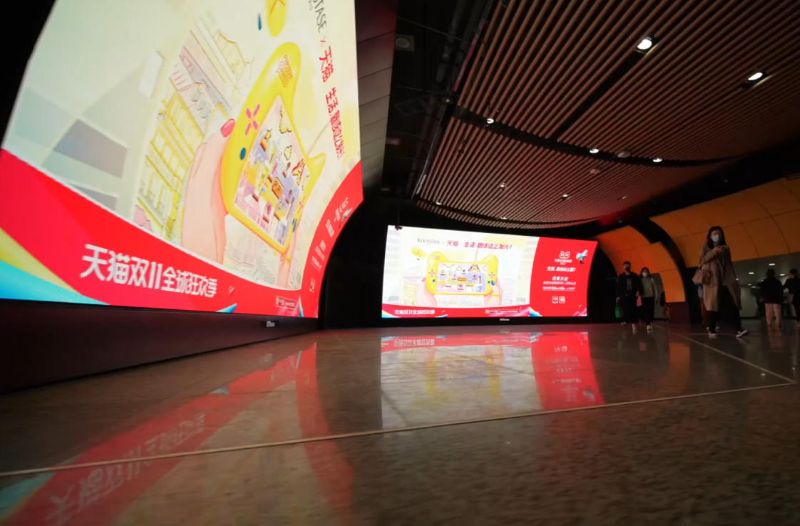
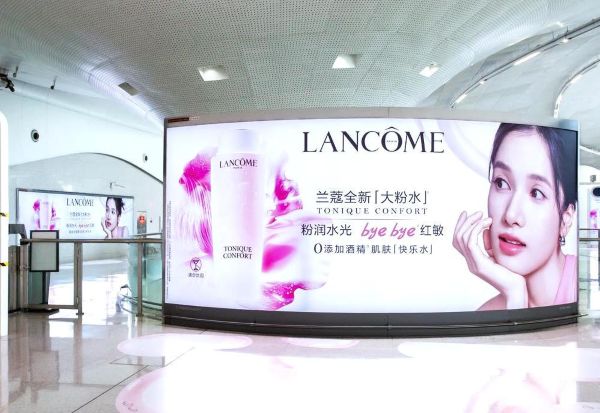
Large enclosed columns/brand walls in the station hall: located at hub stations such as Chegongmiao, Gaoxin Park, Futian, etc., with strong visual impact, it is the first choice for shaping the brand landmark image and launching major campaigns, with the highest cost.
Brand specific train: Contracting the theme packaging inside and outside the entire subway carriage to create an immersive experience, which can trigger social communication and is suitable for brand events with strong topicality.
2. Mainstream exposure media (achieving coverage)
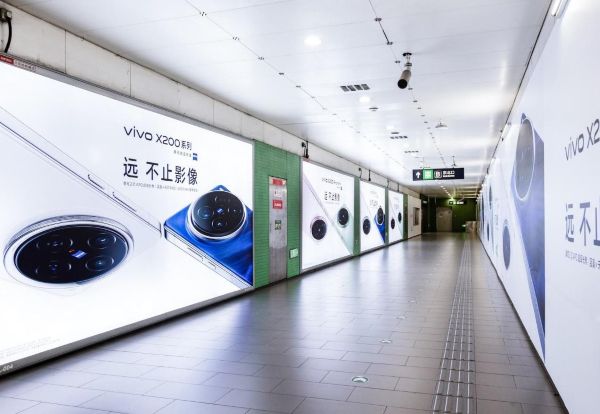
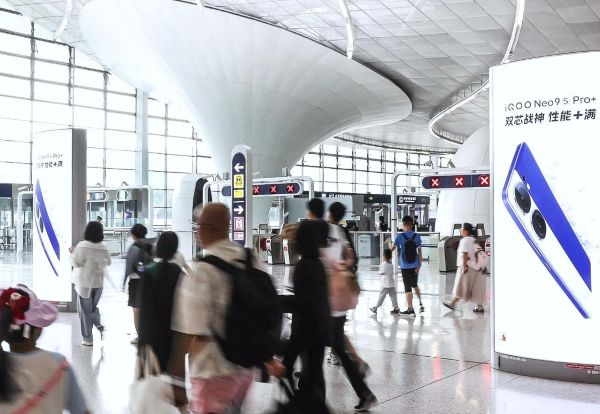
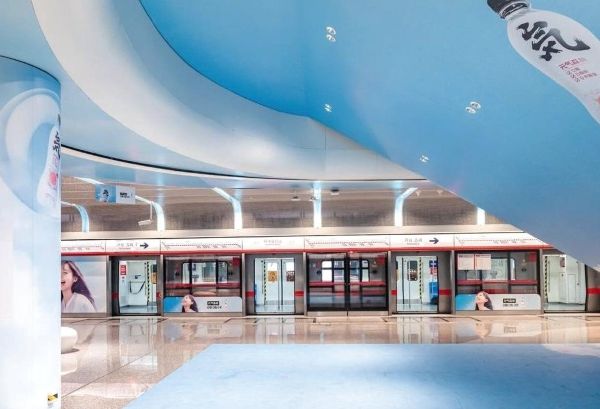
Channel/platform lightboxes (12/18): the most classic and numerous media. Located on the passenger route, it achieves high-frequency contact. The price varies greatly depending on the location of the station (such as Nanshan Science and Technology Park Station vs. Qinghu Station).
In car package (signs, door stickers, backrest): During the average travel time of more than 30 minutes for passengers, close and long-term communication is carried out, and the depth of information transmission is good.
Elevator and escalator signs (ladder signs): accompany passengers in the process of getting up and down to achieve mandatory viewing.
3. Digital interactive media (driving action)
Digital lightbox/electronic newspaper reading column: located in the station hall and passage, it can achieve dynamic image rotation, strong visual appeal, and flexible content updates.
Interactive screen/AR media: In some newly built lines or stations, new experiences such as QR code interaction are provided, which can redirect offline traffic to online and track the effect.
3、 Practical Five Step Method: Scientific Placement of Shenzhen Metro Advertisements
Step 1: Clarify the goal, target the core route and target audience
Ask yourself: Does the brand aim to influence the "code farmers" of the technology park, the financial elites of Futian CBD, or the young families of Bao'an and Longhua? The goal determines the main investment route. For example, a developer tool aimed at programmers should focus on the layout of Line 1 and Line 9 that run through Nanshan Science and Technology Park.
Step 2: Develop a "point line network" combination strategy
Single point explosion "strategy: Concentrate budget, occupy a complete set of high-quality media at one or more core hub stations (such as Chegongmiao and Futian), and create a brand hall effect.
The "single line penetration" strategy: Select a route that best matches the target audience (such as Line 2 for business people), and carry out media combination advertising for the entire line or key stations to form a linear influence.
The "networked coverage" strategy: targeting a wide range of people (such as young consumers), select transfer stations or residential area stations where multiple lines (such as lines 1, 3, and 4) intersect to combine and weave a coverage network.
Step 3: Professional inquiry and budget planning
The core factors that affect costs are site value and media format.
Site value: The prices of core business district sites in Nanshan and Futian are much higher than those in peripheral residential areas.
Media format: Column wrapping>Large lightbox>Ordinary lightbox/ladder sign>Car interior signboard.
Efficient Path: Collaborate with professional companies that have local resources. For example, as a professional subway advertising placement company, Tianci Media not only has access to real-time resources and pricing systems of Shenzhen Metro, but also can provide integrated cost-effective solutions across lines and media based on your goals, avoiding information asymmetry.
Step 4: Creative Design Meets the 'Shenzhen Speed'
Shenzhen passengers are in a hurry, with a fast pace of life, and creativity needs to follow:
The 3-second attention rule: The screen must transmit core information within 3 seconds. Strong visual appeal and eye-catching title.
Sense of technology and design: In line with the urban tone of Shenzhen, the design style can lean towards modernity, simplicity, and a sense of technology.
Strong call to action: Combining QR codes, mini program codes, or eye-catching slogans to transform brief attention into traceable interactions.
Step 5: Conduct monitoring and attribution of effectiveness
Publication monitoring: Request to provide a monitoring report with time and location watermarks.
Effect tracking:
Offline traffic diversion: Use subway advertising exclusive QR codes or discount codes to track in store/online conversions.
Online linkage: Simultaneously initiate topics such as # Shenzhen Metro Encounters XX Brand # to motivate users to check in and amplify social media coverage.
Data review: Compare the search index, app download volume, or sales data changes of the brand in the Shenzhen area during the advertising period.

4、 Shenzhen market exclusive misconceptions and pitfalls avoidance guide
Misconception 1: Focus only on the sites with the highest foot traffic.
Avoiding pitfalls: The old street station has a huge flow of people, but the passengers are mixed and the target is vague. And the quality of pedestrian flow at Gaoxin Park Station (for technology practitioners) is highly concentrated, and for specific brands, the value of the latter may far exceed that of the former. The accuracy of the crowd is better than absolute traffic.
Misconception 2: Neglecting the unique composite value of "transfer stations".
Avoiding pitfalls: such as Chegongmiao Station (transfer to lines 1, 7, 9, and 11), Shenzhen North Station (transfer to lines 4, 5, and 6+high-speed rail), etc., not only cover passenger flow on multiple lines, but also have longer passenger stays, making them highly cost-effective strategic locations.
Misconception 3: Creative style does not match the urban temperament.
Avoiding pitfalls: In the young and innovative city of Shenzhen, overly traditional and outdated advertising designs may appear out of place and reduce brand favorability. Creativity needs to possess the 'Shenzhen temperament'.
Misconception 4: Fragmentation of the advertising cycle prevents the formation of memories.
Avoiding pitfalls: Subway advertising relies on repeated outreach. Short term, scattered advertising (such as only advertising for 2 weeks) is difficult to leave a mark on the minds of frequent commuters. It is recommended that the core campaign last for at least 4 weeks (one full release cycle).
Misconception 5: Fighting alone and attempting to connect all resources on your own.
Avoiding pitfalls: The media resource management of Shenzhen Metro is diverse and the process is complex. The cost of individual or small team communication is extremely high. Relying on the resource integration ability and execution experience of professional institutions such as Tianci Media is the optimal solution to ensure the efficiency and effectiveness of advertising.
Conclusion: Establishing a stable brand exists in the dynamic pulse of the city
The essence of Shenzhen Metro advertising is to integrate the brand into the most mainstream "lifestyle and commuting rhythm" of this young city. It provides a certainty of repeated and in-depth communication with a designated high-quality audience at a specific time and location.
In the vibrant Shenzhen market, the key to success lies not in "investing in the subway", but in "whether you invest in the right lines, stations, and forms". This is a strategic project that requires refined operations.
For brands aiming to win over consumers in Shenzhen, systematically planning and executing subway advertising is not only about purchasing media, but also investing in long-term relationships with the future backbone of the city. Joining hands with a partner who is well versed in the ecology of Shenzhen Metro, possesses professional strategies and execution capabilities (such as Tianci Media), will enable you to take every step on this "underground golden corridor" with greater precision and power.