In depth analysis of advertising placement in Hangzhou Metro: from route selection to doubled effectiveness
2026-02-05Tianci MediaViews:156
Highlights
This guide provides an in-depth analysis of the entire process of advertising placement in Hangzhou Metro, covering the passenger flow characteristics of 12 lines, core station values, six media form selection strategies, and creative points. If you are looking for a professional advertising platform like Tianci Media to achieve efficient coverage, this article will provide you with a clear decision-making path.
Hangzhou, a city renowned for its digital economy and poetic landscapes, is running another efficient and sophisticated system underground - a subway network with a total mileage of over 500 kilometers and an average daily passenger flow of over 3 million people. This' underground artery 'not only transports people, but also carries the golden opportunity for brands to have deep daily contact with millions of consumers. The advertising placement of Hangzhou Metro has surpassed the traditional outdoor media category and evolved into a precise integrated marketing project based on urban big data, passenger flow and scene psychology. However, in the face of 12 intricate routes, hundreds of distinctive stations, and diverse media forms, how to plan scientifically instead of blindly covering has become the core determining the return on investment. This guide will provide you with a systematic breakdown on how to achieve optimal dissemination of brand information in underground spaces in Hangzhou within a budget framework.
Understanding the unique value of Hangzhou Metro: Why is it a brand battleground?
The media value of Hangzhou Metro is rooted in the unique genes of this city and the development stage of the subway network.
Firstly, there is a balance between passenger flow quality and scale. Subway passengers cover a wide range of people, from white-collar commuters and college students to tourists and citizens, and are mainly the most dynamic consumer force. Networked operation enables synchronous coverage of multiple areas throughout the city with a single launch, which is difficult for many traditional outdoor media to achieve.
Secondly, the "Asian Games dividend" and the continuous release of network effects. In preparation for the Asian Games, Hangzhou Metro has undergone an explosive network formation, with modern station design, advanced facilities, and high-quality media environment. Networking has led to frequent passenger transfers and extended stays in station halls and corridors, creating more and deeper communication scenarios for brands.
Finally, high concentration attention in a closed environment. The subway carriage and station hall are relatively enclosed spaces with unstable signals. Passengers are in a state of "on the go" and their sensitivity to surrounding environmental information passively increases, allowing high-quality advertisements to effectively occupy their fragmented time and achieve almost mandatory low interference reach.

Step 1: Decoding the subway network and passenger flow characteristics
Successful advertising begins with a deep understanding of the media medium itself. You need to plan your advertising layout like planning transportation.
Key strategy one: Select arteries based on the functional positioning of the route.
The various lines of Hangzhou Metro undertake different urban functions:
Core commuting routes (such as lines 1, 2, 4, and 5): connecting major residential areas with business districts (such as Qianjiang New City and Future Science and Technology City), with huge peak morning and evening passenger flow and high repeat reach rates. Suitable for products and services that require widespread recognition and are aimed at office workers.
Tourist and cultural routes (such as Line 7 and Line 16): directly reach West Lake, Olympic Sports Center, airport, Liangzhu and other places, carrying a large number of tourists and local leisure tourists. A brand suitable for tourism, hotels, high-end consumption, and targeting tourists.
Emerging development axis (such as Line 6 and Line 19): Connecting emerging areas (such as Qiantang District and Xiaoshan Science and Technology City), with a high proportion of new Hangzhou residents and young families among passengers, and cutting-edge consumption concepts. It is suitable for new brands, Internet services and young families.
Key Strategy 2: Identify the 'scenario value' of the site.
The value of a site goes far beyond passenger flow numbers, but also lies in the unique communication scenarios it creates
Transportation hub stations (such as East Railway Station and Airport Station): The "first impression" and "last memory" scenes of passengers are suitable for showcasing high-end brand images, providing tourism services, and welcoming city information.
Commercial center stations (such as Longxiangqiao and Qianjiang Road stations): directly connected to the commercial district, passengers are in a clear consumer mindset. Advertisements should focus on promotions, new product releases, and real-time consumption guidance.
Industrial park stations (such as Chuangjing Road Station - Future Science and Technology City): reach specific industrial groups with high density and high value, such as Internet practitioners. Suitable for To B services, technology products, and consumer brands targeting this group.
Residential center station (such as the end station of multiple lines): penetrate deep into the community hinterland and reach stable family passenger flow. Suitable for family decision-making advertisements such as home decoration, education, automobiles, and daily necessities.
Step 2: Inventory core advertising resources and combination strategies
The media forms of Hangzhou Metro are diverse, from grand brand booths to subtle touchpoints. Understanding their characteristics is a prerequisite for effective combination.
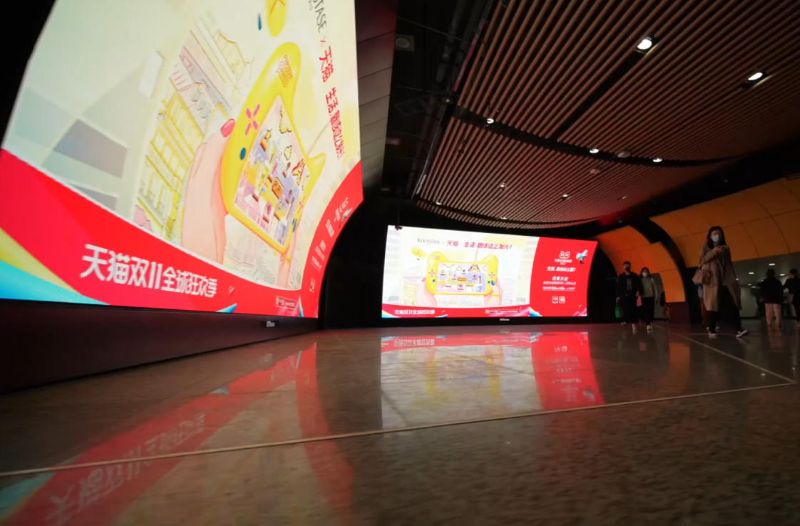
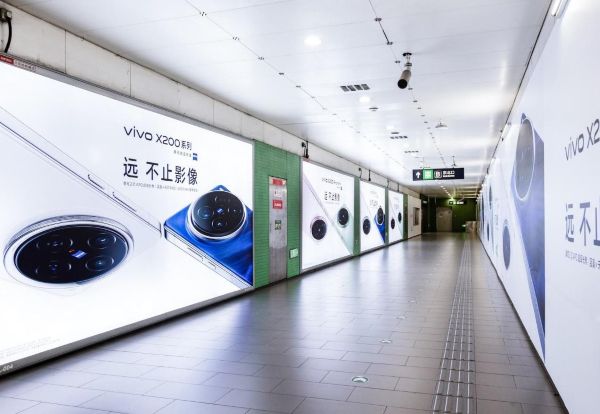
1. Brand Wall/Corridor: Creating Immersive First Impressions
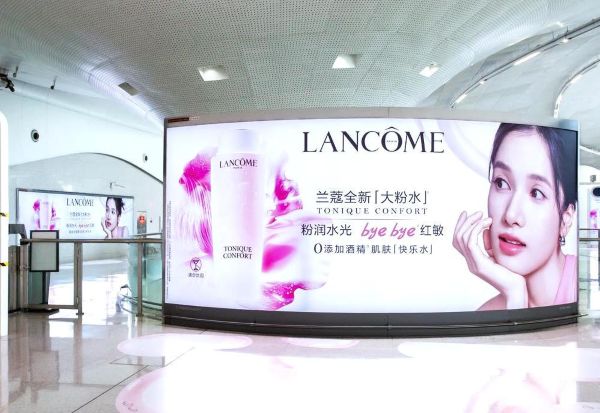
Located at large transfer stations or entrance/exit passages, with a huge area and extremely strong visual impact. It is not just an advertisement, but also an art installation and a check-in point. Suitable for major brand event releases, brand concept declarations, or creating seasonal themed landscapes. Require a high level of creative design and pursue viral dissemination effects.
2. In car media (posters, electronic screens, handles): Accompanying deep communication
Passengers stay in the carriage for an average of a long time and the environment is enclosed.
Car interior poster: located above the car door or opposite the seat, with a level line of sight, suitable for serialized storytelling, and suitable for products that need to convey multiple selling points.
In car electronic screen (PIS): dynamic video, combined with sound and image, with a large information carrying capacity. Suitable for product function demonstrations and narrative short films, but please note that the audio should not disturb the public.
Hand pulled advertisement: The closest distance to the passenger's line of sight (about 30 centimeters) is the absolute visual focus. Information must be extremely concise, one logo and one slogan are enough, suitable for brand logo reinforcement.
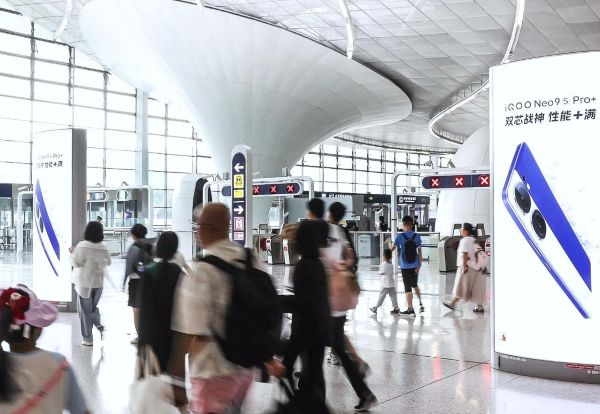
3. Station hall lightboxes and column stickers: repeated exposure in the core area
Distributed inside and outside the paid area of the station hall, it is a necessary passage for passengers to enter and exit the station and transfer. High exposure frequency and standardized and clean media environment. The continuous consolidation of brand core information (such as new products and core slogans) is the foundation for building brand awareness.
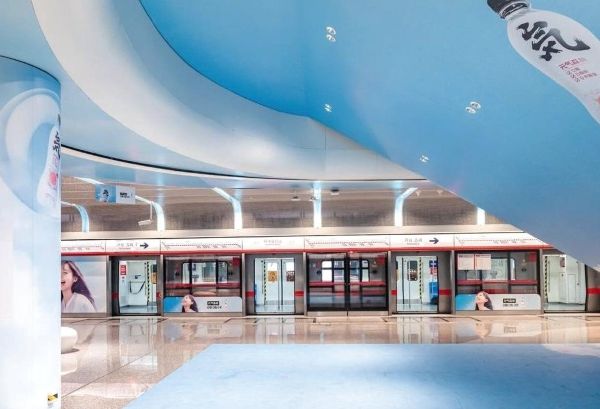
4. Creative pillars and 3D installations: interactive experiences that ignite topics
Transform ordinary pillars or corners into creative interactive installations. Based on the young and fashionable customer flow in Hangzhou, this type of media is highly likely to trigger photo sharing and achieve secondary social diffusion of advertising effects. Suitable for brands that dare to innovate and hope to play with young consumers.
Step 3: Creativity and Execution: Integrating Advertising into the Travel Journey
The creativity of subway advertising must respect the core scenario of "travel".
Creative core principles:
Flash memory: Most passengers are in a moving state. The main visual of the screen must catch the eye within 1 second, and the core copy can be read within 3 seconds. Use large fonts, high contrast, star or strong symbols.
Scene association: Creativity can be combined with subway travel purposes such as commuting, returning home, dating, and tourism. For example, breakfast product advertisements appearing on rush hour commuting routes are more likely to resonate and generate demand.
Route guidance: Fully utilize the geographical attributes of subway media. Advertisements can be combined with guidance information such as "get off at XX station" and "direct access to Line X" to directly convert advertising exposure into store foot traffic.
Delivery execution and effect optimization:
Release cycle and rhythm: Subway advertising requires a certain period to form cumulative cognition. Regular brand exposure is recommended for at least 4 weeks. Pulse based centralized advertising can be carried out in conjunction with marketing nodes such as the opening season and Double Eleven.
Media Combination Fist: The effectiveness of a single media form is limited. Recommend the combination mode of "brand wall explosion volume+continuous prompt of station hall lightboxes+deep communication of carriage posters" to form a three-dimensional reach network.
Effect tracking design: Set up exclusive subway discount codes, activity QR codes, or limited store activities during the advertising period. By monitoring the participation data of these channels, the conversion effect of advertisements on different routes or sites can be intuitively evaluated.
Step 4: Avoid common advertising misconceptions
When planning the advertising placement of Hangzhou Metro, the following cognitive traps need to be warned in advance:
Misconception 1: Only focusing on the "flow of people" theory, ignoring the nature of passenger flow. Blindly choosing the transfer station with the highest passenger flow may result in passengers passing by in a hurry and having no time to look closely, and the crowd structure is too complex to accurately reach the target customer group. The effect may not be as good as choosing an industrial park station or high-end residential area station with moderate passenger flow but highly consistent with your target image.
Misconception 2: Creativity speaks for itself, detached from the mobile environment. Using complex infographics that require stopping for half a minute to understand in the fast walking passages of people; In the noisy carriage, relying on long texts that require quiet reading. This is essentially a waste of media resources.
Misconception 3: Lack of global networked thinking. Focusing only on a few popular stations, ignoring the networked effect of the subway. Brand information needs to appear multiple times along the complete travel route of the target customer group (such as 3-4 stops from home to work) in order to form effective memory, rather than isolated exposure at a single point.
Professional Path: How to Efficiently Integrate Resources and Scientific Execution
Faced with the vast network and complex media resources of Hangzhou Metro, the brand's self docking efficiency is low. Collaborating with professional platforms is the key to improving efficiency.
Tianci Media is a professional subway advertising platform, whose core value lies in providing scientific and systematic solutions. Working with such professional partners means that you can:
Obtaining data-driven site selection suggestions: Based on historical passenger flow data, route characteristics, and crowd portrait models, the platform can recommend the most suitable route, station, and media combination solutions for your brand goals, rather than just providing a quotation.
Realize one-stop efficient management: from strategy formulation, resource locking, creative review, publication monitoring, to effectiveness reporting, the entire process is digitally managed, greatly reducing the execution complexity and communication costs of cross route and multi site advertising.
Winning innovative media opportunities: Professional platforms usually have priority access to scarce innovative media resources such as creative columns and themed trains, and can provide professional creative advice to help brands create phenomenal communication cases.
Conclusion
The advertising placement of Hangzhou Metro is a systematic project that embeds brand strategy into daily urban life. Its effectiveness does not depend on the absolute size of the budget, but on the precision of the strategy - whether to make the brand information appear at the key decision point on the target consumer's travel path.
From understanding the "urban function" of the subway network, to identifying the "scene psychology" of stations, to selecting and combining the most cohesive media forms, every step requires rational judgment based on data and insights. In this process, avoiding extensive thinking and focusing on "investment return" rather than "simple exposure" is the key to distinguishing professional investment from blind trial and error.
For brands that pursue deterministic growth and efficient reach, collaborating with professional platforms like Tianci Media is not only about purchasing media resources, but also introducing a validated, data-driven scientific advertising system. This ensures that your brand information is accurately, efficiently, and effectively conveyed to every target consumer in the underground network of Hangzhou, a vibrant city, driving synchronous growth in brand awareness and market performance.