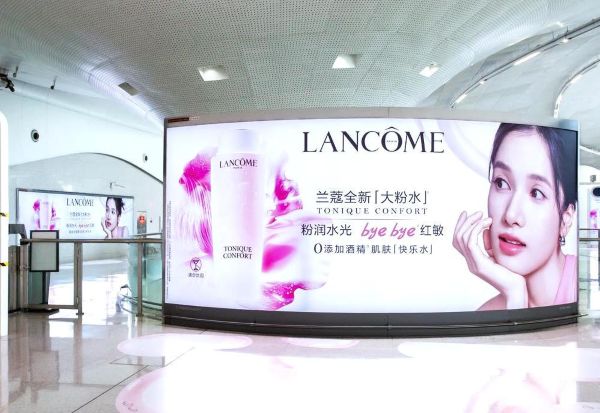
Beijing Dongzhimen Subway Advertisement: How to Play the Traffic Code at the Intersection of Three Lines?
2026-02-13Tianci MediaViews:125
Highlights
Beijing Dongzhimen Subway Advertisement: How to Play the Traffic Code at the Intersection of Three Lines?
Friend, have you ever squeezed through the subway in Beijing?
If you pass by Dongzhimen during rush hour in the morning and evening, you must be familiar with that scene - the transfer army of Line 2, the commuting flood of Line 13, and the passengers dragging their suitcases to catch the airport line, merging into a sea of people in the passage.
Hundreds of thousands of people pass through here every day, walking in the passage for a few minutes. The phone signal is intermittent, and the eyes don't know where to put them.
At this moment, guess what they're looking at?
That's right, the advertisement on the wall.
Beijing Dongzhimen subway advertisement has never been a cold and indifferent media term. It is a "golden spot" that countless brands are striving to seize, and it is also a place that many novice advertisers both aspire to and are uncertain about.
Today's article is like chatting with friends, discussing the Dongzhimen subway advertisement thoroughly.
Let me tell you directly: What resources are there here? How much does it cost to invest once? How effective is it? How do beginners get started?

Chapter 1: What is special about Dongzhimen Station?
First, let's clarify one question: With so many subway stations in Beijing, why is Dongzhimen?
Firstly, it is one of the few "three line transfer hubs" in Beijing.
Line 2 (Circle Line), Line 13 (connecting Huilongguan and Shangdi), and Capital Airport Line (a necessary route to the airport) intersect here.
What does this mean?
Line 2 brings commuters from all over the city
Line 13 brings Ma Nong and Internet people
The airport line brings business travelers and tourists
Three completely different groups of people interweave here every day. The traffic profile you want is available at Dongzhimen.
Secondly, its passenger flow is' rhythmic '.
During the morning rush hour, the farmers who got off Line 13 flocked to Line 2 to enter the city; During the evening rush hour, commuters who get off at Line 2 transfer to Line 13 to go home; All day long, passengers on the airport line drag boxes in and out.
This sense of rhythm allows for particularly precise advertising placement. Pushing coffee during the morning rush hour, home service during the evening rush hour, and promoting tourism travel around the clock - one station can serve three purposes.
Thirdly, its transfer channel is inherently a 'advertising corridor'.
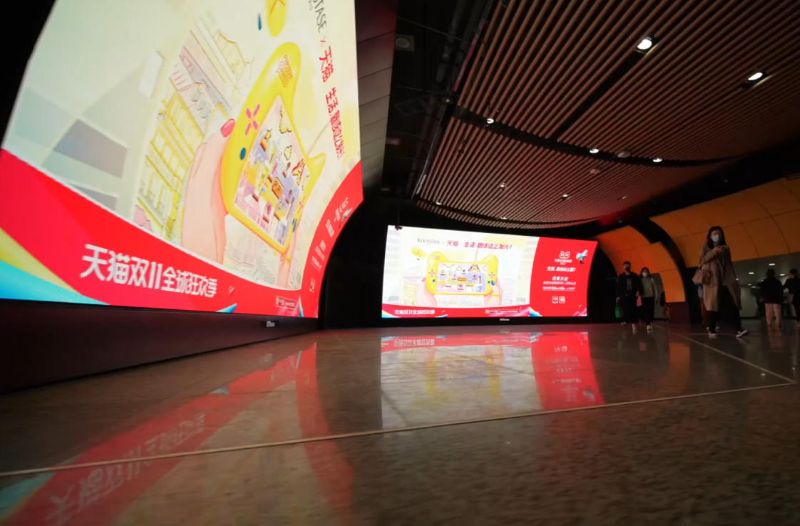
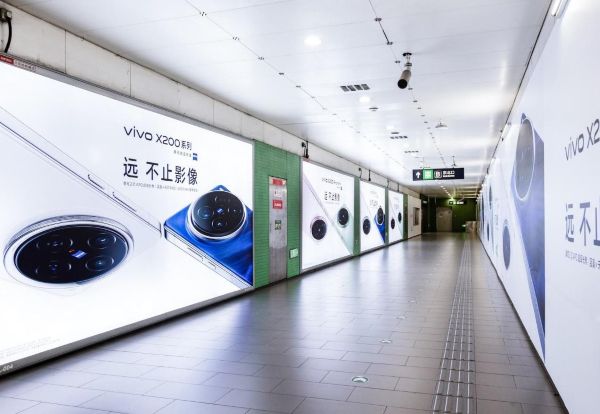
The long passage from Line 13 to Line 2 is lined with light boxes on both sides. It takes two or three minutes to walk, there are no forks, no windows, and the line of sight can only fall on the wall.
Isn't this a natural advertising gallery?
Not long ago, an advertising case at Dongzhimen Station on the Capital Airport Line just won the "Golden Bi Award" gold medal in China's outdoor advertising industry. How did they do it? A panoramic space was created in the transfer channel to immerse passengers in a natural tea scene. The panoramic top sticker, along with 3 large light boxes and 7 high-definition electronic screens, made passengers feel like they were walking into a forest.
This is the imagination of Dongzhimen - it's not just a station, it's a space that can be 'booked'.
Chapter 2: What resources are available for Dongzhimen subway advertising?
After discussing value, let's see what we can actually invest in.
According to the resource allocation of Beijing subway advertising, Dongzhimen Station is classified as an "S-level station" - the highest level station.
At this level of website, there are mainly several types of advertising resources:
2.1 Transfer Channel Lightbox
This is the core resource of Dongzhimen and also the most valuable point.
The location is on both sides of the long passage where Line 13 switches to Line 2. Passengers have to walk for two or three minutes, and their line of sight naturally falls on the wall. The lightbox area here is usually relatively large, and large lightboxes over 10 square meters are very common.
Suitable for: Brands that require deep communication. Two or three minutes is enough to tell your brand story clearly.
2.2 Station hall level large screen/light box
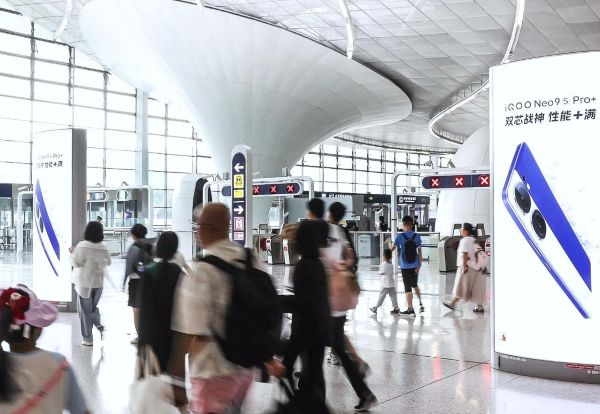
At the core locations of the station halls of Line 2 and Line 13, such as directly opposite the escalators and above the entrance and exit gates.
The advantage of these locations is visual coercion - passengers swipe their cards to enter the station, and the head up is your advertisement.
Suitable for: Brands that require quick exposure. New product launches and big promotions, let everyone see you first.
2.3 Square Column Stickers/Wrapping Columns
The pillars in the station hall are covered with advertising screens and displayed 360 degrees without dead corners.
The square pillar stickers at Dongzhimen Station can have a single-sided area of over 5 square meters, and a group of pillars can have multiple sides.
Who is suitable: Brands that want to play with creativity. Surrounded by four sides, it can create continuous visuals and interactive designs.
2.4 Exclusive Area for Airport Line
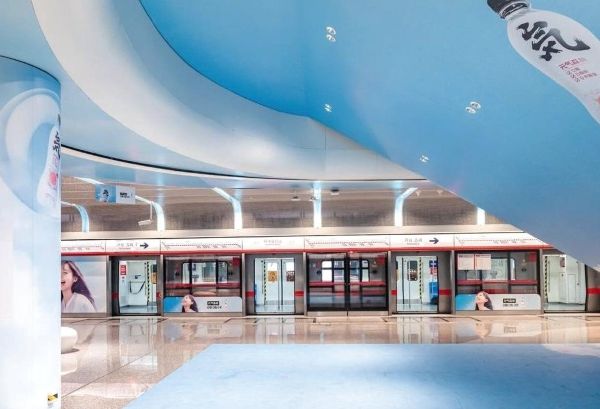
The waiting area and passage of the Capital Airport Line are mainly for business travelers with high spending power and relaxed mentality.
Suitable for: high-end hotels, airlines, tourist destinations, luxury goods.
2.5 Creative Immersive Space
This is the gameplay of winning the gold medal mentioned earlier - not just a screen or a lightbox, but wrapping up the entire channel to create a brand themed space.
Suitable for: Brands with sufficient budget and those who want to do big things. This kind of gameplay doesn't happen every day, but it's phenomenal as soon as you make a move.
Chapter 3: Real Case Talks -3.48 Million, What Did They Buy?
The theory may be a bit vague, let's take a look at a real case that happened.
In January 2026, the Cultural and Tourism Bureau of Chaoyang City, Liaoning Province made a decision to spend 3.485 million yuan on advertising in the Beijing subway.
They chose four stations, one of which is Dongzhimen.
Take a look at what they bought (this is publicly available information on government procurement, which can be directly referenced):
At Dongzhimen Transportation Hub Station:
Visual focal points in transfer passages and halls
No less than 5 light boxes, each with an area of no less than 10 square meters
6-sided square column stickers, with a single-sided area of no less than 5 square meters
The total media area shall not be less than 80 square meters
Placement duration: 6 months
Includes 2 free magazine changes (meaning you can change the screen twice)
Service requirements: Repair within 3 days of damage, submit monthly monitoring reports, and provide data reports every 2 months (covering number of people, exposure frequency, and changes in passenger flow)
This tells us a few pieces of information:
Firstly, Dongzhimen's "combination advertising" is the mainstream gameplay. It's not just buying a single screen, but attaching a lightbox and square pillar together to form a visual enclosure.
Secondly, there is service guarantee for long-term deployment. 6 months, 2 painting changes, regular data reports - these are all written in the contract.
Thirdly, the transparency requirements for government procurement levels can serve as a reference standard for ordinary enterprises. We should also demand conditions that the government can accept.
Chapter 4: The most concerned question for beginners - how much does it cost?
This question is the most difficult to answer, but it must also be answered.
To be honest, there is no "uniform price" for advertising on the Beijing subway, and S-level stations like Dongzhimen offer one price per station and one price per person.
But we can give you a rough "scale concept" based on industry public information:
A single standard light box (about 12 boxes): At ordinary sites, it may cost tens of thousands of yuan per month. At core sites like Dongzhimen, monthly fees in the six digit range are normal.
A combination of advertising: like the case above, 80 square meters+6 months+including services, with a total package price of over 3 million yuan, which is within a reasonable range in the industry.
Short term trial: Some digital screens can be purchased on a weekly basis, but popular spots in Dongzhimen usually require advance booking, making it difficult to find them on the spot.
The main factors affecting prices are:
Location level: S-level sites are definitely more expensive than A-level sites
Specific location: The opposite side of the escalator is more expensive than the corner
Area size: A 10 square meter lightbox is more expensive than a 5 square meter one
Placement cycle: Signing a yearly contract is more cost-effective than buying on a monthly basis
Off peak season: Prices will rise before and after May Day, National Day, and Spring Festival
Advice for beginners: Don't come up and ask 'How much does Dongzhimen advertisement cost?' This question is too broad. A better way to ask is: "I want to invest in the lightbox of Dongzhimen transfer passage for 2 yuan, 3 months. What budget range is it?" - This way, the other party can give you a reliable answer.
Chapter 5: Three Steps for Novice Placement, Follow without Stepping into Pitfalls
Step 1: Think clearly about what you want
First, ask yourself three questions:
Who is your target audience?
If you are a commuting white-collar worker, focus on the transfer channel
If you are a business traveler, consider the airport line area
If you want everything, you need to do combination advertising
What goal do you want to achieve?
New product launch requires loud volume → Large screen in the station hall
Deep communication requires storytelling → Corridor corridor
Brand image should be high-end → Creative space
What is your budget?
Hundreds of thousands of budget → Consider single lightbox or short-term placement
Millions of budget → can create combination plans
Millions of budget → can play immersive games
Step 2: Find the Right Person
Beijing subway advertising resources are not directly open to individual travelers and require authorization from advertising agencies.
When looking for an agency, you can ask these questions:
Do you have lightbox resources for the Dongzhimen transfer passage
Can you take a look at the bitmap? Where exactly is it located
Does the quotation include production and installation? How much is the fee for changing the artwork
Can you provide monitoring photos and data reports
A reliable partner is more important than cheap prices.
Tianci Media has abundant resources in the field of subway advertising in North China. If you are interested in advertising at Dongzhimen or other Beijing subway stations, you can chat with their friends. They will not only tell you how much it is, but also help you analyze whether it is worth it.
Step 3: Calculate the hidden costs clearly
Many beginners only focus on "media publishing fees" and ignore other costs:
Production costs: lightbox film, printing, installation, which need to be budgeted separately
Replacement fee: If you invest in a long cycle, you will need to spend extra money to change the image in the middle
Maintenance fee: Who is responsible for repairing damages? How long does it take to respond? It's better to include it in the contract
Monitoring fee: Some companies offer free monitoring, while others charge a fee
According to the standards of government procurement, they require "including the full cost of the first publication and two replacements during the release period", "repair within 3 days of damage", and "monthly submission of monitoring reports" - all of which can be used as references for negotiations between you and the agency company.
Finally, Dongzhimen is worth your serious consideration
To be honest, there are so many subway stations in Beijing that not every one is worth writing a dedicated article about.
But Dongzhimen is different.
It is the intersection of Line 2, Line 13, and Airport Line, and a "city node" that hundreds of thousands of people pass through every day.
Its transfer channel is naturally an advertising corridor, and its customer base structure allows for extremely precise advertising placement.
It has creative cases that have won national gold awards, as well as transparent data at the government procurement level.
For beginners who are advertising for the Beijing subway for the first time, Dongzhimen may not be the cheapest option, but it is definitely one of the most "error free" options.
Because here, your advertisement is not just "seen", but also "well seen" - during those two to three minutes of transfer time, when the phone signal is poor and there is nothing else to do, your eyes will naturally fall on your screen.
If you are considering giving your brand a chance to debut in Beijing, you may want to put Dongzhimen on the list of candidates.
Find a reliable partner to chat with, look at the bitmap, calculate the budget, even if you don't invest in the end, this process itself can help you quickly understand the tricks of Beijing subway advertising.
After all, some stations are for travelers, while others are for destinations.
Dongzhimen belongs to the latter.