How much does subway advertising cost per month? Cost comparison of different media forms (lightboxes/columns/wall stickers)
2026-02-02Tianci MediaViews:204
Highlights
Do you want to know approximately how much subway advertising costs? This article provides you with a detailed cost analysis of subway advertising (columns, channel wall stickers, light boxes) in 2026, analyzing the 5 core factors that affect prices and providing practical budget planning suggestions. Tianci Media is a professional subway advertising placement company that can customize high cost-effective solutions for you. Get a quote reference now!
I want to advertise on the subway, but how much does it cost? "- This is the first question asked by almost all brand owners and marketers who are new to subway media. However, there is no unified price tag for this question, just like asking "how much does a car cost", answers ranging from tens of thousands to millions may hold true.
The cost of subway advertising is a complex function determined by multiple variables such as city, station, media format, location size, and advertising period. A lightbox on a platform in a fourth tier city may cost hundreds of times more than a full channel wall sticker at Beijing Guomao Station. This article will thoroughly break down the cost structure of subway advertising, transforming you from a "novice" to a "knowledgeable person" who can understand quotes and plan budgets.

Chapter 1: Why do subway advertisements not have a fixed price? ——Understand the underlying logic of prices
The subway is a large and sophisticated system, and its advertising value is determined by the following core dimensions, which directly lead to significant price differences:
City level and passenger flow (basic variables): The core route stations in first tier cities (North, Shanghai, Guangzhou, Shenzhen) have an average daily passenger flow of hundreds of thousands or even millions of people, and their advertising space value is much higher than that of second - and third tier cities. Customer traffic is the cornerstone of pricing.
Site attributes (value amplifier): Even within the same city, the value of different sites varies greatly. The advertising prices of core commercial district stations, transportation hub transfer stations, and tourist attraction stations are usually several times or even dozens of times higher than those of ordinary residential area stations. For example, Beijing Xidan Station, Shanghai People's Square Station, Guangzhou Sports West Road Station, etc. are all considered "golden spots".
Media form (cost carrier): There are various forms of advertising in the subway, with different technical complexity and space occupation, resulting in vastly different cost structures.
Placement cycle (time leverage): usually priced in "weeks" or "months". The longer the advertising time, the lower the daily average cost may be, but the higher the total budget.
Chapter 2: Breakdown of Cost Composition - Where Did Your Money Actually Spend It?
To understand the total cost, it is necessary to break down its components. The cost of a complete subway advertising campaign mainly covers the following three major areas:
1. Media release fee (core cost, highest proportion)
This is the cost of renting advertising space from the subway media operation company. Usually quoted based on "point/cycle". Here are the approximate cost ranges for several mainstream media formats (taking core sites in first tier cities in China as an example):
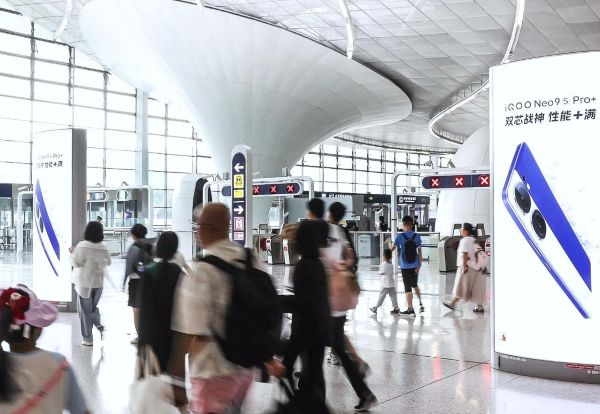
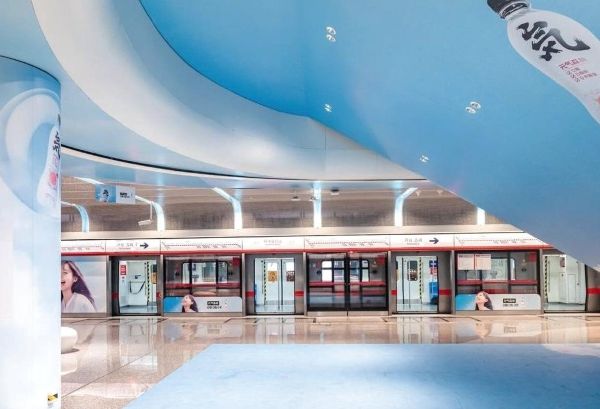
Twelve lightboxes/ladder signs: located on both sides of the platform and passage, standard size. The monthly fee for a single location is approximately between 8000-30000 yuan. There will be discounts for non core sites or bundled purchases.
Column advertising: Packaging the columns in the subway station as a whole. Strong visual impact. The monthly fee for a single column is about 20000-80000 yuan or even higher, depending on the size and location of the column.
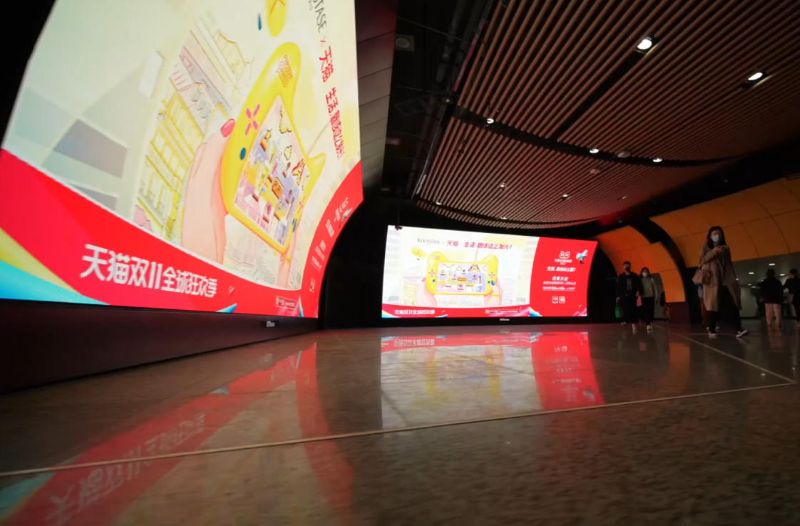
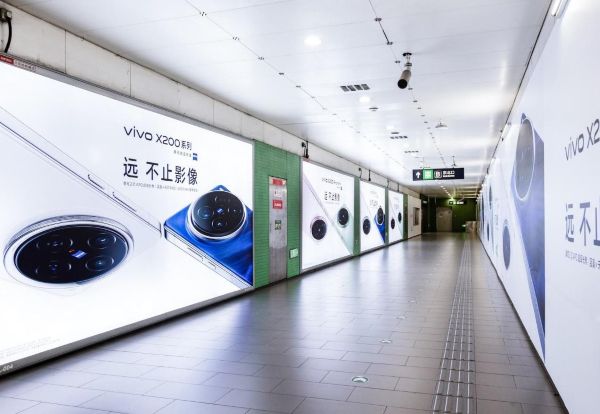
Channel wall stickers/corridors: Package the entire channel wall as a whole advertisement to create an immersive experience. This is the preferred form of high-end brands. The monthly fee for a single channel can reach tens of thousands to millions of yuan, making it a luxury item in subway advertising.
Brand train/theme station: Contract the decoration of the entire train or station to create a phenomenal event. The cost is usually in the millions for annual projects.
Please note: The above is a rough market range, and the actual price needs to be determined based on specific cities, sites, and negotiation situations. For example, by collaborating with service providers such as Tianci Media, a professional subway advertising placement company, they can often negotiate better packaging prices or scarce spots for clients based on their media resources and project experience.
2. Advertising screen production and installation fees (one-time hard cost)
This part is the physical manufacturing cost of advertising materials.
Production cost: Depending on the screen size, materials used (high-definition printing, car stickers, UV printing, etc.), and process complexity. The production cost of a large wall sticker or column may range from several thousand to tens of thousands of yuan.
Installation fee: Subway construction is usually carried out after the shutdown at night (early morning), with high labor costs and the need to comply with strict security and construction standards. The installation fee usually ranges from several thousand to tens of thousands of yuan depending on the difficulty of the project.
3. Other possible expenses
Design fee: If the advertising company provides creative design services, they may be charged separately.
Monitoring and maintenance fees: Some contracts may include service fees for regular inspections, image cleaning, and replacement of damages.
Taxes: Value added tax and other taxes that need to be paid.
Chapter 3: Five Step Method - Accurately Estimate Your Subway Advertising Budget
Instead of blindly asking 'approximately how much', it's better to follow these steps to calculate your own precise budget range:
Step 1: Clarify marketing objectives
Do you want to enhance brand image, promote specific products, or guide offline activities? The goal determines how much exposure and what kind of scenes you need.
Step 2: Define the target area and population
Which city are your customers concentrated in? Which subway lines and stations can most accurately cover them? Should we cover the mainstream routes throughout the city, or concentrate our firepower on attacking a few core commercial districts and stations? The more precise the scope, the clearer the budget planning.
Step 3: Select the matching media combination
Combine different media formats based on the target audience. For example:
Cost effective choice: Choose multiple platform lightboxes on 2-3 mainstream routes for extensive coverage.
Precision Strike Selection: Create a stunning effect by combining pillars and channel wall stickers at 1-2 core stations where the target customers are concentrated.
The option to trigger the event: contract a branded train that passes through the core area.
Step 4: Determine the advertising cycle
Brand building requires time for sedimentation, and it is usually recommended to take at least 1-3 months. Short term promotional activities can be held for 2-4 weeks. The longer the cycle, the higher the total cost, but it may result in longer lasting discounts.
Step 5: Obtain professional quotations and compare them
Submit your preliminary plan (target city, intended site, media format, cycle) to professional service providers like Tianci Media. They will provide a preliminary plan based on your needs, including detailed locations, prices, and estimated effects. Remember, it is important to obtain proposals from 2-3 companies for comprehensive comparison, not only in terms of price, but also in terms of the quality of the location and the professionalism of the service.
Chapter 4: Key Insights and Cost Misconceptions to Avoid Pitfalls
Misconception 1: Only focus on unit price and ignore the quality of the location.
Truth: A lightbox located in a transfer passage may cost twice as much as a regular platform lightbox, but its daily exposure may be five times that of the latter. Calculating the 'cost per thousand people' is more important than just looking at the unit price.
Misconception 2: Believing that a small budget cannot be used for subway advertising.
Strategy: Absolutely possible! For example, in non core sites in second tier cities, selecting a single lightbox for one month may result in a total budget controlled within 10000 to 30000 yuan. The key is to reduce dimensions and match accurately.
Misconception 3: Vague pricing and hidden later costs.
Countermeasure: Require service providers to provide a "full package price" or clearly list all details such as media fees, production fees, installation fees, taxes, etc., to avoid unexpected expenses in the future.
Misconception 4: Blindly pursuing "big and comprehensive" leads to budget dispersion and failure.
Suggestion: "Concentrate superior forces to engage in a war of annihilation. It is better to distribute the 500000 budget to 20 ordinary sites than to concentrate on high-quality media on 3-5 core sites, which will have a much stronger impact and memory.
Conclusion
Returning to the original question: How much does subway advertising cost? The answer is - it is a customized product that varies in terms of cost and effectiveness depending on the individual. From a basic exposure of tens of thousands of yuan per month to a brand feast of millions of yuan per station, subway advertising provides a rich selection for brands with different budgets and goals.
For beginners, the wisest approach is not to get bogged down in a vague number, but to first clarify one's own goals and then use professional expertise to plan. A professional subway advertising placement company like Tianci Media's value lies not only in providing media resources, but also in being able to tailor the most cost-effective and effective integrated placement plan for you based on your budget, helping you avoid cost traps and spend every penny wisely.
Now, you can plan with a clearer mindset: how much budget do you plan to use, in which city, and how many people will be affected? Think about these clearly, and the answer about the cost will naturally surface.