How to advertise with limited budget? Unveiling the 5 irreplaceable advantages of subway advertising!
2025-12-24Tianci MediaViews:249
Highlights
In-depth analysis of the advantages of subway advertising: compulsory reach in a closed environment, high-quality and stable customer base, diverse forms with ample creative space, high cost-effectiveness, and assistance in brand upgrading. This article takes Beijing subway as an example, providing a complete guide from strategy to execution to help advertisers make informed decisions. Get your subway advertising solution now!
一、 Introduction: Advertising Channel Entering the Pulse of the City
When the economy and vitality of a city are surging underground, the subway is not only a means of transportation, but also a huge and mobile consumption magnetic field. Every day, millions of commuters, business people, and tourists flock into this relatively enclosed space, with an average stay time of over 30 minutes from entry to exit. Their attention, released from the gaps between swiping their phones, inevitably meets the surrounding advertising environment.
For brands, this constitutes a unique golden marketing scenario. But many newcomers may ask: What are the advantages of investing in subway advertising compared to other media? Can it really bring considerable returns? This article will systematically break down the core value of subway advertising and provide you with a clear decision-making map based on the massive scale of Beijing Metro.

二、 In depth analysis of core advantages: not limited to "high foot traffic"
The value of subway advertising is far from being simply summarized as "having many people". Its advantage is a three-dimensional value matrix, mainly reflected in the following five dimensions:
(1) Mandatory high-frequency contact in a closed environment
This is the fundamental advantage of subway advertising. After entering the subway system, passengers are in a relatively undisturbed "tunnel environment". The mobile phone signal may be unstable, causing attention to be pulled back and forth from the line. The advertising information on both sides of the channel and inside the carriage is almost unavoidable, forming a continuous and mandatory exposure lasting for dozens of minutes. This kind of deep contact is incomparable to online advertising or noisy outdoor advertising on the ground.
(2) Stable and high-quality customer base structure
The subway, especially a network developed system like the Beijing subway, precisely gathers the most valuable groups of people in the city: office workers, business people, students, and tourists. They have stable travel patterns, high levels of education, and purchasing power. Advertisers can achieve precise targeting of their target audience by selecting specific routes (such as Line 1 and Line 10 passing through the business district) or stations (such as Guomao and Xidan).
(3) Rich and diverse advertising forms and creative carrying space
The subway is a three-dimensional space that provides a broad stage for advertising creativity, not as simple as a flat lightbox:
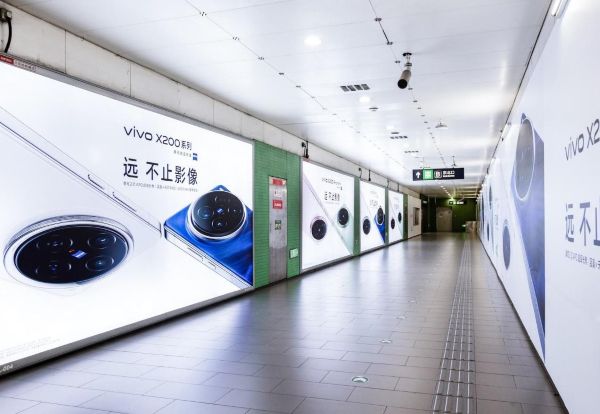
Brand channel/corridor: Theme package the entire channel to create an immersive experience.
Train carriage package: Create a mobile brand themed carriage with strong visual impact.
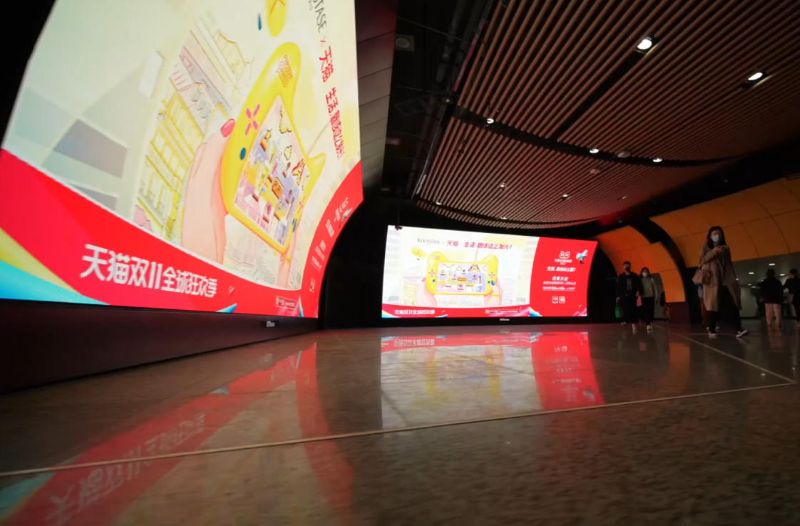
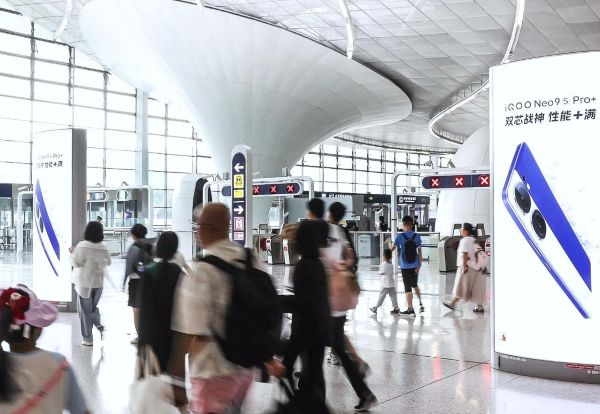
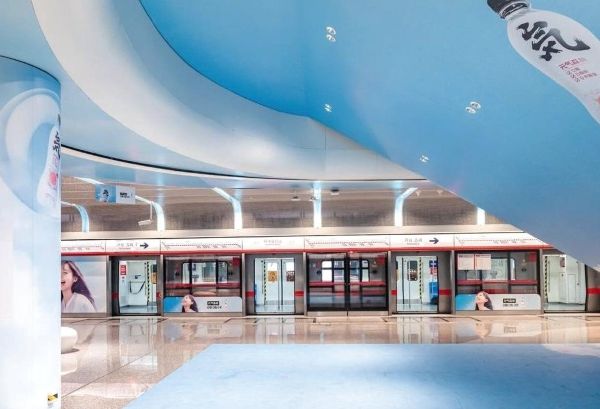
Station hall wall stickers and column stickers: Use large areas of walls to tell the brand story.
Digital screen: dynamic video, interactive screen, flexible content updates.
Creative 3D installation: Breaking through flat surfaces and creating fun interactions with passengers.
This diversity allows brands to choose the best combination based on their marketing goals (whether it's hype, traffic, or deep communication).
(4) High cost-effectiveness and long-term influence
From the perspective of CPM (cost per thousand impressions), subway advertising often outperforms many traditional TV and high-end building media. Once published, it will continue to be exposed for 28-30 days, covering hundreds of thousands or even millions of people every day. This sustained and stable exposure has long-term value in establishing brand awareness and consolidating market position, and is a high-quality carrier that combines quality and efficiency.
(5) Powerful brand endorsement and scene association
Being able to occupy a place in the core city's rail transit system itself conveys the brand's strength and market position to the public. At the same time, the subway scene is strongly related to concepts such as "commuting", "life", and "urban vitality", and is suitable for scenario marketing in many industries such as FMCG, Internet, finance, automobile, and cultural tourism.
三、How to plan an effective subway advertising campaign? (Four step method)
How to translate advantages into practical results after understanding them? Please follow the following steps:
Step 1: Clarify the target and locked area
Firstly, ask yourself: Is this launch aimed at creating a buzz for new product launches, guiding offline stores, or enhancing brand awareness in specific regions? Goals determine strategies. For example, if it is to attract traffic to Sanlitun stores, it should be concentrated on Line 10 (Tuanjiehu Station) and related transfer stations.
Step 2: Refine media mix strategy
Collaborate with professional media agents to conduct precise planning based on objectives:
Route selection: Study the passenger flow composition of each route (office, residential, commercial, transportation hub).
Site selection: Determine the core station or transfer station where the target audience gathers (such as Xidan, Guomao, Xizhimen in Beijing).
Form selection: Based on budget and creativity, decide whether to focus on a stunning brand wall, a wider lightbox network, or dynamic dissemination combined with digital screens.
Step 3: Scene based Creative Design
Creativity must be tailored for the 'subway scene':
Quick identification: Passengers are mostly in motion, and the main visual and text must be captured within 3 seconds.
Scene resonance: Creativity can be combined with the emotions of subway scenes such as "rush hour", "commuting", and "weekend travel".
Drive action: Clearly inform "where to buy", "what code to scan", "what topic to search for", and convert offline attention into online action.
Step 4: Execution, monitoring, and effectiveness evaluation
After signing the contract and completing the publication, on-site monitoring must be carried out to ensure the quality of the delivery. The evaluation of effectiveness should not only focus on "foot traffic", but should be measured in conjunction with comprehensive indicators such as changes in brand search index, social media check-in volume, in store customer flow/scan code conversion, etc.

四、 Common cognitive misconceptions and pitfalls avoidance guidelines
Misconception 1: Blindly pursuing sites with the highest foot traffic
The transfer stations (such as Xizhimen and Dongzhimen in Beijing) have a huge passenger flow, but passengers travel in a hurry and stay for a very short time. The advertising memory may not be as accurate as some commercial or community stations that cater to specific customer groups.
Misconception 2: Creative information overload, designing as posters
In noisy passing environments, the more complex the information, the faster it becomes ineffective. Adhere to the principle of "one image, one theme, one call to action".
Misconception 3: Short term advertising expecting miracles
Subway advertising is a medium for establishing sustained cognition, and single or short cycle (such as two weeks) placement is difficult to form effective memory. It is recommended to use at least a monthly unit or conduct centralized delivery in a pulsed and multi wave manner.
Misconception 4: Neglecting the integration and linkage between online and offline
Subway advertising should be the tipping point for integrated marketing. It is necessary to guide the massive offline exposure to the online private domain through online social media topics, KOL check-in, QR code interaction, and other methods, forming a closed loop.
Misconception 5: Choosing suppliers solely based on quotes
The management of subway media resources is strict, and it is necessary to choose a first level agent directly authorized by the subway company to ensure the authenticity, exclusivity, and professionalism of the resources and subsequent services.
五、 Conclusion: Implanting the brand into the underground hub of the city
In summary, the advantage of subway advertising lies in its excellent combination of brand dissemination depth, audience accuracy, form breadth, and cost-effectiveness. It is not an outdated traditional media, but a rare scene in the era of fragmented attention that can provide brands with "deterministic exposure" and "immersive communication".
For enterprises aimed at increasing urban market share and strengthening their mainstream brand image, subway advertising is not an option, but a strategic necessity.
Your action roadmap:
Requirement diagnosis: Internally clarify the core objectives and budget scope of this subway advertising campaign.
Data Insight: Contact us for free access to the "Key City Subway Line Customer Analysis Report" and the latest media resource manual.
Get customized plan: Submit your preliminary idea, and we will provide you with a "Subway Advertising Integration and Placement Strategy Plan" that includes competitor analysis, location selection, creative suggestions, and precise budget.
Now is the time for your brand strategy to enter the fast lane of urban development.