The advantages of subway advertising: shaping the deep logic of brand in urban arteries
2026-01-09Tianci MediaViews:164
Highlights
In depth analysis of the advantages of subway advertising: large and precise passenger flow, closed and immersive communication environment, diverse media forms, and high cost-effectiveness. Learn how to maximize marketing value through professional services such as Tianci Media's subway advertising placement. Avoid common misconceptions and immediately obtain authoritative advertising strategies.
Among numerous outdoor advertising media, subway advertising has always held an unshakable strategic position. It is not just a "poster on the wall", but also a super scene for a brand to engage in deep, high-frequency, and immersive communication with millions of urban mainstream people. When marketers evaluate a medium, they often ask: What are its core advantages? For subway advertising, its advantage is a systematic combination of punches, far more than just "high foot traffic".
This article will analyze layer by layer and reveal why subway advertising can become a golden channel for brands to capture urban minds and achieve product efficiency synergy.
Advantage 1: Unparalleled massive and high-quality passenger flow foundation
This is the most intuitive and fundamental advantage of subway advertising.
Massive absolute passenger flow: The daily average passenger flow of subways in first tier and new first tier cities is often in the millions or even tens of millions. This means that your advertisement has the opportunity to meet a massive audience every day, which is the foundation for achieving widespread coverage.
Stable commuting population: Subway passengers are mainly composed of commuters, business people, students, etc. They are the most active, influential, and decision-making core group in the city. They take the subway regularly every day, forming a stable and predictable exposure pattern.
Wide customer base coverage: The subway network connects every corner of the city, reaching citizens of different consumption levels and interest circles simultaneously, making it suitable for brands that need to establish public awareness.
Advantage 2: Closed immersive mandatory communication environment
This is the psychological advantage that distinguishes subway advertising from many outdoor media.
High attention during "boring time": When driving in tunnels and without mobile phone signals (or with unstable signals), passengers are in an "information vacuum" state. Advertisements inside the train carriage or station hall have almost become the visual focus, with a very high rate of active reading.
Deep reach throughout the journey: Passengers stay for an average of over 20 minutes from entering, waiting, boarding to exiting the station. Brand information can be repeated multiple times and from multiple angles through different media (such as channel wall stickers, station hall lightboxes, and car interior posters) during this journey, completing a deep infusion from cognition to memory.
Relatively quiet environment: Compared to noisy streets, the environment inside subway stations (non-commercial core areas) is relatively orderly, reducing information interference and facilitating clearer communication of advertising information.
Advantage 3: Rich and diverse media forms and creative space
The subway is not a single medium, but a composite matrix of media. This is particularly evident when collaborating with professional organizations such as Tianci Media for subway advertising placement.
Brand image media:
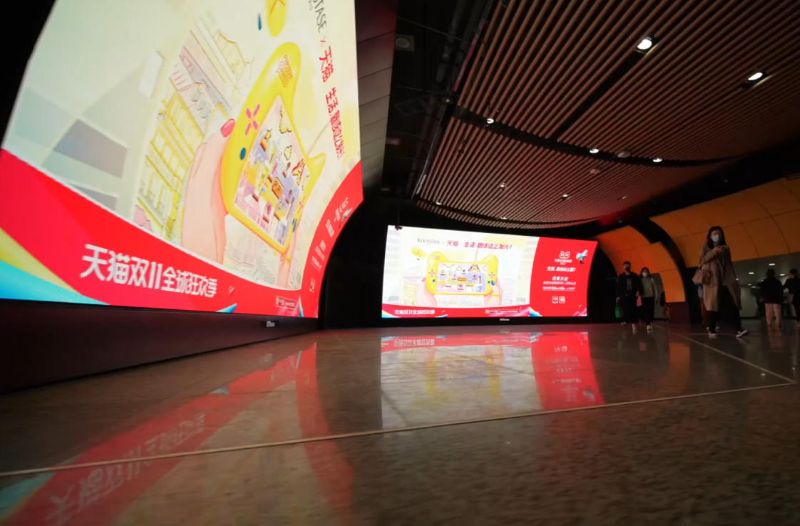
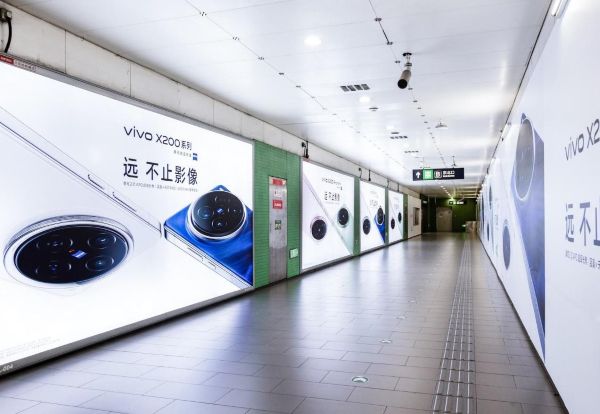
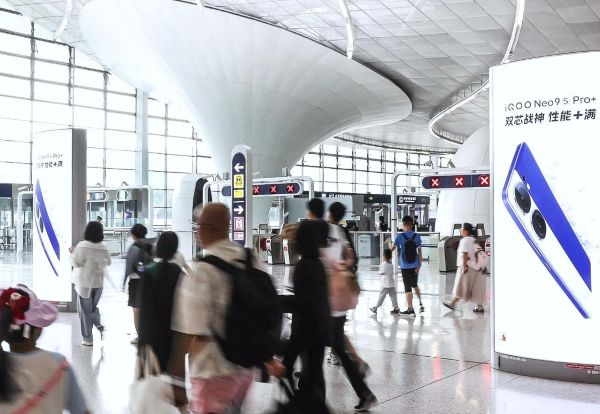
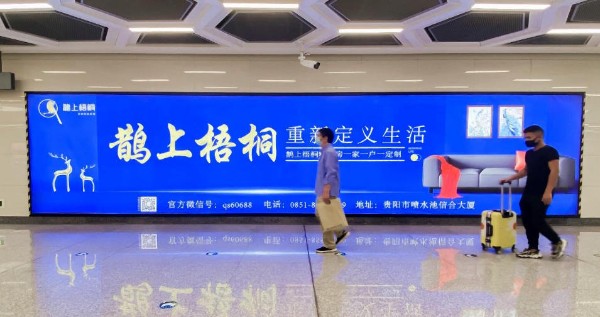
Giant wall stickers and light boxes in the station hall/passage: With a huge area and strong visual impact, they are suitable for creating a high-end brand image and launching important campaigns.
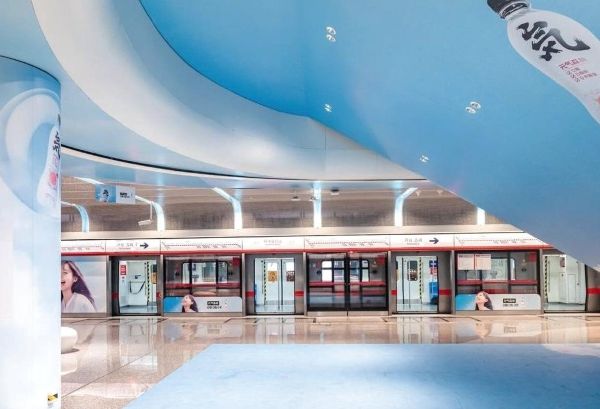
Column packaging/column advertising: Packaging the columns inside the station as a whole to create a three-dimensional display effect, with a large creative space and deep memory points.
Effect conversion media:
Posters/boards inside the carriage: facing passengers directly and up close, with a long exposure time, suitable for communicating product selling points and promotional information.
Door stickers/window stickers: The dynamic effect of opening and closing doors can attract extra attention.
Digital and experiential media:
Digital lightbox/LED large screen: capable of dynamic video playback, with real-time content updates and a strong sense of technology.
Theme station hall/brand train: creatively package the entire station hall or train in a fully enclosed manner to create an immersive brand experience, which can trigger social communication and form event marketing.
Advantage 4: Accurate scenario based marketing and regional deep cultivation ability
Subway advertising can achieve targeted advertising.
Business district scenario marketing: Placing ads on stations and routes leading to core business districts (such as CBD and large shopping centers) can directly influence consumers' shopping decisions and attract offline traffic.
Penetration of community life circle: Placed at concentrated sites in large residential areas, it can continue to influence household consumption decision-makers and is suitable for localized service brands such as home decoration, education, and automobiles.
Commuting route coverage: Targeting specific commuting routes from industrial parks to residential areas, it can accurately reach specific groups of people in a certain industry.
Advantage 5: High cost-effectiveness and measurable investment return
From the perspective of marketing investment, subway advertising has a good cost-effectiveness.
Relatively low cost per thousand (CPM): Considering the size and quality of its target audience, the CPM of subway advertising is usually much lower than many traditional TV advertisements and high-end digital advertisements, making it an economically efficient way of mass communication.
The exposure effect can be preliminarily estimated: based on publicly available line passenger flow data, the potential exposure of advertisements can be estimated relatively scientifically, making budget planning more based.
Brand safety and credibility: As an important public infrastructure in cities, the media environment of subways has natural authority and credibility, which can provide strong endorsement for brands.
Common Misconceptions and Reminders: How to Truly Utilize Advantages?
After recognizing the advantages, it is also necessary to avoid execution traps:
Misconception 1: Invest wherever you have a position and ignore media combinations. Randomly selecting a few scattered points cannot form a cohesive force for dissemination. The correct approach is to work together with professional service providers (such as Tianci Media) to develop strategies and create a complete communication journey through the combination of "station hall detonation+channel continuation+carriage deepening".
Misconception 2: Designing blindly online leads to information overload. The subway is a fast-moving public place where passengers have limited time to stay. Correct approach: The advertising screen must be concise, the core information (brand, slogan, product) must be clear and distinguishable within 3 seconds, the font should be large, and the QR code should be eye-catching.
Misconception 3: Lack of effect tracking thinking. It is believed that outdoor advertising cannot track its effectiveness. Correct approach: Use exclusive QR codes, discount codes, landing page links, or call for social interaction (such as check-in topics) to convert offline exposure into measurable online behavior.
Misconception 4: One time delivery lacks sustainability. Brand building requires repetition and accumulation. Correct approach: Develop a sustained advertising plan for at least one quarter, or conduct multiple waves of concentrated advertising within a year to consolidate brand memory.

Conclusion
In summary, the advantage of subway advertising is a powerful system composed of "massive high-quality traffic", "immersive communication scenes", "diversified creative carriers", "precise scene links", and "high cost-effectiveness investment". It is not only a rental of advertising space, but also a strategic occupation of core urban living scenes.
For enterprises that hope to enhance urban influence, establish a solid brand awareness, or deeply cultivate regional markets, subway advertising is not an optional option, but a necessary one.