Beijing Subway Station Advertising Budget Guide: How to Calculate and Optimize Advertising Costs
2025-12-19Tianci MediaViews:308
Highlights
Are you curious about the true composition of advertising expenses in Beijing subway stations? This article delves into the advertising pricing system of Beijing subway, the five major factors influencing expenses, and the reference price range for different media. Additionally, it offers a three-step budget planning method. Get a professional quotation guide to optimize your outdoor advertising budget.
When planning to launch a marketing campaign in the super metropolis of Beijing, subway advertising is an option that cannot be ignored. With an average daily passenger flow in the tens of millions, a closed communication environment, and precise audience coverage, it has become a golden channel for brand exposure. However, when faced with the core issue of "Beijing subway station advertising costs," many newcomers to the market often feel confused: why is there such a huge price difference ranging from tens of thousands to tens of millions? Where exactly does this budget go? This article will thoroughly break down the cost structure of Beijing subway advertising for you, so that every cent of your budget is spent clearly and transparently.
一、Beijing subway advertising fees are not just "one price": core constituent elements
Firstly, it must be understood that subway advertising expenses constitute a complex system, rather than a single figure. They primarily consist of the following four levels:
1. Media format: the basis for determining costs
This is the largest cost variable. Beijing subway advertisements are mainly divided into the following categories, with prices roughly arranged from high to low:
Brand-themed trains/station concourses: The highest level of cooperation, such as contracting the creative packaging of an entire train or the entire station concourse. The cost is usually in the millions to tens of millions, belonging to brand event marketing.
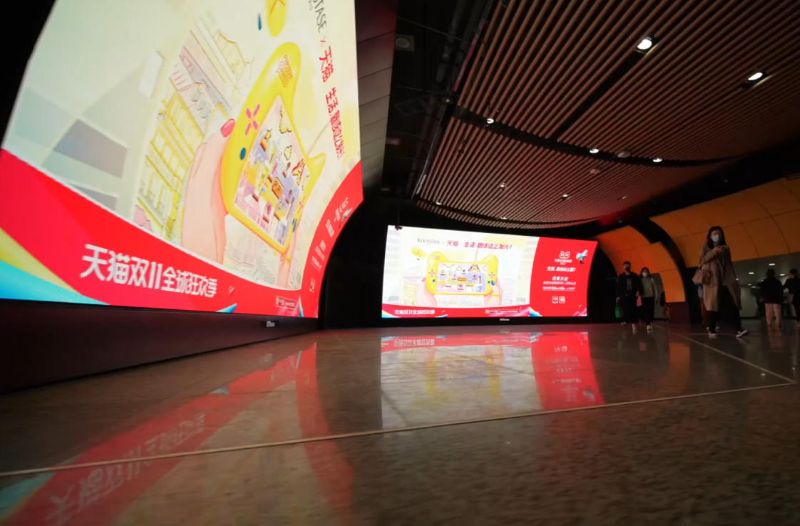
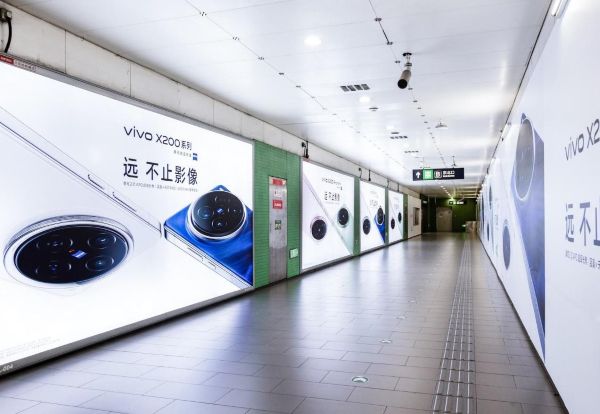
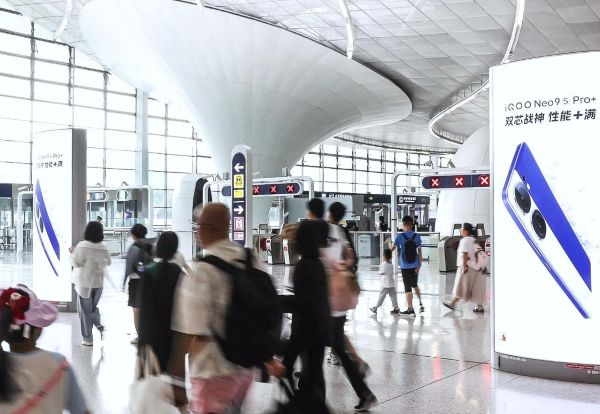
Large wall stickers/light boxes in passageways: Located on both sides of transfer passageways and entrance/exit passageways, they boast a large area and strong visual impact, and are inevitably passed by people. They are core media commonly used by high-end brands, with monthly fees ranging from hundreds of thousands to millions.
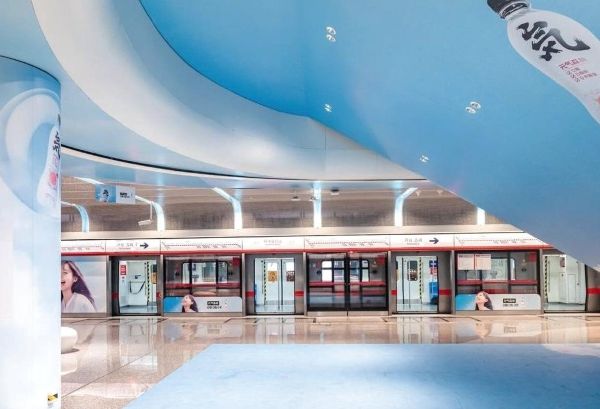
Platform light boxes (12-pack/24-pack): Located in the waiting area of the platform, parallel to the line of sight of passengers waiting for the bus, with a long contact time. Depending on the passenger flow and location of the station (whether it is front-facing or not), the monthly fee ranges from tens of thousands to hundreds of thousands.
Advertisements inside the train (signboards, handles, door stickers): They achieve high-frequency and close-range exposure within the train. The price is relatively affordable, with monthly costs for a single train and a single form starting from tens of thousands of yuan.
Escalator side wall/corridor posters: They are exposed as passengers move, offering high cost-effectiveness and serving as an important component of advertising networks.
Digital screens (platform PDP, elevator lobby screens): They display content dynamically and can show multiple images in a rotating manner. Their prices are usually higher than static media in the same location.
2. Site level: the price tag of traffic
The Beijing subway network is vast, with significant differences in passenger flow and passenger value across different stations, which are directly reflected in the fares.
S-level (special stations): such as Guomao, Xidan, Wangfujing, Haidian Huangzhuang, Beijing South Railway Station, etc. These stations gather core business, transportation, and tourism crowds, and have the highest prices.
Grade A (core stations): such as major transfer stations (Dongzhimen, Xizhimen) and stations in key commercial areas, with price being secondary.
Grade B/C (ordinary stations): general residential areas or non-core stations along the line, with the most affordable prices.
3. Purchase cycle: the scale effect of time
Like most media, the longer the purchase time, the lower the unit price, usually with a discount.
Short-term deployment (1-3 months): The highest unit price, suitable for promotions or flash sales events.
Medium and long-term placement (quarterly/semi-annual/annual): Unit prices will decrease, making it a mainstream choice for regular brand exposure. Annual framework cooperation can secure the best price and preferred placement rights.
4. Additional costs: the "underlying" costs that cannot be ignored
Media rental is only part of the surface, and the following costs also need to be budgeted:
Creative design and production costs: The expenses for designing advertising visuals, printing materials, and installation and construction. The production costs for complex creative ideas and special materials may be high.
Monitoring and maintenance fee: The fee for the monitoring service to ensure the normal release of advertisements.
Taxes and fees: All quotations usually exclude value-added tax (VAT).

二、Five-step budget planning method: from goals to precise quotation
Facing a complex system, you can follow the steps below to plan your budget and avoid getting out of control.
Step 1: Clarify marketing objectives and budget range
This is the starting point of planning. Ask yourself:
Is it for brand exposure across the entire network, or for deep cultivation in a specific region?
Is the target audience commuting white-collar workers, business people, or shopping tourists?
What is your overall disposable budget? (For example: 500,000, 1,000,000, 3,000,000) This figure will directly determine the scale of the "game" you can play.
Step 2: Match media mix and site strategy
Based on the objectives and budget, select the appropriate "weapon combination".
High-budget brand ignition strategy: Select 1-2 core channels of S-level stations, utilizing large wall stickers combined with multiple in-train advertisements, to form a "landmark ignition + network coverage" approach.
Cost-effective regional deep-penetration strategy: Select several Grade A/B stations along the target business district or community, and purchase their platform lightbox and escalator advertisements in a bundle to achieve high-frequency repeated exposure in the region.
Low-budget testing entry strategy: Select one route with a concentrated target population, and place a full set of advertisements (signboards + handrails) in a single train compartment, or place several light boxes on platforms at a single high-quality station for effect testing.
Step 3: Obtain and interpret the official quotation
Inquire about prices from exclusive or authorized agents of Beijing subway advertisements, such as Dian'an and Bailing Times.
When inquiring about prices, it is necessary to specify the media format, specific site name, number of locations, and deployment period.
Interpreting the quotation: Check whether the quotation unit is "price per point/month" or "total price", whether it includes tax, and whether it covers the production and installation costs.
Step 4: Evaluate cost-effectiveness and negotiation space
Don't just look at the absolute price, but also consider the CPM (cost per thousand impressions).
Rough estimation of CPM: Divide the monthly fee per location by (the average daily passenger flow of the station * 30) * 1000. By comparing CPMs of different stations and formats, we can more scientifically evaluate the cost-effectiveness.
Key negotiation points: Long-term cooperation commitment, framework procurement, off-season placement, and combined purchases may all be used to secure discounts.
Step 5: Reserve a contingency fund and track the results
It is recommended to set aside 10%-15% of the total budget as a contingency fund to accommodate potential adjustments. Additionally, a portion of the budget should be allocated for tracking effectiveness, such as setting up QR codes for monitoring and tracking brand search index, to ensure that the expenditure is justified.

三 、Three key reminders about advertising expenses on Beijing subway
Reminder 1: Be wary of the "ultra-low price" trap
If the quotation from a core site is significantly lower than the market level, please make sure to verify whether it is located in a non-mainstream position (such as outside the exit), has non-standard dimensions, or includes strict publishing restrictions (such as only being displayed at night). There is a market consensus on the price of premium resources.
Reminder 2: Passenger flow data needs cross-validation
The customer flow data provided by agents is an important reference, but it is recommended to combine it with your own research. During different time periods such as the morning and evening rush hours on weekdays and weekends, personally visit the target locations to feel the flow of people and the characteristics of the crowd, and make more realistic judgments.
Reminder 3: Creative and production costs may exceed the budget
Especially for large wall decals or advertisements made of special materials, the complexity of design and the difficulty of construction can significantly increase production costs. Before signing the contract, it is essential to require the supplier to provide detailed quotations for design, production, and installation, and to incorporate them into the overall budget control.
四、Conclusion and Call to Action
Planning advertising expenses for Beijing subway stations is essentially a strategic allocation of marketing resources. It tests the ability to optimize and combine the three dimensions of "media form", "space location", and "time period" under a clear goal. There is no most expensive advertisement, only the most suitable solution.