Beginner's Guide to Subway Advertising: Budgeting, Placement, and Performance Evaluation
2025-12-08Tianci MediaViews:318
Highlights
The subway carries hundreds of millions of passengers daily, making it a prime setting for brands to reach the public. However, what beginners are most concerned about is how much subway advertising costs and how to evaluate its effectiveness after placement. This article breaks down the budget composition, placement process, and methods for measuring results, helping you carry out advertising clearly and effectively.
The subway carries hundreds of millions of passengers daily, making it a golden opportunity for brands to reach the public. However, for newcomers, the main concerns are how much subway advertising costs and how to evaluate its effectiveness after placement. This article breaks down the budget structure, placement process, and methods for measuring effectiveness to help you carry out advertising clearly and confidently.
一. First, Understand: The Value and Core Budget of Subway Advertising
You need to clarify the underlying logic before placement to accurately match your needs and lay the foundation for subsequent effectiveness evaluation.
1. The Three Core Values of Subway Advertising
First, wide passenger coverage: in over 20 cities nationwide, daily subway passenger flow exceeds one million, covering commuting and shopping scenarios; second, high frequency of exposure: commuters ride the subway an average of 22 times per month, which easily builds brand memory; third, cost-effectiveness: compared to elevator ads, the cost per person reached is 30% lower.
2. Key Question: How Much Does Subway Advertising Cost?
The budget is not fixed and is mainly influenced by three factors: city tier (top-tier cities cost 50%-80% more than second- and third-tier cities), ad format (full-train wrap costs more than lightbox ads—over ten times higher), and placement duration (short-term placements have high premiums, while long-term placements enjoy discounts). Beginners can start from around 50,000 yuan, and budgets can be scaled up to millions based on needs.

二、 5 Steps to Implementing Subway Advertising (with Budget Allocation)
Following standardized procedures can not only avoid confusion in advertising, but also retain complete data for effectiveness evaluation.
1: Choose the right advertising format according to the budget
Accurately match budget and goals to avoid waste:
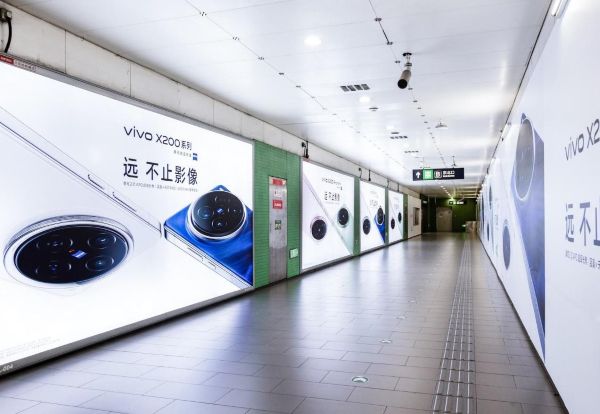
Budget of 50000 to 200000 yuan (preferred for beginners): Lightbox (3000-8000 yuan/block/month), ladder sign (2000-5000 yuan/block/month), suitable for precise reach of regional brands;
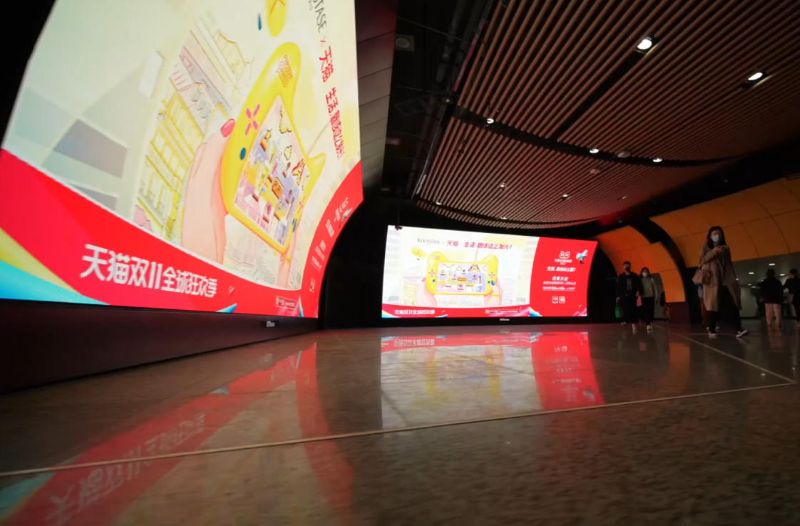
Budget of 200000 to 500000 yuan: carriage pillars (150000 to 300000 yuan/group/month), platform row light boxes, covering core passenger flow lines;
Budget of over 500000 yuan: Complete vehicle package (500000 to 2 million yuan/train/month), large platform screen, suitable for nationwide brand promotion.
2: Lock in the site and cycle, save 30% of the budget
Choosing the right site saves money: invest in financial advertising in the business district (Beijing Guomao), invest in fast-moving consumer goods in the commercial district station (Shanghai Nanjing East Road), and invest in lifestyle services in the community station. Avoid holidays (premium 20% -40%), invest for more than 4 weeks and enjoy a discount of 70-80% on the regular price. Novice investors are recommended to invest for 1 month to test the effect.
3: Design high conversion advertising content
The passenger's stay is short, and the content should be eye-catching in 3 seconds: the main visual should highlight the product or discount, with no more than 3 lines of text and clear instructions (such as "scan the code to get a 10 yuan coupon"). A certain milk tea brand used this method, and the conversion rate of subway advertising was three times higher than that of pure brand images.
4: Choose the right partner to avoid hidden costs
Prioritize choosing official subway media (such as Shanghai Shentong Degao) or national agents (Focus Media) to avoid small agents charging 10% -20% service fees. When signing the contract, it is clearly stated that the cost includes production and maintenance, and there are no additional charges.
5: Ensure data retention during advertising
Retain real-life photos and rotation records of advertisements, synchronously record station passenger flow, weather and other data, and provide a basis for subsequent effectiveness evaluation. This step directly affects whether the budget is spent effectively.
三、 Core: Four dimensions of subway advertising effectiveness evaluation
Evaluation is not based on a single data, it needs to be analyzed comprehensively from quantitative to qualitative in conjunction with the advertising objectives.
1. Basic dimensions: exposure and reach (see coverage)
The core indicators include:
Exposure: Calculated based on station passenger flow (such as 100000 passenger flow stations, with an average daily exposure of 80000 times for lightboxes);
Reach rate: High quality points reach 40% -60%, and if it falls below 20%, a new location is required;
Contact frequency: Commuter groups need to form memory at least 3 times.
Tools: subway operator passenger flow report, advertising monitoring platform (such as the second hand system).
2. Core dimensions: Interaction and conversion (looking at revenue)
This is the key to evaluating cost-effectiveness and needs to match the target:
Interactive indicators: A scan rate of 1% -3% is considered qualified, and content optimization is required if it is below 0.5%;
Conversion metrics: number of exclusive coupon cancellations, store to store volume (measured by POI). If 300000 yuan is invested to generate 1.2 million yuan in revenue, ROI=3 means profit.
Case: A certain beauty brand invested 250000 subway lightboxes, reaching 500000 people, scanning QR codes to collect samples 12000 times, driving store sales to increase by 28%, with a ROI of 1:3.5, far higher than the industry average.
3. Advanced dimension: Brand awareness (looking at the long term)
If the goal is to increase visibility, indirect data should be considered:
Search volume: A brand search volume increase of more than 50% month on month during the advertising period is considered effective;
Social mentions: Weibo and Xiaohongshu calculate the proportion of positive reviews for brands and subways;
Research: Conduct a small-scale questionnaire to understand the relationship between advertising reach rate and changes in brand impression.
4. Review dimension: ROI calculation (general ledger)
Formula: ROI=(Total Conversion Revenue - Total Advertising Investment)/Total Advertising Investment. ROI ≥ 1 is qualified, and if it is lower than 1, problems need to be investigated from three aspects: customer base, content, and location, in order to optimize for the next advertising campaign.

四、 Novice Avoiding Pitfalls: 6 Misconceptions about Budgeting and Placement
Many beginners have poor results, not because of wrong methods, but because they have stepped on cognitive misconceptions.
Misconception 1: Blindly chasing low prices, ignoring the quality of the location
Choosing low-priced lightboxes at remote sites may result in a large customer flow but a mismatch with the target audience. For example, investing in health products at high school stations may result in high exposure but no conversion, wasting budget instead.
Misconception 2: Spending all budget on advertising and neglecting content design
Spending 200000 yuan on advertising but saving design costs, the advertising images are blurry and the information is messy, passengers turn a blind eye, and the scanning rate is less than 0.1%, directly leading to a collapse in the effect.
Misconception 3: Without exclusive tracking, conversion cannot be counted
Using universal links without exclusive QR codes makes it impossible to distinguish between subway conversion and natural traffic. Spending money without knowing which part is effective makes optimization impossible.
Misconception 4: Following the trend of advertising during peak seasons results in high budget premiums
Launched one month before the Spring Festival, with a premium of 40%, but passengers are eager to return home and have no interest in watching the advertisement, resulting in a sharp drop in reach rate and a much lower cost-effectiveness than the off-season.
Misconception 5: Choosing a small agent, there is no guarantee of data fraud
Small agents promise to advertise at a low price, but in reality, they reduce the number of broadcasts and falsify exposure data, making it difficult for beginners to distinguish and ultimately wasting money.
Misconception 6: Not conducting a review, repeatedly stepping into pitfalls
The first advertising campaign had poor results, without analyzing whether it was due to mismatched customer groups or content issues. The second advertising campaign still followed the original plan, resulting in continued budget waste.
五、 Conclusion: Novice subway advertising is the most worry free approach
After reading this guide, you will find that the cost of subway advertising is not a fixed answer, and starting at 50000 yuan can also achieve good results. The core is "precise matching of customer groups+control of budget costs+scientific evaluation of effectiveness". Novices don't need to be afraid. Follow the steps of "setting budget → selecting locations → creating content → evaluating effectiveness" to avoid pitfalls.