Practical Guide to Subway Advertising: 2025 Complete Workflow for Precise Customer Acquisition
2025-12-03Tianci MediaViews:456
Highlights
As a core urban transportation hub, the subway handles over ten million passengers daily, catering to the 20-45 age group of 'young, highly educated, and high-spending' individuals, making it a key target audience for industries such as fast-moving consumer goods, retail, and education.
1. Why Metro Advertising Has Become a Core Choice in Urban Marketing?
As the central urban transportation hub, metro systems handle over ten million passengers daily, covering the 20-45-year-old demographic—young, highly educated, and high-spending—which is a core target group for fast-moving consumer goods, retail, and education sectors.
Its advantages in "enclosed spaces with high-frequency exposure" are significant: passengers face minimal distractions throughout entry, waiting, and riding, making ad reception 40% more efficient than in open spaces. At the same time, the metro serves as the city's business card, enhancing brand credibility and trust.
2. Five-Step Method for Metro Ad Placement (From Planning to Conversion)
2.1 Clarify Goals and Target Audience
First, identify core objectives to avoid aimlessness:
• Brand Awareness: Choose transfer stations and hubs with high foot traffic
• Product Conversion: Focus on high-intent audiences and combine with promotional offers
• Area Penetration/Event Attraction: Target stations near shopping districts, residential areas, or stores
Refine audience profiles: For example, cosmetics target female office workers aged 20-35, educational institutions focus on parents aged 30-45, with a clear understanding of their commute routes and pain points.
2.2 Choose the Right Advertising Media
Match the media type with objectives and budget:
(1) In-Station Advertising
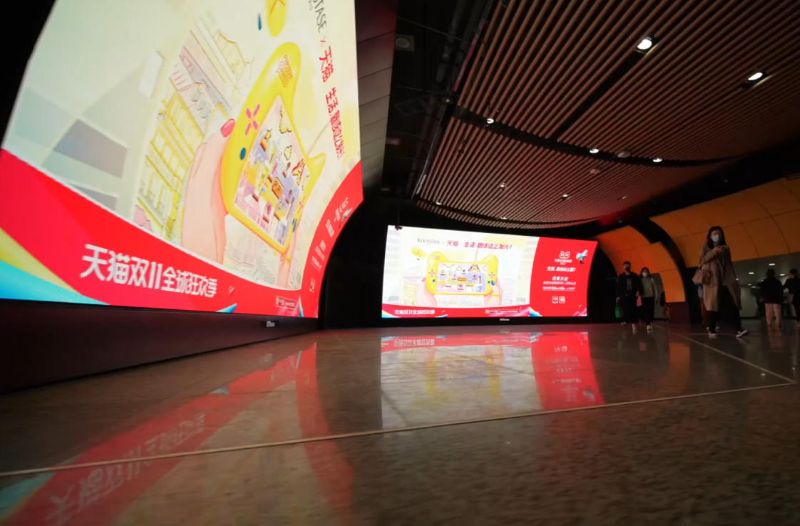
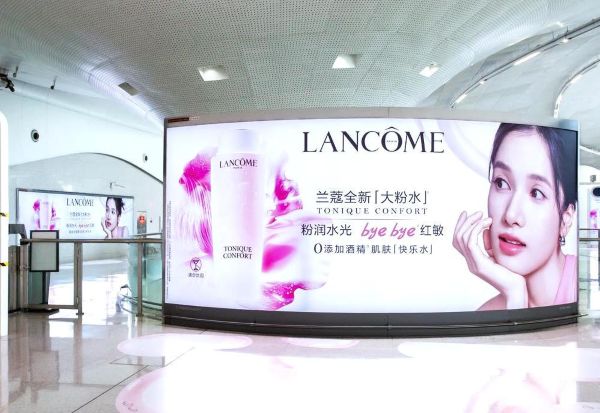
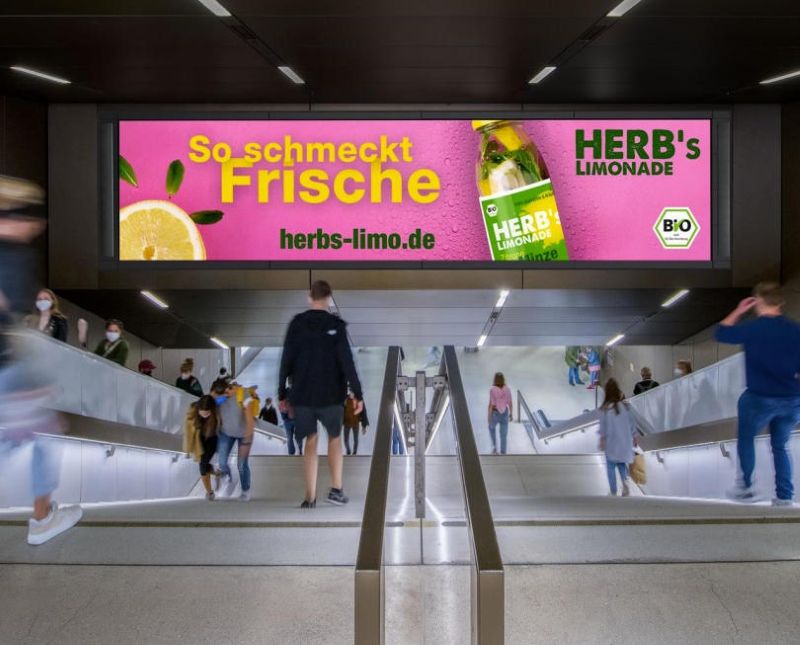
• Station Hall LED Screens: Strong visual impact, suitable for brand image display
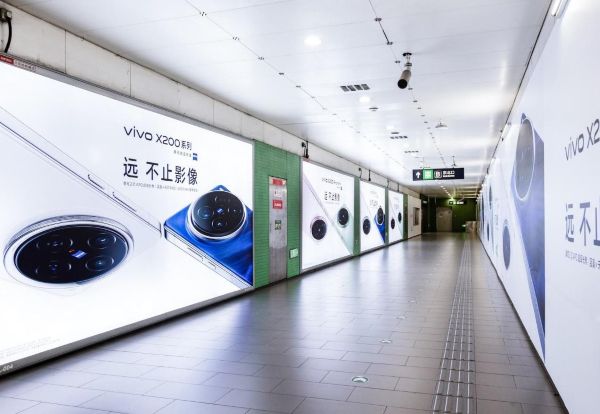
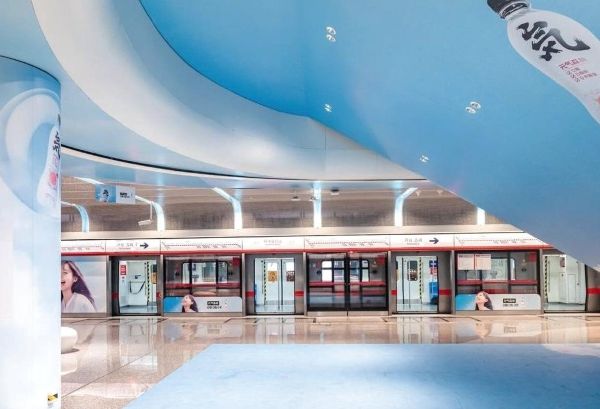
• Lightbox Ads: Cover passages and platforms, high exposure frequency, can convey detailed information
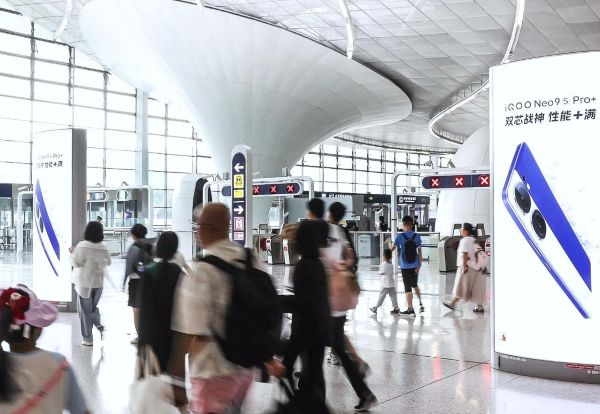
• Column/Waist Ads & Escalator Ads: Occupy main pathways, suitable for reinforcing brand memory
(2) In-Car Advertising
• Train Exterior Stickers: Double exposure both inside and outside, suitable for large-scale promotion
• Seat-Back Ads: Close contact, suitable for communicating product highlights
• Carriage LED Screens: Dynamic short videos, attract attention
(3) Innovative Formats
• Tunnel Ads: Dynamic visuals create strong impact; Full Carriage Wraps: Ideal for thematic marketing
• Interactive Projections: Increase audience engagement
2.3 Determine Placement Areas and Station Combinations
(1) Area Selection Logic
• Core Commercial Districts: Target shopping crowds (e.g., Beijing Wangfujing, Shanghai Lujiazui Station)
• Office-Concentrated Areas: Focus on CBD workers; Residential-Dense Areas: Cover family audiences
• Transportation Hubs/Campus Surroundings: Target intercity travelers, students, and parents
(2) Station Combination Techniques
• Single-Point Focus: Concentrate multiple media types in 1-2 core stations to create an immersive effect
• Line Coverage: Place ads in key stations along a line to cover commuters
• Complementary Placement: Combine transfer and terminal stations to balance reach and precision
2.4 Budget and Schedule Planning
(1) Budget Allocation
• Media Buying: 65%-75% of total budget, prioritize high-match core media
• Creative Design: 10%-15%, quality design can boost recall by 30%
• Performance Monitoring: 5%-10%, provides data for future optimization
(2) Placement Duration
• Short-term (1-2 weeks): Suitable for holiday promotions or new product launches
• Medium-term (1-3 months): Suitable for seasonal campaigns; Long-term (3+ months): Suitable for brand building
(3) Optimization Tips
Schedule ads during off-peak hours to avoid congestion (e.g., Spring Festival travel), select "station hall + carriage" combo packages, and focus on early morning and evening commuter periods for efficiency.
2.5 Creative Design and Performance Monitoring
(1) Creative Key Points
Follow the principle of 'short, clear, fast, accurate': keep copy under 10 words (e.g., 'New product launch, scan to get coupon'); use strong color contrast to grab attention within 3 seconds; provide clear calls to action (scan/store visit) while maintaining consistent brand tone.
(2) Performance Monitoring and Optimization
• Key Metrics: site traffic, brand search volume, QR code conversions, audience recall
• Optimization Strategies: increase LED display frequency during commuting hours; replace low-conversion sites; adjust copy with poor recall.
3. Six Common Mistakes in Subway Advertising (Pitfall Avoidance Guide)
1. Focusing only on traffic and ignoring precision: Blindly choosing large stations while neglecting audience match (e.g., advertising luxury goods to students). Priority should be given to stations with both high traffic and high audience relevance.
2. Spreading the budget too thinly: Investing small amounts across many stations fails to create lasting impressions. Budget should be focused on core stations.
3. Disconnect between creative and context: Displaying complex technical specifications inside the carriage without considering the commuting context (e.g., office workers care about "efficiency"). Ads should align with audience needs.
4. Ignoring performance tracking: Not monitoring data after launch makes it impossible to assess ROI. Establish a "launch-monitor-optimize" loop.
5. Overemphasis on low-cost ad space: Choosing ineffective locations like corner lightboxes wastes budget. Consider cost-effectiveness by calculating "exposure ÷ cost".
6. Advertising period too short (less than 1 week): Subway ads need at least three exposures to be memorable, so the campaign should run for at least 1-2 weeks.

4. Core Trends in Subway Advertising for 2025
4.1.Digital Interaction: QR code-based lotteries and AR experiences create a “exposure-to-conversion” loop, enhancing participation.
4.2 Data-Driven Precision Targeting: Using passenger flow data, advertise breakfast during morning rush hours and food & beverage during evening peaks.
4.3.Short Videos as Mainstream: 15-30 second short videos attract more attention than static ads and are suitable for telling brand stories.
5. Conclusion and Call to Action
Subway advertising has become a must-have platform for urban marketing with “high traffic, high precision, and high trust.” Every step, from target positioning to performance monitoring, affects the effectiveness of campaigns.
By 2025, its digitalization and precision targeting trends will become more prominent. Enterprises that seize these opportunities can accurately reach their audience. If you need a cost-effective and efficient urban marketing solution, start with subway advertising and contact professional agencies immediately to get a customized advertising plan!