
- Photos
- Specs
- Advantages
- Value
- Media Map
| Area:Xian | Type:Metro | Frequency:0 |
| Address:Qinggong Station | Format:Booth | Duration:0 |
| Location:Concourse Floor | Min Qty:1 | Operating Time:0-24o'clock |
| Size:9m*2m =18㎡ | Min Period:4week |
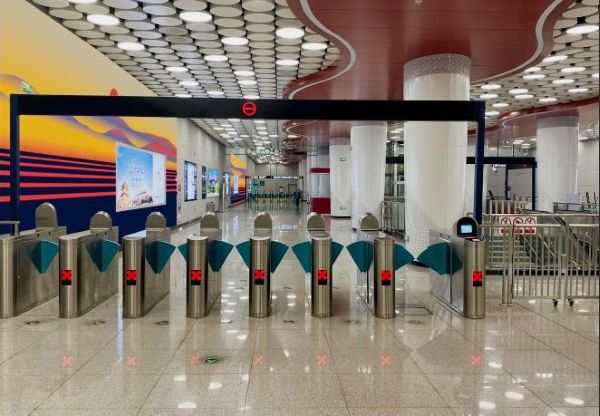
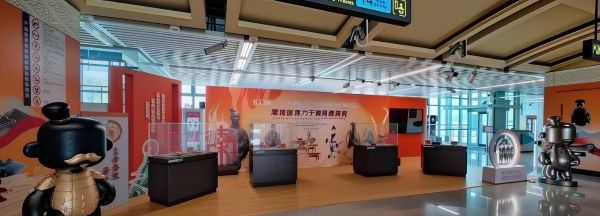
The brand booth is located at the visual center of the station hall, featuring an open space with no sightline obstructions. It serves as the primary visual focal point for passengers upon entering the hall. The foot traffic mainly consists of national cultural‑museum visitors, Chinese‑style culture enthusiasts, young social‑media check‑in crowds, and high‑net‑worth local commuters. Visitors show strong willingness to make special trips for the exhibition and take check‑in photos, which brings inherent advantages for social viral communication. It thoroughly addresses the shortcomings of traditional subway advertisements that are "only viewed without engagement, generating exposure yet no conversion".
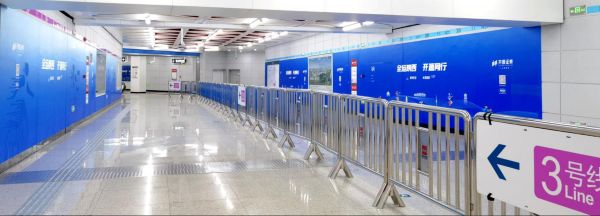
Situated in the center of the station hall floor, the booth sits on a mandatory passage leading from security checks to ticket gates and all entrances and exits. All passengers, whether boarding trains or exiting for museums, will pass by the booth. The semi‑enclosed subway environment creates minimal distractions. Different from ordinary light‑box posters, the physical booth enables multi‑dimensional communication integrating vision, physical exhibits and interaction. Beyond simple visual exposure, it allows passengers to engage with the brand up close and strengthen brand recall.
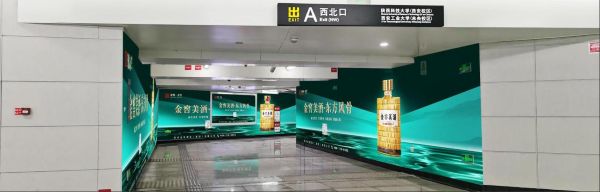
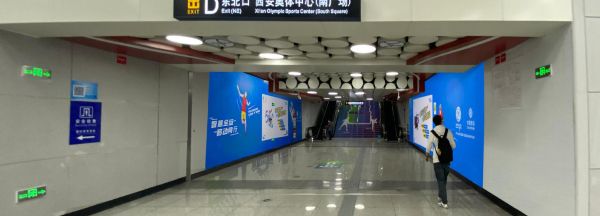
Brand wall decals or booths on the station hall floor are usually posted in combination with hall columns and central‑area walls. Breaking the limitations of traditional light boxes, they offer extensive room for creative expression and can deliver a magnificent display effect. Passengers spend an average of more than 3 minutes stopping here, over six times the average exposure time of subway commercial advertisements (<30 seconds). Through high‑frequency and repeated visual impact, the booth continuously deepens passengers’ brand memory.
Serving as a "guidance platform" for highly mobile audiences before they visit check‑in spots, this station naturally draws large numbers of out‑of‑town tourists and local culture enthusiasts. Supported by Xi’an Metro’s daily passenger flow of over 4 million, its audience mainly consists of young people aged 18‑45, business professionals and frequent commuters. They boast strong purchasing power and show extremely high acceptance of mid‑to‑high‑end products and cultural‑experience‑oriented brands.
Positioned along the central main circulation route in the station hall, the spot lies on the mandatory path for passengers entering/exiting the station and passing through security checks. It features unobstructed sightlines, delivering forced exposure and repeated brand recall, covering 100% of the station’s mobile passenger flow. There are very few available spaces for physical custom‑built booths inside the station, offering strong exclusivity. It avoids diluted impact caused by crowded advertisements, allowing brands exclusive access to the station hall’s core foot traffic and visual focus. It serves as a premium core media resource for brands to capture Xixian‑Qinhan cultural‑tourism traffic, leverage the museum‑themed internet‑famous station, and achieve integrated brand building and performance outcomes.
The station connects to the Shaanxi History Museum Qinhan Hall and the Qinhan New Town Tourism Distribution Center. Multiple tourist shuttle bus routes radiate from this station to attractions such as the Hanyang Mausoleum and Chateau Changyu Rena, forming a complete tourist itinerary. The brand booth sits at the entry node of this tourist route, enabling early engagement with tourists about to start their excursions. It can effectively drive pre‑traffic for offline stores, scenic spots and cultural‑tourism products, and build a full‑fledged communication chain of "metro‑scenic spot‑consumption".