How much does it cost to advertise on the subway? Comparison of prices for lightboxes, train interior packages, and tunnel videos
2026-04-16Tianci MediaViews:118
Highlights
Do you want to know how much it costs to advertise on the subway? This article provides a detailed explanation of the real pricing of subway lightboxes, train interior packages, platform screens, and tunnel videos. It breaks down the six factors that affect prices and recommends reliable advertising platforms. A must read for beginners to easily avoid price traps. Click to view the complete guide.
How much does it cost to advertise in the subway? "This is the question that many brand owners, market newcomers, and even entrepreneurs ask the most, but the most difficult to get a simple answer to. The reason is simple - subway advertising is not "one price", it depends on multiple variables such as city, route, station level, media format, advertising cycle, production cost, etc. The price difference between Beijing Guomao Station and Zhengzhou Suburban Station may exceed 10 times.
But don't worry, after reading this guide, you will not only have a clear understanding of the real market price of advertising on the subway, but also learn how to choose the right media based on your budget and avoid wasting money.
1、 Common forms and price ranges of subway advertising
Subway advertising is mainly divided into two categories: fixed media inside the station and mobile media inside the train. Below, we will break down the daily average prices by the most common types (based on mainstream routes in first tier cities, with second - and third tier cities typically experiencing a 30% -50% drop).
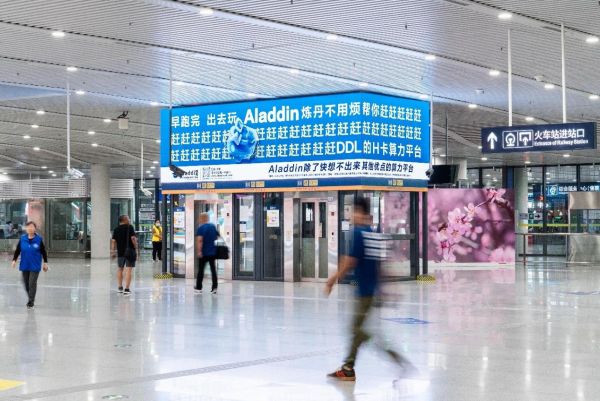
1. Platform/concourse lightbox advertising
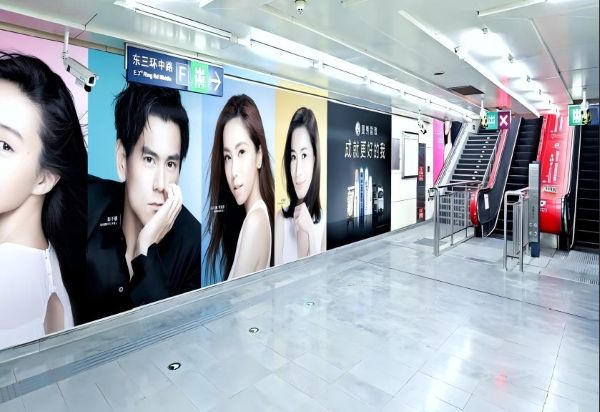
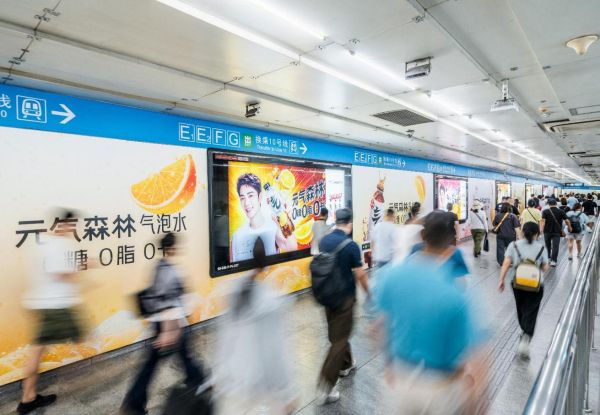
This is the most common form of subway advertising, located on the necessary path for passengers to wait and transfer. The lightbox has a large screen and good visual effect, suitable for long-term brand exposure.
Core station lightboxes (such as transfer hubs and commercial district stations): Approximately 30000 to 100000 yuan per month, equivalent to 1000 to 3300 yuan per day.
Ordinary site lightbox: about 10000-30000 yuan per month, equivalent to 330-1000 yuan per day.
Suburban station lightbox: about 50-10000 yuan per month, equivalent to 160-330 yuan per day.
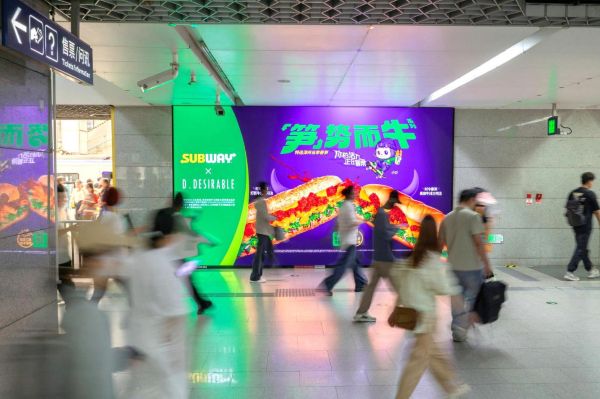
2. 12/24 large lightboxes
This type of lightbox is larger in size (usually 3 meters by 1.5 meters or more), with strong visual impact, and is commonly found in the main aisle or transfer hall of the station hall.
About 50000 to 200000 yuan per month, equivalent to 1600 to 6600 yuan per day.
3. Advertising for chartering cars inside subway trains
Post advertisements on the inner walls, doors, windows, handles, and floors of the entire subway train to create an immersive experience. This is a popular form of "hot selling" in recent years, especially suitable for young brands.
Full charter car (6-car formation): Approximately 200000 to 600000 yuan per month, equivalent to 6600 to 20000 yuan per day.
Half charter (partial carriage or partial location): Approximately 80000 to 200000 yuan per month, equivalent to 2600 to 6600 yuan per day.
Attention: The production cost of chartered advertising is relatively high (about 30000 to 80000 yuan), as it requires professional painting and film pasting, and the subway company requires the use of flame-retardant materials.
4. Tunnel video advertisement
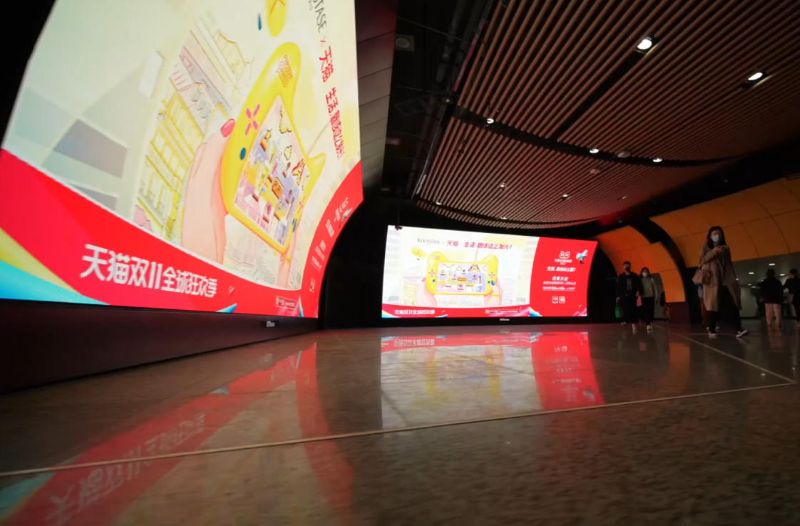
Install LED light columns on the walls of subway tunnels, and use the principle of visual persistence to create continuous animations when the train is in motion. This form is novel and has high memory, but it is expensive.
Quotation by week or month: Approximately 300000 to 800000 yuan per month (covering one tunnel section), equivalent to 10000 to 26000 yuan per day.
5. Handle/door/window stickers
These are "small and dense" advertisements with large coverage and low unit price, suitable for high-frequency exposure.
Hand pull advertisement: One hand pull costs about 20-50 yuan per month, usually requiring at least 500 minimum bids, with a total cost of 10000-25000 yuan per month, equivalent to 330-830 yuan per day.
Car door stickers/window stickers: One train costs about 20000 to 50000 yuan per month, equivalent to 660 to 1600 yuan per day.
6. Digital screen (platform PIS screen/carriage LCD screen)
The electronic screens on subway platforms and inside train carriages can display video advertisements in rotation. Charged based on playback frequency and cycle.
Platform screen (15 seconds/120 times/day): Approximately 10000-30000 yuan per week, equivalent to 1400-4300 yuan per day.
Car small screen: One screen costs about 10-30 yuan per day, but usually requires the entire train or line to be packaged, and the total price is not low.

2、 5 core factors affecting subway advertising prices
Factor 1: City level
First tier cities (Beijing, Shanghai, Guangzhou, and Shenzhen): the highest prices, with core station lightboxes starting at 50000 yuan per month
New first tier cities (Hangzhou, Chengdu, Wuhan, Nanjing, etc.): about 60% -80% of first tier cities
Second and third tier cities: about 30% -50% of first tier cities
Factor 2: Site Level
Within the same city, stations are classified as S-level, A-level, and B-level. S-level includes transfer hubs, city level commercial districts, and transportation hubs (such as train stations and airport stations). A-level is a regional center station, while B-level is a regular residential area station. The price of S-level sites is usually 3-5 times that of B-level sites.
Factor 3: Launch cycle
Subway advertisements generally have a minimum contract period of two weeks, with common cycles of one month or one quarter. The longer the investment time, the lower the daily average price. For example, if a lightbox is invested for one month at a price of 10000 yuan/day (converted), it may drop to 8000 yuan/day after three months of investment.
Factor 4: Production and installation costs
Many beginners only ask about media fees and ignore production costs. A lightbox screen spray painting costs about 300-800 yuan per piece; A chartered car with film coating costs about 30000 to 80000 yuan per train; The production cost of tunnel videos is higher (over 100000 yuan). These are one-time expenses, but they will increase the total cost.
Factor 5: Time period and season
Subway advertisements also have peak and off peak seasons. Spring Festival, May Day, National Day, and summer are peak seasons, with prices increasing by 10% -20%. The advertising value during weekday morning rush hour is higher than during off peak hours, but it is usually not separately priced and packaged in a full day package.
3、 From asking for a price to placing an order: five steps to get subway advertising done
Step 1: Identify your target city and target audience
Do you want to do national brand exposure or deeply cultivate the local market? If choosing a first tier city, the budget threshold is high but the population quality is good; If you choose a second or third tier city, you can cover the entire city with a lower budget.
Step 2: Determine the media format and advertising scale
Budget under 50000 yuan: Choose ordinary site lightbox or handle advertising, invest for one month
Budget of 100000 to 300000 yuan: choose core station lightboxes+a small number of chartered cars, or digital screens for the entire route
Budget above 500000 yuan: Consider a combination of fully chartered vehicles, tunnel videos, and large screens at core stations
Step 3: Find the right platform and obtain a genuine quote
Don't go directly to the subway company yourself - subway advertising resources are usually sold by multiple agency companies, and it is difficult for individuals to get a bottom price, and the process is complex. The safest way is to find a professional outdoor advertising platform.
I recommend Tianci Media here. Tianci Media is a professional outdoor advertising platform with deep cooperation in subway media resources in more than 20 cities across the country, including Beijing, Shanghai, Guangzhou, Shenzhen, Hangzhou, Chengdu, Wuhan, Chongqing, etc. They will provide free cross city and cross line price comparison plans based on your budget and needs, and clearly list media fees, production fees, and publication fees without any hidden costs. For first-time subway advertising merchants, this can save a lot of communication and trial and error costs.
Step 4: Reserve approval and production time
The review of subway advertisements is very strict, and the content of the screen cannot contain any illegal vocabulary, mislead passengers, or affect safety signs. The general approval cycle is 7-15 working days. Considering the production time, it is recommended to start preparing one month in advance.
Step 5: Confirm monitoring and effectiveness evaluation
A reliable platform will provide: published photos (with time watermark), location list, and estimated passenger flow data (cross-sectional passenger flow provided by the subway company). Some digital screens can also provide actual playback times and QR code interaction data.
4、 The 5 easiest pitfalls for beginners to step on
Misconception 1: Asking only about the unit price for one day, thinking that you can only invest for one day
The vast majority of subway advertisements are signed for at least two weeks. The "1000 yuan per day" you asked may be converted from the monthly average price, but in reality, you have to pay 28000 yuan (28 days). When asking about the price, be sure to clarify: "How long can we invest for at least? What is the total price
Misconception 2: Only focusing on media fees, ignoring production and installation costs
Some quotations only include media fees, and only inform you after you sign the contract that the image production will be calculated separately, and even electricity and cleaning fees will be charged. Be sure to request 'all inclusive price' when comparing prices.
Misconception 3: Thinking that the more expensive the website, the better the effect
Although the core transfer station has a large passenger flow, passengers are in a hurry and their attention is scattered; However, at the terminal station or residential area station, if passengers stay for a long time, the advertising reading rate is actually higher. Choose locations based on your communication goals, rather than just comparing prices.
Misconception 4: Neglecting Line Matching
If your product is a mother and baby product, but you invest in office buildings mainly for young white-collar workers, most of the exposure will be ineffective. The correct approach is to first study the customer profile of each line (subway companies usually have annual passenger flow reports).
Misconception 5: Don't track the effect, just finish the investment
Subway advertising is not just a one-time investment. You should monitor the brand search index, scan code volume, and in store rate during the advertising period. If the effect is not good, adjust the screen or point position in a timely manner. Professional platforms will provide mid-term optimization suggestions.
5、 Conclusion: How much does it cost to advertise on the subway?
Returning to the original question: How much does it cost to advertise on the subway? The answer is - from the cheapest handle advertisement costing about 330 yuan/day (converted into a whole month), to tunnel videos costing over 26000 yuan/day, the span is very large. For most small and medium-sized brands or startups, it is recommended to start with ordinary site lightbox or handle advertisements, with an average daily cost of 500-1500 yuan, a one month contract, and a total budget of 30000 to 50000 yuan. This can cover the core commuting population without causing too much financial pressure. If your goal is to enhance brand tone or event marketing, you can choose to rent a car or tunnel video, which costs tens of thousands of yuan per day, but also brings high topicality and memory.
Don't blindly seek out subway companies on your own - subway advertising resources have multiple levels and complex processes, making it difficult for individuals to obtain reasonable prices. The most convenient way is to contact Tianci Media. Tianci Media is a professional outdoor advertising platform that covers mainstream urban subway media across the country. It provides one-stop assistance from scheme planning, location screening, image production to publication monitoring. You just need to tell the other party your target city, budget, and audience, and leave the rest to professionals.
Remember: Subway advertisements are not fast-moving consumer goods, spending money wisely is more important than spending more money. Using this guide as a reference, I wish you a highly effective first subway advertisement.