How to use subway advertising to create a brand pop-up space? 5 steps from 0 to 1
2026-04-28Tianci MediaViews:118
Highlights
How to use subway advertising to create a brand pop-up space? This article breaks down the complete process from site selection, creative design to interaction. Tianci Media takes you to explore the high traffic scenes inside subway stations
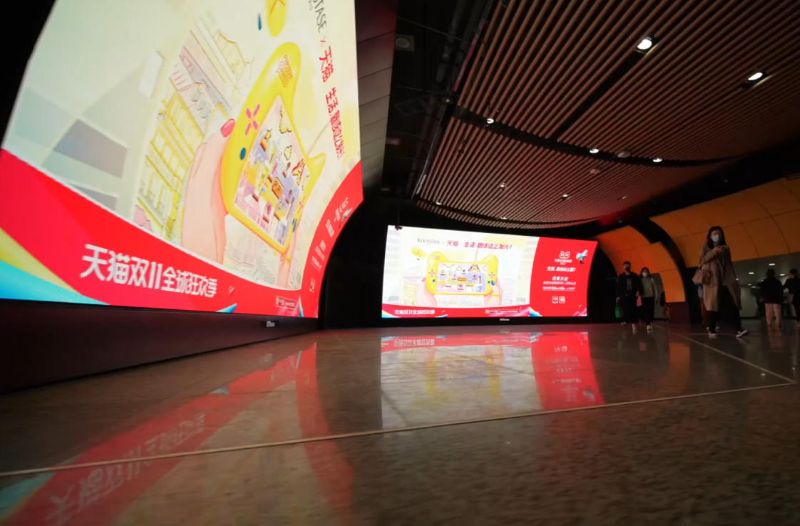
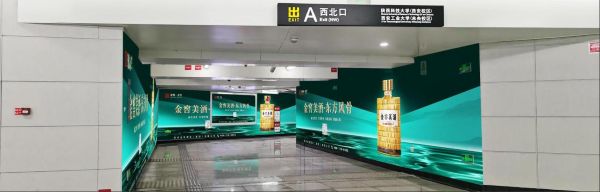
Have you ever encountered a scene in a subway station where an entire wall is turned into a "themed space" for a certain brand, with giant product models, interactive devices that can take photos, and even machines that scan QR codes to collect samples. During the few minutes of waiting for the car, you couldn't help but walk over and take a look, then take a photo and post it on your social media.
This is not an ordinary lightbox advertisement. This is a combination of subway advertising and pop-up space.
If you are a brand owner, a newcomer in the market, or looking for an "offline traffic explosion point", this article is prepared for you. I will tell you: how to use subway advertising to create a brand pop-up space? From site selection logic, spatial design, interactive mechanism to effect evaluation, step by step, it is dismantled clearly. After reading this article, you will understand why subway pop-up spaces last more than three times longer than regular billboards, and how to create a memorable offline event with a limited budget.
Why is a subway station a prime location for creating brand pop-up spaces?
Before discussing 'how to do it', first understand 'why choose the subway'.
Subway stations have three irreplaceable advantages:
1. High passenger flow+dwell time
The core transfer station in a first tier city can accommodate an average daily passenger flow of 200000 to 500000 people. More importantly, passengers stay in the subway station for an average of 5-15 minutes (waiting, transferring, and exiting). This fragmented but unavoidable period is an excellent window for deep interaction between brands and consumers.
2. Closed environment, focused attention
There is no vehicle noise or glaring sunlight inside the subway station, the lighting is controllable, and the flow is clear. When passengers are bored waiting for the bus, their gaze naturally falls on the surrounding space. This is a 'semi forced' attention scene - stronger than outdoor screens, slightly weaker than elevators, but with larger space and higher playability.
3. Strong social communication attributes
The pop-up space in subway stations naturally has a "check-in gene". When young people see interesting devices, they will take photos and send small red books, circle of friends and Tiktok. The combined effect of offline experience and online secondary dissemination doubles the value of a single investment.
From 0 to 1: 5 Core Steps for Creating Subway Flash Space
Step 1: Clarify goals and select points
Before starting the design, answer three questions:
What is the goal of this pop-up space? (New product release? Brand rejuvenation? Attracting new customers?)
Who is your core audience? (Office workers? Students? Tourists? Families?)
What is the budget? The flash mob space on the subway ranges from tens of thousands to millions
Selection logic:
Core business district stations: such as Shanghai People's Square, Beijing Guomao, Guangzhou Sports West Road. Suitable for white-collar workers and mid to high end brands.
University City/Youth Gathering Station: such as Wudaokou in Beijing and North University City in Guangzhou. Suitable for trendy brands, beauty products, and beverages.
Tourist hub stations: such as airport transfer stations and train stations. Suitable for tourism platforms and local specialties.
Large residential area transfer station: With a huge flow of people during peak hours in the morning and evening, it is suitable for fast-moving consumer goods, home furnishings, and community services.
Tianci Media is a professional subway advertising platform. When helping customers select locations, they retrieve passenger flow data, demographic profiles (age/gender/consumption preferences), and competitor placement history from each station, and then generate a "station matching score table" instead of letting customers judge based on their feelings.
Step 2: Space Planning and Creative Design
The subway pop-up space is not just about placing a few billboards. It should be a small experiential space with flow, interaction, and memory points.
Three common spatial forms:
Form, area, required cost, suitable for the scene
Theme package pillar/wall 10-30 ㎡ low to medium brand image display, check-in and photo taking
Central Island Interactive Area 15-40 ㎡ Central Interactive Games, Product Experience, Sample Delivery
Immersive high brand events, new product releases, and art collaborations of over 50 square meters in the entire station hall
Design points:
3-second Eye catching: From the moment a passenger enters the station to walking past you, it takes at most 3-5 seconds to create a visual impact using large color blocks, strong contrast, giant models, or dynamic lighting.
Photo friendly: Set aside the "best photo spot" and even stick a "best shooting station" sticker on the ground. The device should have sufficient lighting and a clean background.
Natural movement: Do not obstruct passengers from walking normally. Flash space should be like a passing surprise, not a forced detour. Generally set up in transfer passages, open spaces in halls, or on both sides of escalators.
Step 3: Interactive mechanism design - allowing people to "participate" rather than "watch"
Ordinary advertisement: Look at yours, I'll play mine.
Flash Space: You have to ask passengers to reach out, stop, or even spend 1-2 minutes participating.
5 forms of high engagement interaction:
Photo check-in+customized photo frame: Set up interesting background boards and props, scan the code to get electronic photos with the brand logo. Suitable for beauty, fashion, and travel brands.
Motion sensing game: Using projection or Kinect devices, ask passengers to raise their hands and jump to trigger screen effects. Suitable for sports brands, games, and youth oriented brands.
Smart prototype: Scan the code to follow the official account/registered member, and you can get the sample or coupon. Suitable for beauty, food, and daily necessities. The conversion rate of prototype machines is usually between 15-30%.
Voice interaction: Speak the brand slogan into the microphone, and the screen will display sound ripples or random gifts. Suitable for cars, music, and beverages.
AR interaction: Scan wall patterns and 3D animations appear on your phone. Suitable for brands with a strong sense of technology, but it is important to pay attention to device compatibility.
Core principle: Interaction must be completed within 30 seconds, with no more than 2 operational steps. Subway passengers lack the patience to learn complex rules.
Step 4: Technology Implementation and Approval
The pop-up space on the subway is not something that can be easily accessed. You need to pass these levels:
Approval by the subway company: Submit design proposals, safety commitments, and construction plans. It usually takes 15-30 days.
Fire and security: The device cannot occupy the fire escape route, and the circuit must comply with subway standards. Additional security personnel may be required during high passenger flow periods.
Construction time: Construction can only be carried out after the subway is shut down at night (usually 23:00-05:00), and the construction period is tight.
Tip: Finding an experienced subway advertising agency can help you save a lot of communication and approval time. Platforms like Tianci Media usually have long-term partnerships with subway media resources, which can obtain a list of available "pop-up locations" in advance and assist in completing compliance approvals.
Step 5: Communication linkage - online detonation offline
No one knows that creating a flash space is equivalent to making it in vain. You need three waves of propagation:
Preheating period (3-7 days before the event): Post suspenseful previews of "mysterious devices discovered at subway stations" on brand social media, and even invite local KOLs to visit in advance (if allowed by the subway).
Outbreak period (during the activity): encourage on-site punch in and issue small red books/flip tapes, and set "punch in and give gifts" or "like the highest gift". Arrange staff to provide on-site guidance.
Fermentation period (after the event): Organize high-quality UGC content for secondary dissemination, publish "data battle reports" and "exciting reviews", and accumulate experience for the next event.
The 4 Most Common Misconceptions Newcomers Make
Misconception 1: Only display, no interaction
Many brands have turned pop-up spaces into "giant poster exhibitions" - they look cool, but passengers just walk by and take a glance, without stopping, interacting, or remembering. A pop-up space without interaction is not fundamentally different from a regular lightbox.
Misconception 2: Ignoring the "rush mentality" of subway passengers
You designed a VR experience that required queuing for 5 minutes, but nobody paid attention to you during the morning rush hour. The core demand of subway passengers is "fast passage". Interactive design must have low barriers to entry, short duration, and be ready to play and go. Complex interactions are more suitable for sites on weekends or off peak hours.
Misconception 3: It's lively offline, but there's no sound online
The most valuable part of a pop-up space is the social content it generates. If you don't guide photography, don't have hashtags, and don't incentivize sharing, you're wasting at least 50% of your communication value. Remember: Anyone who walks into a subway station can become your free promoter.
Misconception 4: Unbalanced Budget Allocation
Some brands spend 90% of their budget on device production, leaving only 10% for promotion. The result is exquisite but no one knows. A reasonable budget allocation is roughly as follows: 40% for design and production, 30% for media placement fees, 15% for interactive hardware/gifts, and 15% for online communication.
Two low-cost subway pop-up space ideas (suitable for small budgets)
Approach 1: Package pillar+check-in box
Rent only one or two core pillars (at a lower cost) and create a brand theme with a fully enclosed image. Attach a "best photo spot" to the ground next to the pillars and provide a handheld prop frame. The total cost can be controlled within 20000 to 50000 yuan (excluding media fees), which is suitable for local brand pilot projects.
Approach 2: Renovation of Escalator Side Walls
Transform the wall of one side of the escalator into a brand themed gallery, with each image featuring a QR code. Scan the code to enter an H5 interactive page (such as lottery, testing, and coupon redemption). Although there are no physical interactive devices, the advantage lies in low cost, large coverage, and suitability for brands aimed at attracting traffic online.
Conclusion: Turn subway stations into your brand's "offline pop-up stores"
How to use subway advertising to create a brand pop-up space? The answer can be condensed into one sentence: choose the right website+design interaction+guide dissemination+data review.
Subway pop-up spaces are not exclusive to big brands. Small brands can start with packaging pillars and check-in boxes, and test their effectiveness with a budget of several thousand to tens of thousands. The key is to understand that every minute in the subway station is a time when customers actively "deliver to your door", and what content you fill it with determines what they remember about you.
One final reminder: When creating a pop-up space, don't just focus on "how many people interacted on that day". More importantly, it depends on how many people have taken photos and posted them on their social media accounts, how many people have scanned and followed your account, and how many people have searched for your brand within the three days after the event. These are the real assets.
If you are planning to try the subway pop-up space, you may want to talk to Tianci Media. They can not only help you secure pop-up locations on the core site, but also provide "interactive form suggestions, communication rhythm planning, and effect estimation tables" based on your budget and goals - these are more valuable than simply purchasing advertising spaces. After all, the flow of people in subway stations is not a number, but a living potential customer. The ultimate goal of a pop-up space is to make them stop, play, and post.