Mastering the Strategy for Subway Advertising Placement: From Form Selection to Effect Evaluation, Enhancing Brand Exposure Conversion Rate
2026-05-28Tianci MediaViews:148
Highlights
With the continuous expansion of urban subway networks, the subway has become the core means of daily commuting for urban residents.For brands, subway advertising placement is not only a channel for achieving high exposure but also an important battlefield for achieving precise reach and enhancing brand recognition.This article will systematically review the main forms of subway advertising, placement strategies, evaluation methods of effectiveness, and future trends, helping you gain an advantage in advertising placement in 2026.
1. Why choose subway advertisements?
The subway environment has characteristics such as enclosure, high frequency, and multiple touchpoints. During the waiting, riding, and transfer processes of passengers, their attention is relatively concentrated. The effective reach rate of advertising information is much higher than that of many outdoor media. Especially in first-tier and new first-tier cities, the average daily passenger flow of subways often exceeds one million, providing a vast potential audience base for brands.
In addition, the subway passenger group is diverse, including not only office workers and students, but also business people and tourists. By choosing the right routes and stations, the brand can relatively precisely target the target audience.
II. Analysis of Main Metro Advertising Forms
At present, the forms of metro advertising have become increasingly diverse, ranging from traditional light boxes to digital interactive screens, each with its own advantages:
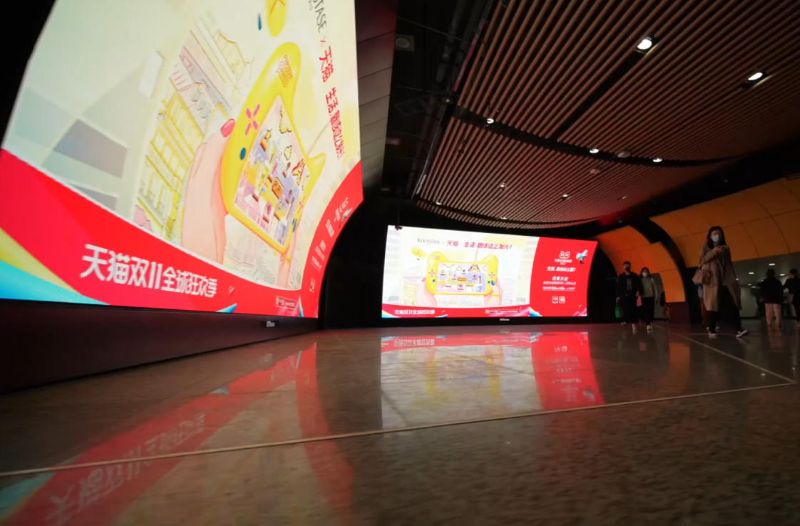
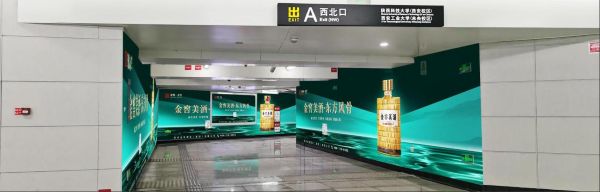
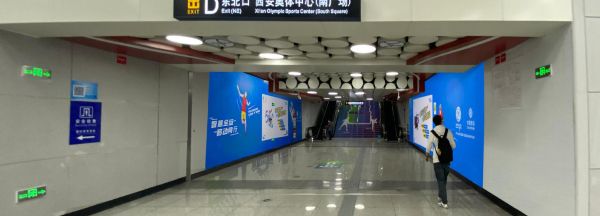
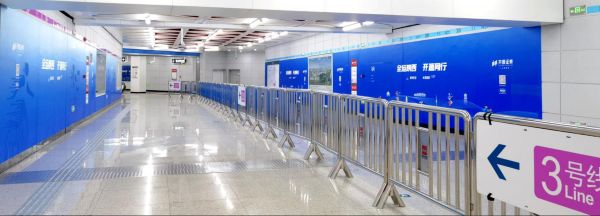
Display Advertising: The most common and stable form, located at platforms, corridors, and concourses. Suitable for conveying concise brand information or visually striking images.
Subway Group Tour Ads (Full Train/Partial Train): The entire train carriage is themed and decorated, providing a strong immersive experience and high topicality. This type of advertisement is suitable for young brands or event marketing.
Tunnel dynamic images: By utilizing the visual persistence principle during the train's movement, dynamic images are played, which is highly impactful and can effectively draw the passengers' attention.
Electronic screens and interactive devices: large screens inside the station, touch screens, AR interaction, etc., support functions such as scanning codes, games, and voting, facilitating the conversion of users to the online platform.
Escalator floor stickers and ground floor stickers: They are placed in a special position and are often noticed by passengers who are "on their phones". They are suitable for guiding information or interesting copy.
III. Four Strategies for Efficient Metro Advertising Placement
1. Precise Point Selection Based on Lines and Stations
Different lines connect different functional areas. For instance, commercial center stations are suitable for consumer brands, lines near universities are suitable for educational or entertainment products, and transportation hubs are suitable for tourism or service advertisements. Before placement, it is necessary to combine the heat map of pedestrian flow and user profile data.
2. Optimization of Time Period and Frequency Combination
Metro advertisements can be purchased on a weekly, monthly or specific time basis. During the morning rush hour, products focusing on efficiency (such as coffee and information apps) are promoted. During the evening rush hour, leisure and entertainment (such as movies and dining) can be targeted. High-frequency short-term campaigns are suitable for launching new products, while low-frequency long-term campaigns are suitable for maintaining brand image.
3. Integration of Creativity and Media Forms
A good idea can double the effectiveness of an advertisement. For instance, in a car rental advertisement, the interior of the car, door handles, and the floor can be used for contextual design; in a tunnel advertisement, countdown or suspenseful copy can be used; on electronic screens, dynamic elements such as real-time weather and countdown can be added to enhance the sense of interaction.
4. Integrated Online and Offline Traffic Attraction
Embed QR codes, short links or topic tags in subway advertisements, and combine them with online activities (H5, mini-programs, social media challenges). This way, it is possible to track the online conversions resulting from offline exposure. At the same time, encourage passengers to take photos and share them, creating secondary dissemination.
IV. How to Evaluate the Effectiveness of Metro Advertising?
Traditional outdoor advertising is often regarded as difficult to quantify. However, with the help of modern technological means, the evaluation of metro advertising has become increasingly scientific:
Scan code views and short link visits: These directly reflect the user's response behavior.
Brand search index changes: Monitoring the search popularity of the brand on platforms such as Baidu and WeChat before and after the advertising period.
Research and street interviews: Conduct audience recall surveys in the vicinity of the distribution sites.
Social media topic volume: The number of discussions related to advertising campaigns and the quantity of user-generated content.
Traffic flow and regional sales correlation: For chain stores or fast-moving consumer goods, the sales fluctuations of nearby stores in the same area can be compared.
V. Forecast of Metro Advertising Trends in 2026
Programmatic Purchasing: Some cities have piloted the programmatic placement of metro electronic screens, supporting dynamic bidding and content switching based on real-time passenger flow, time periods, and weather conditions.
Immersion technology integration: While AR glasses are not yet widely available, AR scanning on mobile devices has already been applied in bus advertising. Users can trigger 3D animations or coupons by scanning specific areas.
Data security and privacy compliance: As regulations on personal information protection become stricter, precise targeting based on anonymized passenger flow data will become the mainstream.
Conclusion
The placement of subway advertisements is no longer merely about "buying a spot and posting a picture". It has evolved into an integrated marketing approach that combines creativity, data, and technology. A successful placement requires clear goals, choosing the right format, optimizing strategies, and continuous evaluation and iteration. We hope this article can provide you with practical operational ideas, enabling your brand to efficiently reach millions of audiences in the "artery of the city" - the subway.
If you are about to launch a subway advertising campaign, it would be a good idea to select 1-2 key points from the above strategies for a small-scale test. Verify the effectiveness quickly and then expand the scale.