
- Photos
- Specs
- Advantages
- Value
- Media Map
| Area:Xian | Type:Metro | Frequency:0 |
| Address:Xi'an North Railway Station | Format:Film | Duration:0 |
| Location:Escalator on the platform floor | Min Qty:1 | Operating Time:0-24o'clock |
| Size:156.1㎡ | Min Period:4week |
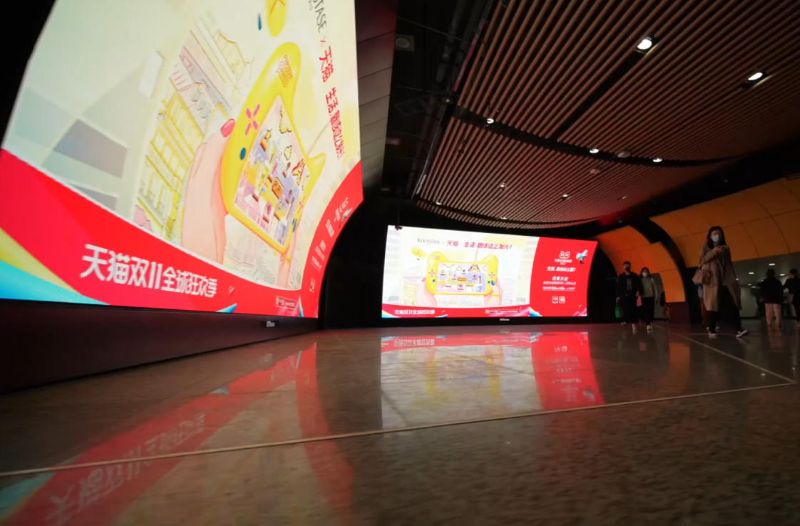
Located at the throat position of the platform escalators, this spot must be passed by all metro passengers entering and exiting the platform as well as high‑speed rail transfer travelers, with no detour routes available. Light boxes on both sides of the escalators are arranged along the escalator gradient. When passengers ride the escalators, their eyes naturally fall on the side light boxes. The escalator header light boxes occupy the primary visual high point at the escalator entrances and exits. Ads can be viewed in both upward and downward directions, delivering full‑coverage exposure for bidirectional passenger flows, with an advertising reach far higher than that of ordinary platform wall‑mounted light boxes.
Xi'an North Railway Station records an average daily passenger flow of over 100,000 people. Platform‑level escalators serve as the sole vertical passage for passengers to move up and down. Passengers spend an average of 8‑12 seconds on the escalators. Their vision naturally focuses on the side walls, creating an efficient communication path of "passive viewing‑active memorization". Transfer passengers travel back and forth between platforms and exit passages, and may pass the same light box multiple times in a single trip, enabling the "three‑time memory rule" for advertising information (entry → waiting for train → exit).
This media boasts the core advantage of 100% forced reach. There is only one movement path for passengers exiting from platforms with no diverting or detour passages. All alighting passengers must pass through this location, bringing an exposure reach of over 95%. It completely avoids the drawbacks of online ads being scrolled past and ordinary outdoor ads being overlooked. When passengers ride down the escalators at a gentle travelling speed, their sightlines are naturally level with the light box visuals. Sufficient close‑range viewing time brings high information acceptance and deep‑seated brand memory points.
Located in the escalator area on the platform floor of Xi'an Metro Xi'an North Station, this is a combined light‑box media, consisting of two sets of media: wall‑mounted light boxes on both sides of the escalator and a fascia light box above the escalator. Situated along the core passenger flow route of the platform, this spot serves as a mandatory passage for passengers travelling between the platform and the station hall. All high‑speed‑rail arriving and departing passengers as well as metro transfer passengers must use this escalator for upward and downward travel, making it a scarce forced‑view media on the platform floor.
The escalator constitutes a rigid passenger flow route for travellers exiting and transferring, with no alternative bypass routes. Advertisements enter people’s field of vision compulsorily to deliver "non‑selective exposure". Such close‑range, interference‑free forced exposure ensures 100% effective reception of brand messages and greatly boosts brand recall. Compared with "passing‑by viewing", dwell‑time viewing improves memory retention rate by more than 50%. Positioned directly in the line of sight, the fascia light box acts as a visual anchor to strengthen brand recognition.
Advertising resources on platform floors are inherently limited. The combined package of light boxes on both escalator sides plus the fascia light box represents scarce bundled media. It features a clean surrounding advertising environment with little interference from competing advertisements, delivering high recognizability for brand visuals. It can quickly capture audience attention, reduce advertising noise and further enhance communication effectiveness. Short‑term high‑intensity campaigns can capitalise on traffic dividends during travel peaks to rapidly expand the brand’s visibility and influence across Northwest China.