- Photos
- Specs
- Advantages
- Value
- Media Map
| Area:Nanjing | Type:airport | Frequency:240 |
| Address:Nanjing Lukou International Airport | Format:led | Duration:5s |
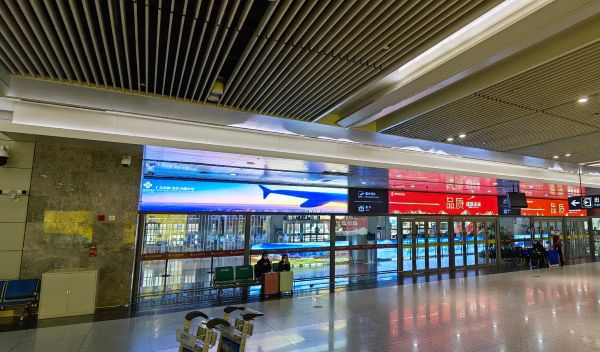
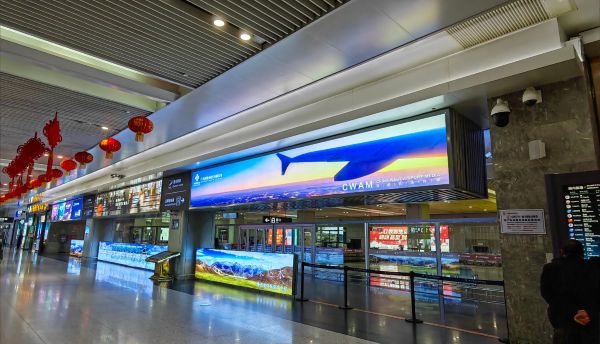
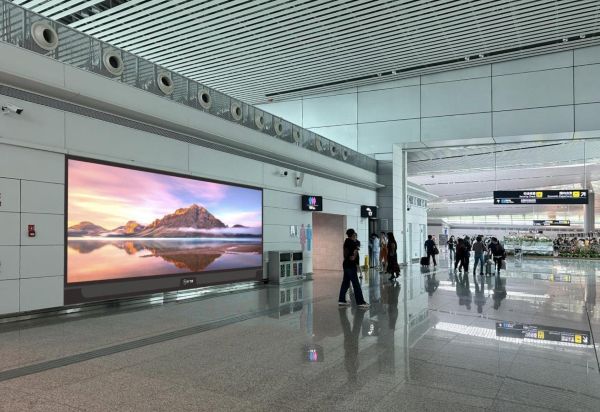
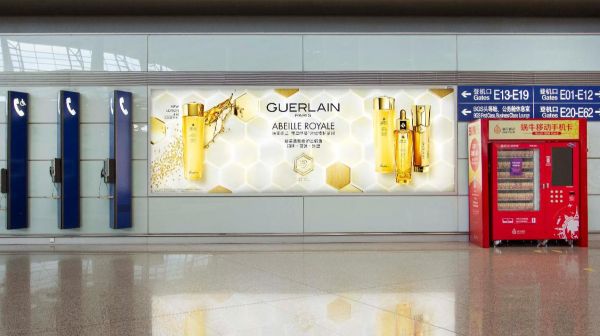
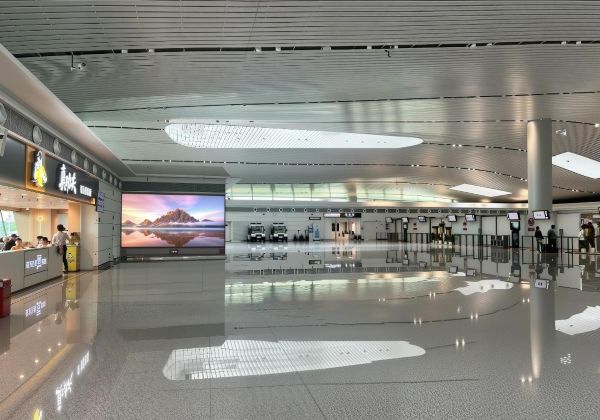
| Location:T2 Baggage Hall Carousel | Min Qty:8 | Operating Time:0-24o'clock |
| Size:2.88 × 0.96 × 2面 | Min Period:week |
Annual throughput of 31.18 million passengers, an average daily arrival of 42,000 passengers, and annual reach of over 15 million high-net-worth arrivals. Every arriving passenger will inevitably pass by, stop at, and see it, with no diversion or omission. The exposure coverage and effective reach rates far exceed those of scattered single-point placements = covering the entire arriving passenger flow, creating a full-chain communication loop from 'carousel → exit → hall', with combined placements achieving a 30% premium.
The media is installed just above the baggage carousel, positioned at the eye-level golden view angle, with an unobstructed picture that is not oppressive, allowing clear viewing without needing to look up deliberately. The baggage claim area is one of the areas where passengers stay the longest in the airport, with most passengers waiting here for 10–30 minutes. It can be linked with the T2 security checkpoint curved LED and high-altitude exit LEDs to achieve cross-point broadcasting, reinforcing brand memory and ensuring full coverage of the arriving passenger flow without blind spots.
Eight LED screens correspond to all domestic baggage carousels in T2, arranged circularly above the carousels. Passengers see them directly without obstruction or detours while picking up, waiting for, or checking their luggage, covering all domestic arrival passenger stay scenarios. This forms a closed-loop communication matrix of 'full carousel coverage, mandatory exposure along the entire arrival path,' serving as a core airport media resource for reaching high-net-worth arrival passengers in East China and achieving high-frequency, deep penetration.
High-frequency mandatory exposure maximizes memory retention with a daily rotation of ≥240 times; passengers stay on average 15–30 minutes, and a single passenger on a single trip is naturally exposed 3–5 times. In a closed, interference-free scenario, brand noticeability exceeds 80%, and memory retention rate is more than three times that of ordinary advertising.
Baggage claim is the stage where passengers spend the longest time after arrival. Passengers’ attention is continuously focused on the carousel and its surrounding area. The dynamic visuals on LED screens can effectively attract their attention and convey information deeply. Multiple screens distributed around the carousel create an "immersive" visual effect. No matter where passengers stand while waiting for their luggage, they cannot avoid the visual coverage of the advertisements, and the exposure effect is significant. It reaches 100% of all arriving passengers, including business travelers and high-end tourists with strong spending power, efficiently and profoundly embedding brand information in high-net-worth individuals' minds during their "idle time" and along their unavoidable path while claiming luggage.
Thanks to its geographic position as a "golden focus area" and the visual advantage of being "surrounding," it becomes a key medium for brands to engage in deep communication during passengers’ "idle time" while waiting for luggage. It not only achieves high-frequency, mandatory exposure but also, through dynamic visuals and vibrant colors, deeply instills brand information in passengers’ minds, making it one of the most valuable advertising media in the arrival area.
Its value lies in turning passengers’ "waiting time" into a "golden communication time" for the brand. Through surrounding visual coverage and frequent dynamic exposure, it achieves deep and mandatory reach to high-net-worth individuals in the area where passengers' attention is most focused, serving as a strategic media resource for brands to conduct precise marketing and image building in the East China region.