- Photos
- Specs
- Advantages
- Value
- Media Map
| Area:Taiyuan | Type:airport | Frequency:0 |
| Address:Taiyuan Wusu Airport | Format:Light box | Duration:0 |
| Location:T2 Second Floor North-South Concourse Distant Camera Escalator Entrance | Min Qty:1 | Operating Time:0-24o'clock |
| Size:4.92×3.22 | Min Period:year |
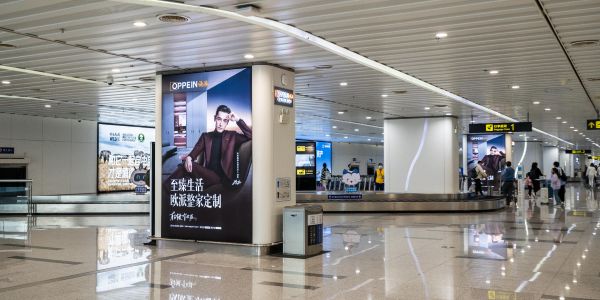
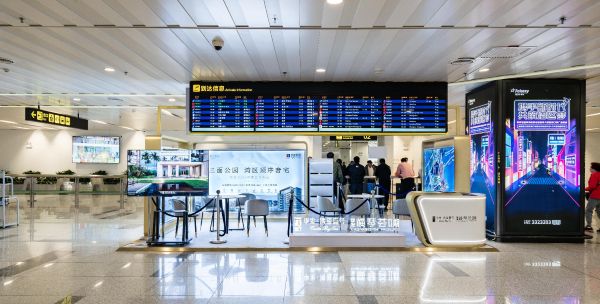
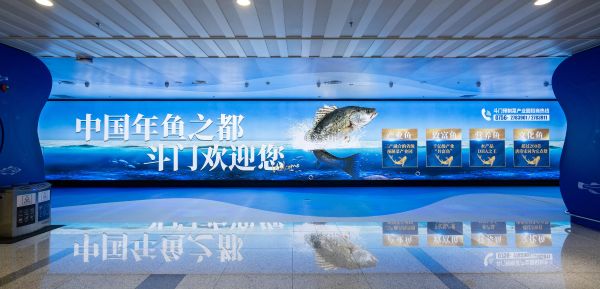
Located on the second floor of Terminal 2 in the north and south corridors for domestic departures, directly opposite the escalator entrance for shuttle buses to remote gates, it is a key visual point for all passengers departing for remote gates (check-in → security → corridor → shuttle bus at the bottom of the escalator). It faces the escalator traffic flow, and when passengers move up or down the escalator, their line of sight naturally meets the display at eye level, unobstructed and directly facing the lightbox image, without detours or dispersal, making it the core visual C-position in the remote gate departure area.
When passengers use the escalator, their line of sight naturally meets the lightbox at eye level without obstruction or interference, ensuring forced attention. The effective dwell time is long, and the exposure conversion rate is much higher than that of ordinary scattered lightboxes. There is one dual-point lightbox in each of the north and south corridors covering all passenger traffic departing from remote gates, allowing repeated brand exposure to reinforce memory. It is a premium location for brand exposure in the departure area with forced reach, high attention, and high memorability.
Advertising positions in this area are scarce, and there is no cluttered information nearby, making the lightbox display stand out independently. The brand message is delivered more purely and focused, with passengers’ attention highly concentrated. Passengers waiting or resting can dwell for 5–8 minutes naturally focused on this lightbox, achieving exclusive single-point brand exposure without diversion or dilution, increasing memory retention 2–3 times compared to other media in the waiting area.
The lightbox directly faces the escalator flow without surrounding disruptive advertisements. During passenger dwell time, their vision is forcibly locked on the brand message efficiently. It is directly aligned with the line of sight and free from other media obstructions. Single exposure lasts 3–5 seconds, with a wide, large image and evenly lit interior, making brand display clear and memorable.
As a visual landmark in the concourse area, this media has a strong sense of scene exclusivity and brand endorsement. The North and South concourses, as the waiting areas extending from Terminal 2, offer a relatively independent and quiet environment where passengers tend to stay longer. The large lightbox media standing opposite the escalator not only forms a visual focal point in physical space but also serves as a strategic point for brands to achieve efficient communication and value conversion in the regional market.
Located on the wall directly opposite the escalator in the domestic departure area on the second floor of Terminal 2, it is a must-pass point for all passengers departing from remote gates after security checks on their way to the shuttle bus boarding area, with no possibility of detouring, ensuring 100% mandatory exposure to remote gate passenger traffic. Unlike the dispersed layout of ordinary airport lightboxes, this position directly faces passengers’ line of sight as they go up and down the escalator, with a suitable distance and no distracting information, allowing brand messages to be conveyed efficiently when passengers are calm and attentive.
This lightbox is a prime media point for remote gate traffic, precise reach to high-net-worth passengers, rare and non-replicable, with outstanding cost-effectiveness. In the short term, it can quickly enhance brand exposure and high-end image; in the long term, it can leverage airport traffic growth and scarce resources to achieve stable, continuous, and predictable investment returns, making it the preferred benchmark location for mid-to-high-end brands planning a presence in aviation hubs.
The core lies in targeting scarce hub resources and accurately reaching high-end passengers, achieving dual returns of short-term exposure and long-term brand asset accumulation. Its investment value mainly reflects four key dimensions: traffic, customer base, scarcity, and cost-effectiveness, making it a quality investment choice in the high-end market.