
- Photos
- Specs
- Advantages
- Value
- Media Map
| Area:Shenzhen | Type:high-speed railway | Frequency:300 |
| Address:No. 28 Zhiyuan Middle Road, Minzhi Subdistrict, Longhua District | Format:led | Duration:10s |
| Location:Entrance Security Checkpoint on the First Floor of the Waiting Hall | Min Qty:8 | Operating Time:6-23o'clock |
| Size:4.9*3 | Min Period:month |
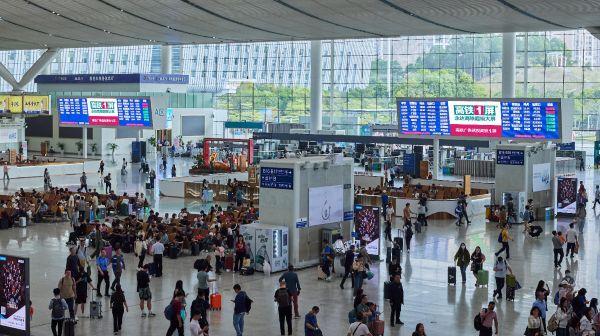
Above the dual security screening zones A and B in the first-floor waiting hall, spanning the core junction of security lanes and waiting seats, sits the first digital media installation that all passengers transferring from metro, bus and online car-hailing services must pass through to enter the station. All outbound passengers of the entire station need to queue up for security checks and identity verification, facing the screens directly throughout the process with no forks or detours to bypass them. Meanwhile, it covers the entire rear waiting lounge, self-service ticketing area and supporting commercial facilities, creating dual exposure scenarios of "queuing for security screening + long waiting stays". This makes it a scarce front-interception LED matrix resource in the waiting hall.
This spot serves as the first communication checkpoint at the entrance of the waiting hall, positioned ahead of secondary media such as ticket gates and seating areas. Passengers spend an average of 3 to 10 minutes queuing for security screening, moving at a gentle pace with spare attention, making them far more receptive to dynamic advertisements than when rushing to catch transport. Right after security screening lies an extensive waiting seat zone, where passengers wait for an average of 25 minutes, enabling secondary continuous exposure to brand information on the screens and doubling the total exposure duration.
The LED screen is situated in a 100% mandatory viewing zone. The long horizontal screen is suspended directly above the security lanes, arranged linearly parallel to the passenger queuing direction. It falls right within passengers’ natural 15°–20° upward line of sight while queuing. Combined with the average 25-minute waiting time for high-speed rail passengers, it delivers unavoidable forced exposure. The advertisement memory retention rate is over 65% higher than that of traditional light boxes.
The annual passenger arrival and departure volume exceeds 126 million, with a regular daily average passenger flow of 376,000 and peak holiday passenger flow surpassing 400,000. Its passenger volume consistently ranks among the top three national railway hubs. Situated above the entire area of the dual A and B security check zones on the ground floor, it serves as the sole mandatory passage for all incoming passengers of Metro Lines 4, 5, 6, buses, online car-hailing services and long-distance coaches, covering 100% of all departing passengers at the station. It creates a dual-scenario traffic superposition combining long dwell time of 3–10 minutes waiting in security check queues and secondary long-term exposure during a 25-minute waiting period, delivering steady, massive and effective reach to target audiences all year round.
The complete set of 8 standardized LED screens is arranged symmetrically, running horizontally through the entire security checkpoint corridor to form an integrated brand visual gallery. Mounted high on the ceiling, the screens align with passengers’ natural upward viewing angle while queuing, capturing their line of sight effortlessly. Free from obstructions by pillars, luggage or crowds, the lobby boasts zero blind visual spots across the entire space with a 120° wide viewing angle for clear visibility both near and far. Dynamic 4K videos and wall stickers offer superior appeal, and synchronized playback across all screens builds a cohesive, grand brand venue with an outstanding premium display presence.
As the core front-facing advertising medium at the North Station entrance, this location delivers both commercial value and urban promotion value. It can accommodate official cooperation initiatives including Shenzhen urban cultural tourism promotion, government public welfare campaigns, regional investment promotion, and civilized city development programs. Government-enterprise cooperation orders feature stable volume, reliable payment collection and fixed scheduling, which can effectively offset revenue shortfalls during the off-season for commercial advertisements, smooth out annual earnings fluctuations, and further boost the overall return on investment and project stability.