- Photos
- Specs
- Advantages
- Value
- Media Map
| Area:Guangzhou | Type:airport | Frequency:0 |
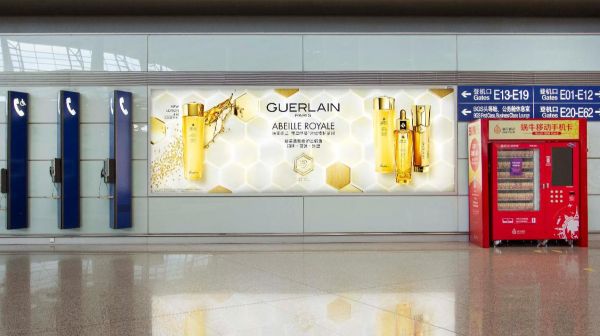
| Address:Guangzhou Baiyun International Airport | Format:Light box | Duration:0 |
| Location:T2 Domestic Arrival Baggage Hall Exit | Min Qty:2 | Operating Time:0-24o'clock |
| Size:13.68×3.58 | Min Period:month |
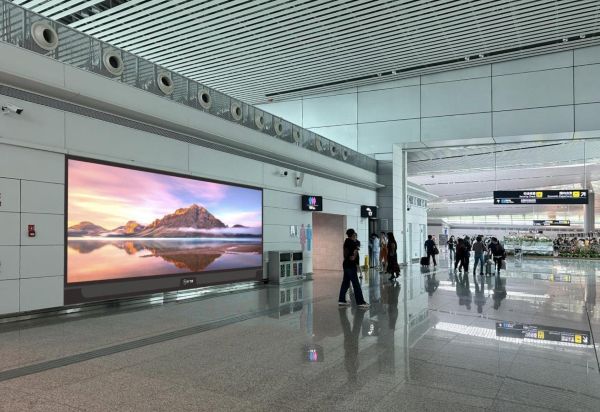
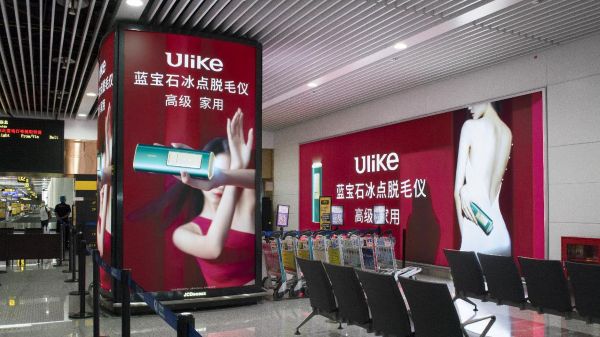
Precisely positioned at the final visual checkpoint for domestic travelers leaving the airport, it is the only mandatory passage after collecting luggage, with no diversion and unobstructed views, achieving full coverage of all arriving passengers. The media is symmetrically arranged on both sides of the exit, forming a channel-style visual enclosure, where passengers are surrounded by images 360° without any blind spots, compelling attention, leaving a deep impression as they look directly at the advertising display, with a significant enhancement in forced visibility and frequency of brand exposure.
The travel route is unique, with no detours, ensuring 100% forced reach of the advertisement. The exit area media is clean, free of informational interference, and passengers are at the end of their journey and in a relaxed state, making the reception of advertising information highly efficient. Content is received fully and spreads more effectively, becoming more vivid and attractive, with brand recall increasing by over 60% compared to static lightboxes.
Terminal 2 handles over 40 million passengers annually, with an average daily flow of more than 110,000 passengers. Travelers wait an average of 8-12 minutes for their luggage, making the exit area advertising forcibly approachable without interruptions. Extra-wide, large-format screens with symmetrical dual-screen layouts create an immersive visual impact, significantly enhancing brand recall. Exposure is stable, reach is precise with no substitute locations, and it can be paired with dynamic video and static visuals to suit different marketing rhythms.
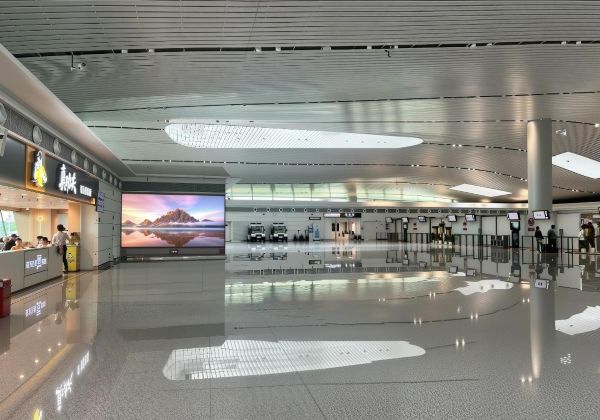
The traffic flow on both sides of the baggage hall exit aligns with the overall minimalist and grand design style of the terminal, which neither disrupts the openness and smoothness of the space, nor does it compromise functionality. By arranging the points reasonably, it ensures that all departing passengers can be reached without diversion, effectively enhancing the efficiency and memorability of information transmission during their exit process, while also providing the brand with a platform that combines both traffic value and emotional value for communication.
With the four core advantages of scenario, traffic, display, and value, it has become the preferred media carrier for brands to seize high-end communication channels and achieve efficient conversion. It can precisely target high-value customer groups, ensure that brand communication hits the core, increase the cost-effectiveness and conversion efficiency of advertising, truly achieve precise reach and efficient communication, and realize a win-win situation for the brand’s communication experience and airport image.
The lightbox package leverages six core advantages: prime location, massive passenger flow, high-value customers, low-interference settings, strong visual presentation, and long-term stable communication. The high-end communication matrix within the lightboxes, which is highly competitive, becomes the preferred medium for brands to deeply engage, elevate their image, and achieve efficient conversion, significantly improving the precision and conversion efficiency of advertising placements, making each exposure directly target the core consumer group.
As the first visual window of Guangzhou, these lightboxes help brands capture the city’s impression, achieving multiple value overlays including airport exposure, city radiation, and word-of-mouth communication, bringing brands triple returns in terms of image enhancement, market conversion, and asset accumulation.