
- Photos
- Specs
- Advantages
- Value
- Media Map
| Area:Guangzhou | Type:airport | Frequency:0 |
| Address:Guangzhou Baiyun International Airport | Format:Light box | Duration:0 |
| Location:T1 Departure Check-in Hall | Min Qty:2 | Operating Time:0-24o'clock |
| Size:16.5×4 | Min Period:month |
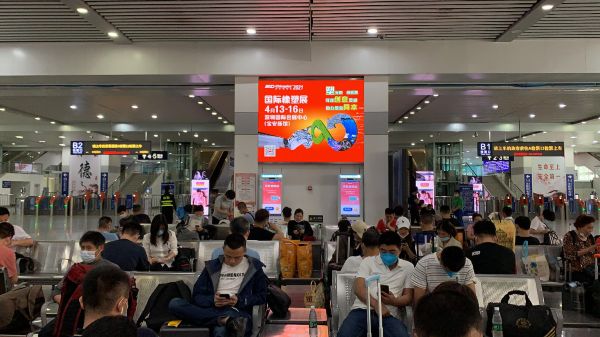
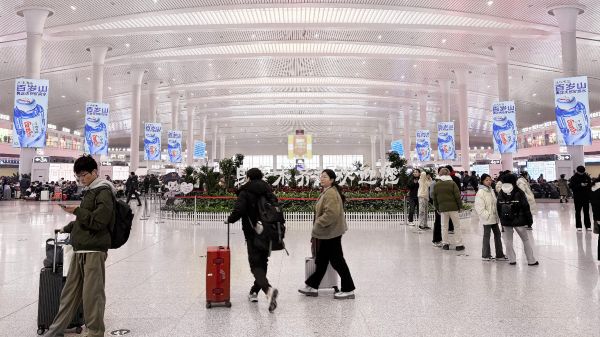
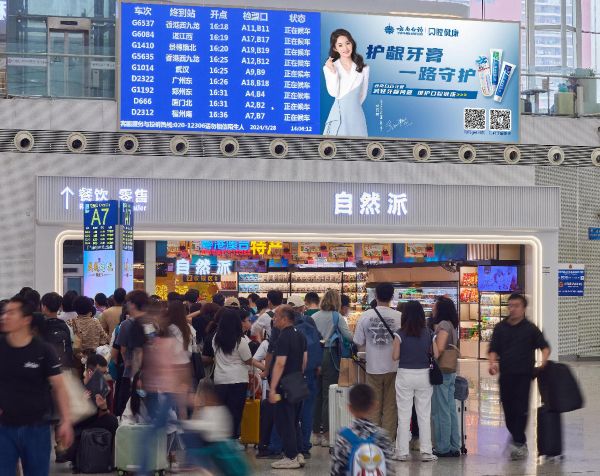
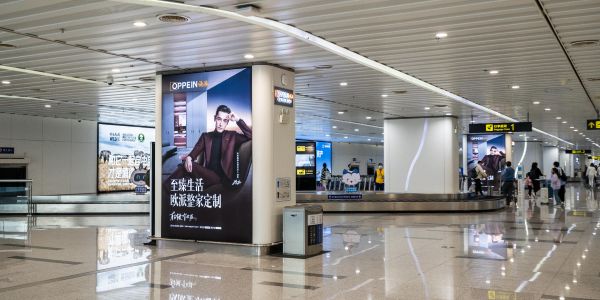
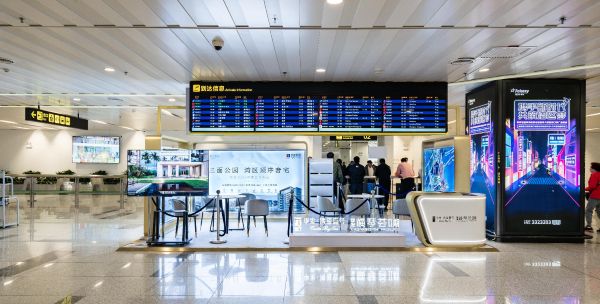
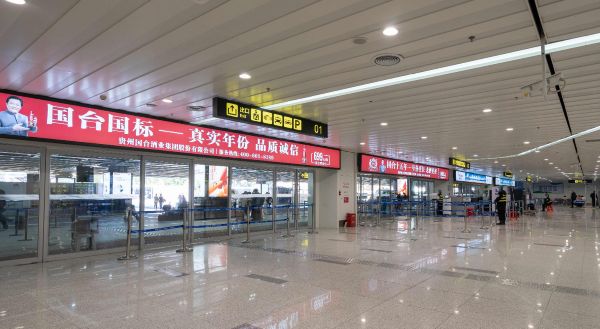
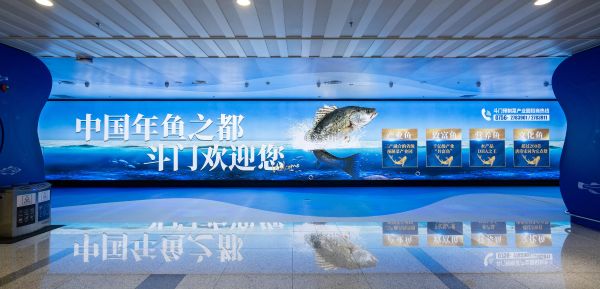
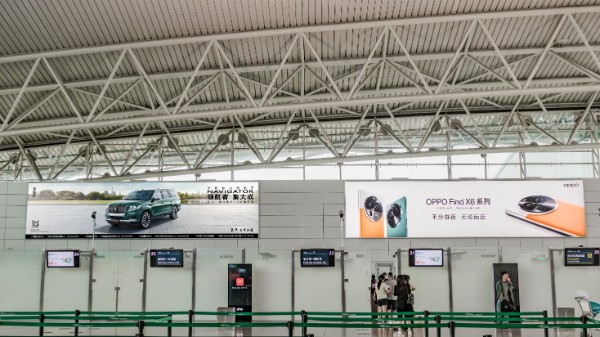
Located in a prominent high-altitude area of the T1 terminal departure hall, adjacent to the main domestic/international check-in islands, it is the panoramic visual core area for all departing passengers as they enter the hall, check in, and queue up. It offers a wide, unobstructed view visible from a long distance, with an average dwell time of 15–30 minutes, achieving nearly 100% passive reception of advertising information across all paths without selection.
The package point occupies the premium high-altitude position in the T1 departure check-in hall, overlooking the entire ticketing area. It is immediately visible to passengers upon entering, unobstructed across the hall, highly visible from a distance, with clear visuals both near and far creating a strong visual impact and presence. The check-in hall environment is simple, with scarce advertising spaces and no redundant information to interfere, ensuring efficient brand message delivery. Two panels operate simultaneously with dual-screen linkage, repeatedly reinforcing brand recognition and memory.
With check-in waiting times of 5–12 minutes, there is prolonged mandatory exposure, high attention concentration, and strong memorability. Daily passenger traffic exceeds 100,000, with an annual throughput of over 40 million. As a top-flow hub in the Greater Bay Area, the oversized, high-brightness, premium location perfectly suits high-end brand images, using a dual lightbox combination setup for a complementary left-right effect, full-area coverage, and repeated reinforcement of brand visuals. Single-point exposure and dual-point linkage significantly enhance memorability and communication penetration.
The high-altitude C-position in the Baiyun T1 departure hall is the terminal’s first visual focal point, covering all domestic and international departing passengers, and represents an irreplaceable core hub advertising resource. The dual-screen package linkage provides repeated exposure, substantially enhancing brand recall.
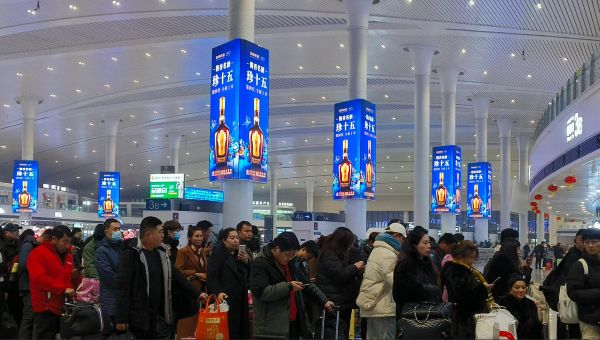
High-altitude lightbox sets are usually hung at the top of the check-in hall or on high walls, occupying the commanding height of the space. Their layout allows the advertising images to stretch over crowded crowds and complex facilities, creating a broad, unobstructed view. When travelers enter the hall and look up, the large brand images naturally come into view, enabling the brand to achieve 100% coverage of all departing passengers. The high-density passenger coverage ensures the breadth and depth of brand information dissemination.
The check-in hall is the most densely populated area of Terminal 1, gathering all domestic and international departing passengers. The location of the high-altitude lightbox set is exactly on the path passengers take to check in and drop off luggage. People's sight naturally extends upward, forming a wide, unobstructed view, and the huge brand images instantly dominate the visual center, presenting details with very high fidelity.
Standing at the panoramic 'check-in hall C-position,' travelers taking photos or short videos for social sharing easily get the lightbox in the shot. The massive lightboxes are like floating aerial galleries, with bright colors and fine details, naturally triggering spontaneous secondary sharing on social platforms. This achieves offline high-impact screen exposure and online free product seeding, amplifying brand voice in both directions. The effective exposure time is several times that of ordinary channel advertisements, with low cost per single reach, deep penetration, and strong memorability.
Each set includes two giant lightboxes with double screens echoing left and right, providing full coverage, achieving the dual effect of 'single-point exposure and coordinated reinforcement.' Compared to single-unit placements, brand recognition and recall increase by more than 50%, quickly deepening the audience's brand imprint and doubling the communication penetration.