

Search
3070results match your search criteria
HOT
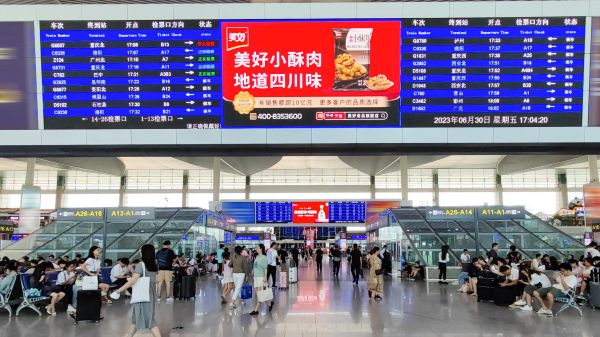
North Main Screen in the Center of Chengdu East Railway Station Waiting Hall
Eye of Vision, Integration of Wealth
Passengers spend an average of 15 to 40 minutes waiting in the station. They repeatedly look straight at the large screens while resting and waiting for ticket checking. They can be exposed to advertisements multiple times during a single trip, resulting in far higher retention of advertising information than short-duration media in passageways.
Quote
¥50 W-100 WTips:A quotation plan can be generated by matching different media resources and downloaded.
HOT

LED Screen in West Entrance Concourse of Chengdu East Railway Station
Customized core costs tailored to each individual
After entering the station, passengers first check their train numbers and locate the departure gates. They will voluntarily stop for 3 to 8 minutes, stand close to view the screens at eye level to obtain information. In this scenario, passengers demonstrate extremely high receptiveness to advertisements, without the sense of forced resistance triggered by outdoor advertising.
Quote
¥23 W-45 WTips:Can match different media resources to generate quotation proposals and support downloading
HOT
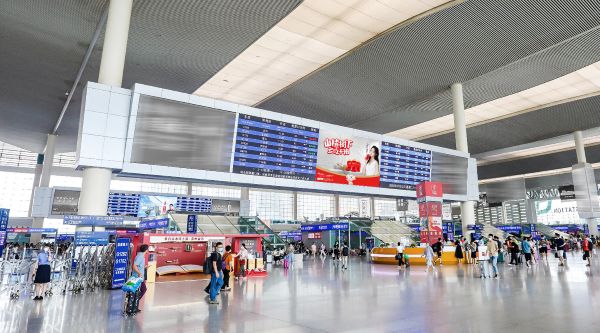
South Main Screen in the Center of the Waiting Hall of Chengdu East Railway Station
LED Technology, the Pioneer Lighting Up the Future
Located on both sides of the train schedule display screens in the lobby, this area naturally draws passengers' attention while they queue for security checks, locate boarding gates and wait for trains. It achieves 100% coverage of all waiting passengers with no blind spots, capturing the first visual impression of travelers on their journeys.
Quote
¥100 W-200 WTips:Can match different media resources to generate quotation proposals and support downloading
HOT
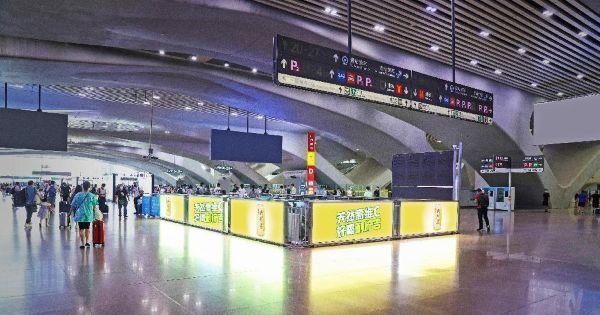
LED Display at Metro Transfer Gate, 1st Floor, Guangzhou South Railway Station
Technology illuminates life, and frugality creates wealth
The media is located in an open lobby inside the venue with no columns or walls for obstruction, enabling a full 360° viewing range without any blind spots. Pedestrians passing by from all four directions—east, west, south and north—can view the advertising screen in its entirety.
Quote
¥11 W-22 WTips:It can match different media resources to generate quotation proposals and support downloading
HOT

LED Screen at the Central Service Center in the Waiting Hall of Ningbo Station
Technology brightens life, and frugality builds wealth
The north-south and east-west passageways of the waiting hall, located at the core of the departure floor, all converge here. There are no columns or walls blocking the view. The 360° circular column structure enables 100% visibility across the entire waiting area without any blind spots for signal transmission.
Quote
¥6 W-12 WTips:It can match different media resources to generate quotation proposals and support downloading.
HOT

LED Display at Central Service Center, Waiting Hall of Nanjing South Railway Station
Stand tall in splendor, radiate glory across the world
Leveraging the advantages of Nanjing South Railway Station as a national-level transportation hub, the station receives an annual passenger flow of over 110 million people, with a stable daily passenger volume of more than 300,000 and a peak volume exceeding 400,000 during holidays. The massive and steadily growing floating passenger flow serves as an inexhaustible asset of communication traffic for media.
Quote
¥10 W-20 WTips:It can match different media resources to generate quotation proposals and support downloading.
HOT

LED Screen at the Central Service Center in the Waiting Hall of Hangzhou East Railway Station
Technology promises light up life
Passengers will pass through this spot many times while waiting for inquiries, resting before their trains, and traveling to and from ticket gates. A single passenger may view the advertisements 3 to 8 times during one trip, resulting in far deeper memory retention than media viewed briefly while passing through corridors.
Quote
¥16 W-32 WTips:It can match different media resources to generate quotation proposals and support downloading.
HOT

LED Screen at the Central Service Center of the Waiting Hall of Shanghai Hongqiao Railway Station
Stand tall with splendor, radiate light across the world
The large screen is located at the visual focal point of the hall. Passengers traveling from the four directions (north, south, east and west) can view it at eye level without any visual obstructions, achieving 100% coverage of all waiting passengers in the waiting hall. Travelers will repeatedly see the screen multiple times during their entire journey, including entering the station, waiting for trains, checking tickets and leaving.
Quote
¥18 W-36 WTips:Can match different media resources to generate quotation proposals and support downloading

We have over decades of experience in developing outdoor advertising media placement strategies to drive brand success on a global scale.
Community Ads
Other Ads
Copyright © 北京杨氏天赐传媒有限公司 版权所有京ICP备2021000929号-7Sitemap广告投放
Links:
天赐传媒