
- Photos
- Specs
- Advantages
- Value
- Media Map
| Area:Chengdu | Type:airport | Frequency:0 |
| Address:Chengdu Tianfu International Airport | Format:Light box | Duration:0 |
| Location:After security check on Level 4, Domestic Departures, Terminal T2 | Min Qty:2 | Operating Time:6-23o'clock |
| Size:3.475m×5.03m;3.465m×5.10m | Min Period:month |
The post‑security‑check area serves as the sole mandatory passage for passengers heading to the departure lounges. It covers 100% of all domestic‑departure passengers who have cleared security with no passenger flow omission, delivering an effective ad reach close to 100%. There are no other dense advertisements in this area to distract attention. After going through security checks, passengers are in a relaxed state and far more receptive to advertising messages than in anxiety‑inducing scenarios such as check‑in queues. Brand recall is over 40% higher than that of conventional airport media.
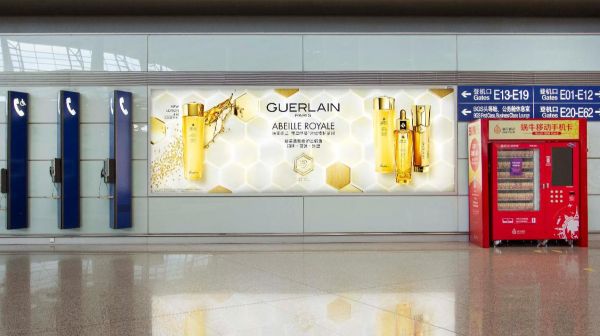
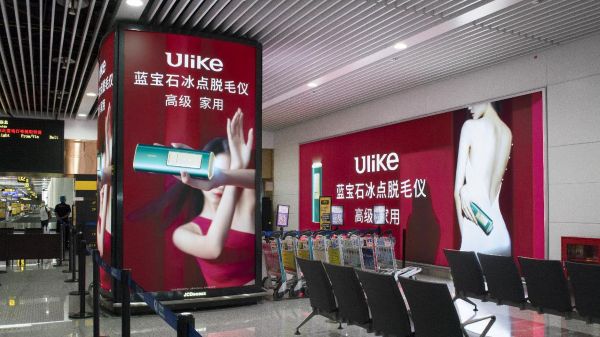
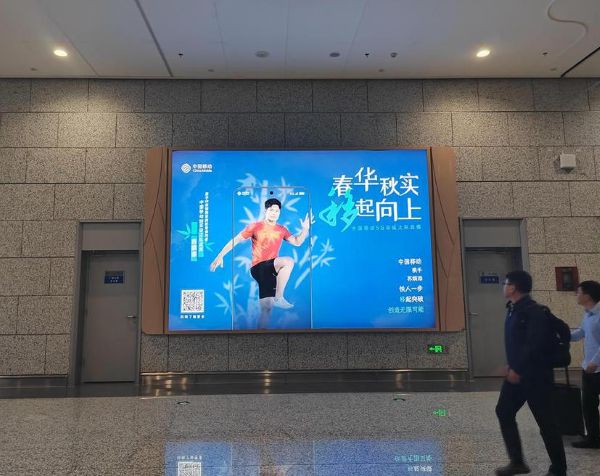
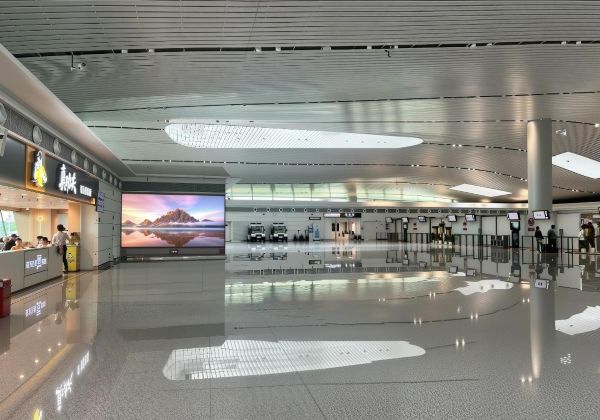
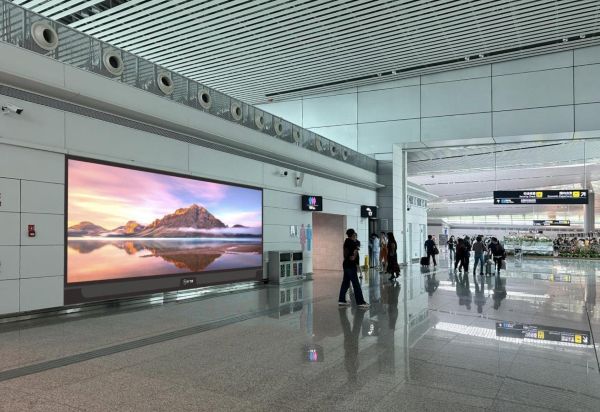
Located in the core thoroughfare on Level 4 for domestic departures, this spot is an unavoidable visual point for domestic‑departure passengers travelling to the concourse after security screening. There are in total two large‑format high‑brightness indoor light boxes, with dimensions of 3.475m×5.03m and 3.465m×5.10m respectively. Featuring large‑scale structures and ample display surfaces, the light boxes are embedded within the bright and spacious indoor space of the terminal building. Natural light combined with backlighting of the light boxes creates refined and premium visual output.
The annual passenger flow exceeds 55 million. Level 4 Domestic Departure Hall of Terminal 2 achieves a daily reach of over 120,000 people, with hourly passenger volume topping 10,000 during peak hours. The light boxes register an annual passenger reach of more than 40 million, supported by sufficient and stable exposure volume. Over 70% of the exposed audience are business travellers, high‑end tourists and cross‑border travellers, and more than 60% are decision‑makers. The average spending power of this audience is more than three times that of regular urban outdoor audiences, bringing great potential for brand conversion.
Before security check, passengers are generally in a stressful state due to rushing for flights, queuing and verifying documents, with distracted attention. After security check, passengers are completely relieved of travel‑related pressure, staying relaxed and emotionally stable while waiting for flights in leisure mode. They are more willing to proactively take in environmental information. At this juncture, media can achieve in‑depth secondary brand seeding, with higher information‑receiving efficiency and extremely low sense of resistance, so as to sustainably strengthen brand awareness and favorability.
The post‑security‑check corridor where the media is located features spacious space, sufficient floor height and well‑organized passenger flow lines, delivering a clean and tidy overall communication environment. With one‑way concentrated foot traffic and unobstructed broad vision, passengers can clearly spot advertising visuals from a distance. They keep receiving brand messages throughout their passage, enjoying stable and continuous visual exposure. Free from interference caused by cluttered crowded advertisements, this single media delivers strong visual focus and can quickly capture passengers’ visual attention.
Leveraging the communication momentum of the enclosed airport travel scenario, it opens up the chain of "exposure — mental perception — consumption intention". Brand memories built by offline mass‑transport media can in turn empower terminal sales and online communication, forming a closed‑loop communication system. Considering passenger quality, scenario interference level and brand premium capacity, this spot counts as high‑value image‑oriented media with prominent return‑on‑investment advantages. It serves as a core preferred location for building the aviation media matrix in Southwest China.