Airport Advertising: Earning 'Premium Endorsement' in the Ritual of Departure and Arrival
2026-08-21Tianci MediaViews:20
Highlights
Airport advertising sits at the "tone ceiling" of offline media. It does not chase the largest crowd but the highest-quality density: business travelers, high-net-worth passengers and outbound tourists, during the "time stretches out, spending intent opens up" gap after security, receive brands far more willingly than in daily life. But airport advertising site selection is highly specific—pre- vs post-security, domestic vs international, departure vs arrival differ enormously. This article uses a "terminal spatial data" framework to explain how airport advertising selects and executes.
1. Why "Location" Is the First Principle of Airport Advertising
The "location" of airport advertising is essentially a ritual node. Stepping into an airport means an "important trip": business, travel, family, study abroad. This "non-routine" mindset makes the airport a natural stage for "premium endorsement"—a brand present at the airport is defaulted to "a brand with strength." The first principle of airport advertising is to treat the ad space as a "scenario-endorsement slot": appearing on the passenger's departure or arrival path equals stamping a "trustworthy" seal in their mind.
2. The Unique Spatial Data Assets of Airport Media
Airport advertising owns distinctive terminal-level spatial data:
Pre/post-security zoning: post-security media exclusively capture high-dwell, high-intent audiences—far more valuable than pre-security.
International/domestic split: international departure halls gather high-net-worth outbound and duty-free demand; domestic halls skew business-commute.
VIP/business movement: VIP lanes, first-class lounges, business waiting areas are high-frequency touchpoints for top audiences.
Route destination profile: which cities a flight serves defines passenger industry attributes (business vs leisure).
Dwell-time data: time at gates and arrival corridors decides creative length and information load.
These spatial data let airport advertising precisely lock "the right people."
3. Gravity Models and Route Network Catchment
The "trade area" of airport advertising is the route network. With the airport as hub, it radiates national and global city connections: business routes (Beijing–Shanghai–Guangzhou–Shenzhen) map to finance, auto and B2B; leisure routes (Sanya, Lijiang, outbound) map to OTA, duty-free and destination brands; study-abroad routes map to education and finance. Through a route OD model, airport value lies not in "local 3 km" but in "whom it connects." One airport advertising campaign actually touches a cross-city network of mobile elites.
4. Competitor Adjacency and Positioning Strategy
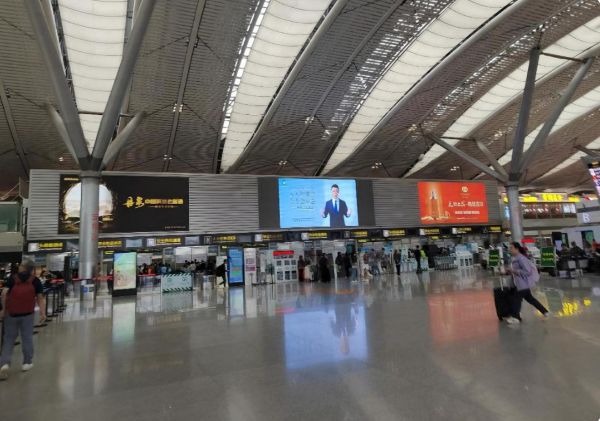
Airport advertising prizes "movement-line monopoly." From check-in to boarding, passengers pass check-in islands, security, waiting halls and gates—each a positioning chance. Smart brands run continuous media along the whole path (e.g., consecutive post-security digital screens) to create an "it's you all the way" immersion, far deeper than single-point buying. On adjacency, premium auto, finance and watch brands cluster in VIP zones for "premium co-presence" endorsement; newcomers can ride the trust tailwind of mature neighbors.
5. Capture Timing and Movement Nodes
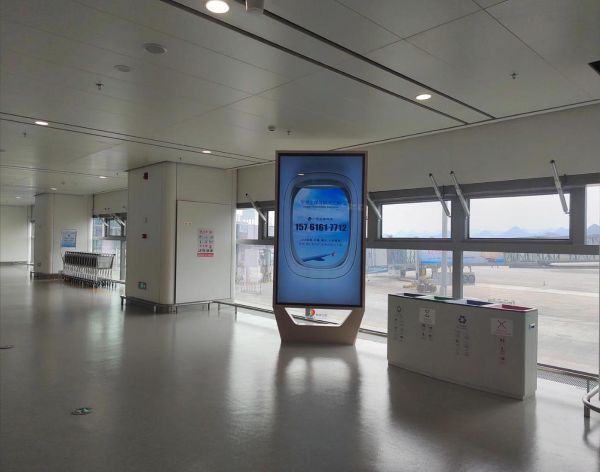
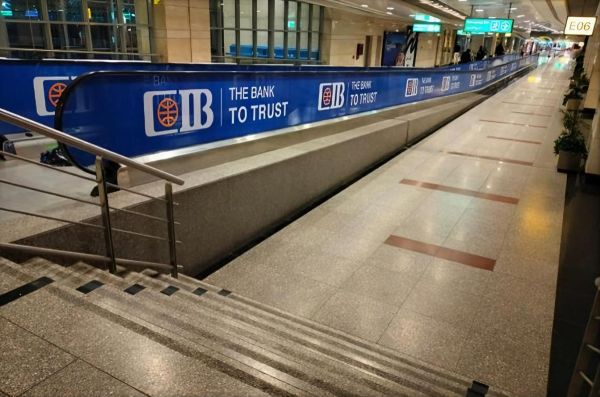
The golden window of airport advertising is post-security to pre-boarding: passengers finish tedious procedures, enter a "waiting but relaxed" state, phone signal weakens, attention returns to environmental media—ideal for brand storytelling. Arrival corridors capture the joyful, relaxed "homecoming/arrival" state, fitting travel, auto and real-estate "good-life" narratives. Great airport advertising acts as a "travel companion" not an "interruption," winning favor with big visuals, low intrusion and high quality.
6. Industry-Specific Airport Advertising Playbooks
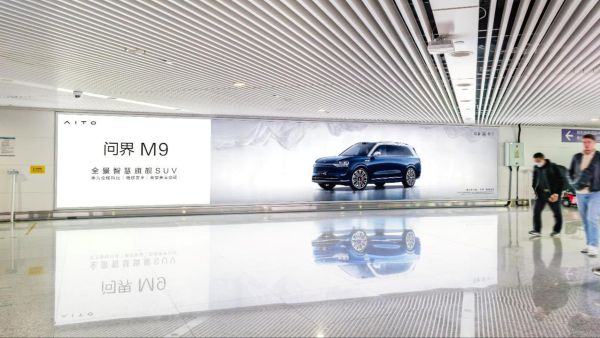
Automotive: lock VIP lanes and arrival halls; push flagship models and test drives; emphasize "success travels with you."
Wealth management/finance: business movement and first-class lounges; push asset allocation and private-banking services.
OTA/travel: international departure and arrival corridors; push destinations and flight-hotel packages.
Duty-free/gifting: post-security and gates; push duty-free shopping and travel souvenirs.
The essence of airport advertising is making the brand a companion through the traveler's "important moments."
7. Data Tools and Key Metrics
For airport advertising, read: throughput by time/route, VIP passenger share, post-security dwell time, passenger-profile surveys. Track effective reach, high-net-worth share, brand-preference uplift, store/counter conversion, search index. Digital terminals now rotate creative by flight density, syncing airport advertising with real passenger flow.
8. Common Mistakes
Only buying cheap pre-security slots, missing high-value dwell audiences.
Creative too "hard-sell," breaking the airport's composed tone.
Mixing routes indiscriminately, wasting premium resources.
Ignoring arrival halls, missing the joyful receiving state.
No link to online membership, failing to retain high-net-worth clients.
9. FAQ
Summary
The core of airport advertising is translating "departure and arrival" into "premium brand endorsement" with terminal spatial data. When you select by post-security, VIP movement and route profile, the airport stops being an ad venue and becomes a trust business card a brand hands to high-net-worth travelers.