- Photos
- Specs
- Advantages
- Value
- Media Map
| Area:Beijing | Type:airport | Frequency:1020 |
| Address:Beijing Capital International Airport | Format:led | Duration:15s |
| Location:T3 Duty‑Free Area Intersection | Min Qty:2 | Operating Time:6-23o'clock |
| Size:2.275 x 4.1 m x 4面 | Min Period:month |
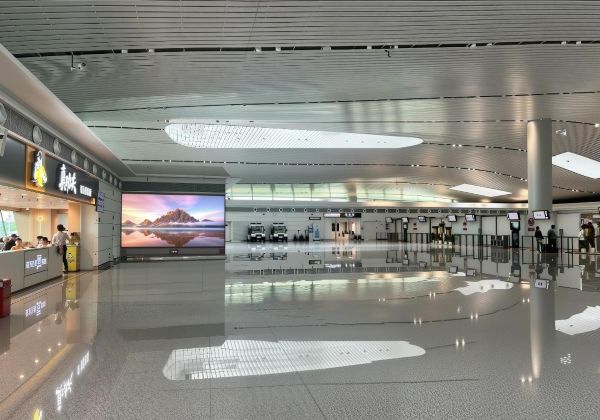
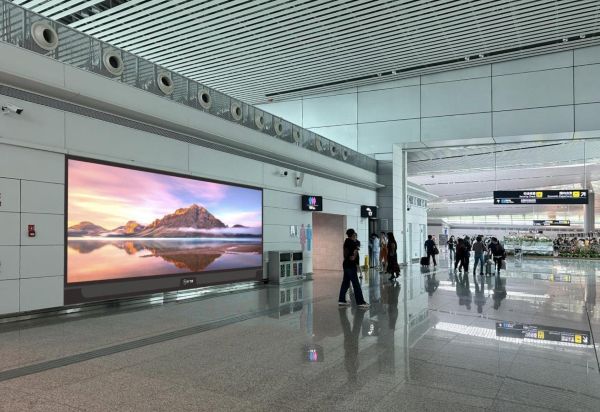
The T3 International Departure Duty‑Free Area Intersection Pillar‑wrapped LED Package is a rare three‑dimensional cross‑road advertising medium within the international sterile zone of Beijing Capital International Airport. Its core value lies in passenger flow converging from two traffic routes, 360‑degree all‑round visibility, and high exposure with a small number of rotating advertisers. Unlike ordinary single‑sided large screens that only capture one‑way pedestrian traffic, the two four‑sided pillar‑wrapped installations firmly capture all diverging passengers at the intersection and achieve full‑coverage reach of outbound travelers.
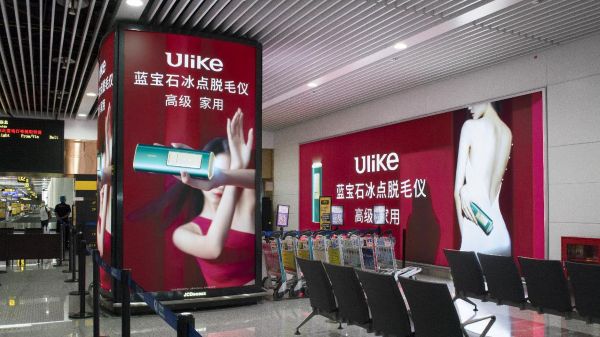
The equipment consists of indoor high‑definition LED panels. Each pillar unit measures 2.28m×4.1m with four display faces. Boasting a striking and grand appearance, it fits the high‑end commercial atmosphere of the national gateway airport. Media sales are on a monthly basis. Each advertising creative runs for 15 seconds, and a maximum of four advertisers rotate on one package. Operating hours follow terminal flight schedules: 06:30‑23:30, totaling 17 hours daily, fully covering all morning, noon and evening international outbound flights. The audience comprises high‑net‑worth international outbound business travelers and outbound tourist consumers.
The two‑pillar array with four‑sided pillar screens forms a floor‑to‑ceiling visual matrix. Passengers can view at least two screen surfaces simultaneously while walking, delivering all‑angle, dead‑free and high‑impact visual immersion. Dynamic videos on the oversized combined display area with stereoscopic surround presentation generate strong visual depth. Brand messages stand out prominently and leave far‑stronger memory imprints than traditional static advertisements. Serving as one of the key final advertising touchpoints before passengers leave the terminal, it delivers high marketing conversion efficiency.
The media is located at the intersection of two passenger flow routes in the duty‑free zone, where two streams of passengers heading for different boarding gates converge, naturally bringing together bidirectional passenger flows. It adopts a four‑sided column‑wrapped 3D LED structure that plays advertisements on all four sides simultaneously. Passengers walking from any direction can face the screen directly with no visual blind spots. The column‑wrapped three‑dimensional form can capture all outbound passengers moving in different directions, delivering high passenger‑flow coverage and remarkable forced‑reach effect.
As "China’s No.1 National Gateway", it is a top‑tier international aviation hub in China that gathers high‑net‑worth outbound business travelers and high‑end tourists from across the country. Boasting dense international air routes and an extremely high proportion of high‑end passengers, this media refers to the column‑wrapped LED at the intersection in the international departure duty‑free zone of Terminal T3‑E. Situated within the core sterile area after security check, it serves as a pivotal convergence point of dual passenger routes for passengers heading for various boarding gates and duty‑free shopping areas, functioning as a core traffic hub that outbound passengers must pass through.
Leveraging three core strengths — an exclusive base of high‑net‑worth international passengers, an immersive duty‑free consumption scenario, and a scarce 4‑slot rotation playback mechanism — it stands as a benchmark media asset in the national gateway area featuring three‑dimensional hub positioning, high‑frequency exposure, high‑net‑worth audiences and conversion potential. Its prime location at the intersection of dual passenger routes, paired with a 360‑degree blind‑spot‑free three‑dimensional display format, thoroughly addresses the pain points of incomplete coverage and superficial exposure plaguing traditional airport media, and achieves full‑range capture of outbound passenger flows.