
- Photos
- Specs
- Advantages
- Value
- Media Map
| Area:Chongqing | Type:airport | Frequency:120 |
| Address:Chongqing Jiangbei International Airport | Format:spam bot | Duration:10s |
| Location:Domestic Departure Lounge, Terminal 3 | Min Qty:76 | Operating Time:7-23o'clock |
| Size:1m*1.7m =1.7㎡ | Min Period:4week |
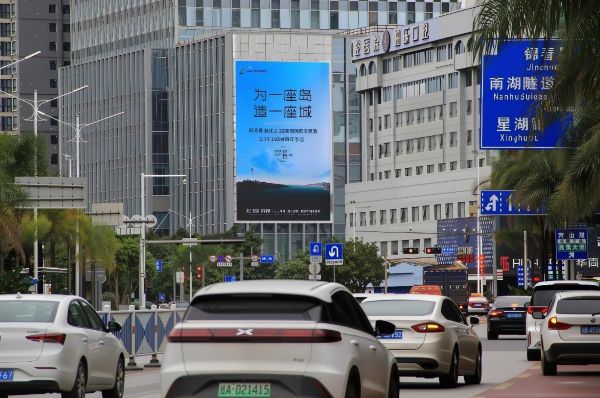
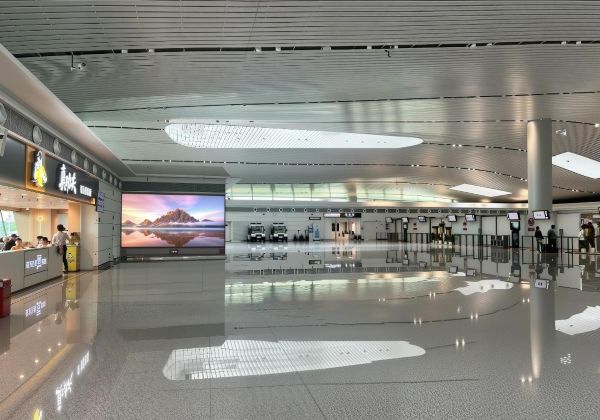
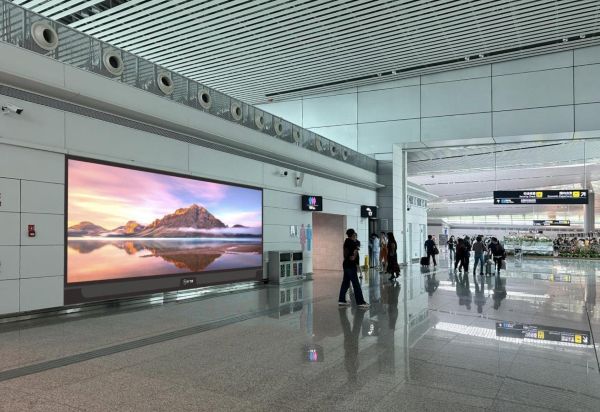
The media is located in the isolated departure waiting area after security check, a confined space where passengers must pass through and stay for an extended period. Free from interference from external vehicle and pedestrian flows, passengers face the screens throughout the entire process of queuing for boarding, sitting and resting, and waiting for flights. It avoids the short‑coming of "fleeting exposure" seen in outdoor and corridor‑based media. The lengthy dwell time enables repeated, frequent and in‑depth audience engagement, delivering far superior brand recall and complete information reception compared with conventional outdoor media.
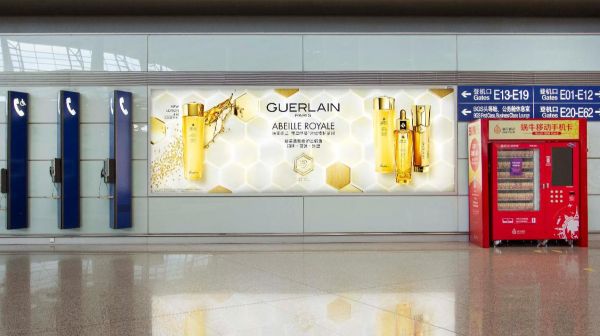
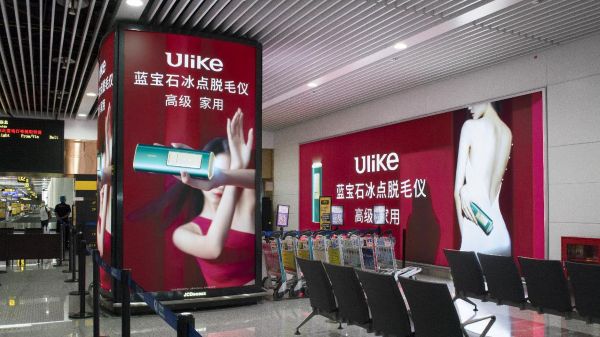
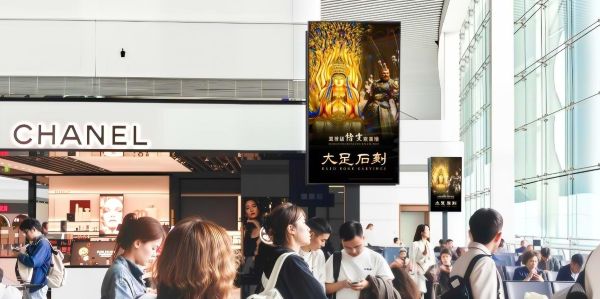
As a national‑level 4F‑grade aviation hub in Southwest China, Terminal 3 handles 70% of the airport’s passenger throughput. The screen display units in the domestic departure lounge constitute core digital media resources within the enclosed waiting environment. Seventy‑six vertical screen displays are deployed alongside all domestic boarding gates, achieving full coverage of all domestic‑departing passengers. After clearing security and entering the enclosed waiting zone, passengers are frequently exposed to screen content during their idle time while waiting for boarding and resting.
The biggest core advantage of the screen displays in Terminal 3 domestic departure lounge lies in in‑depth exposure within the enclosed waiting scenario paired with long passenger dwell time. Different from high‑throughput locations such as check‑in halls and passageways, passengers enter a relatively closed waiting environment after security screening. No longer in a rush, they are more relaxed mentally with greater available attention. Advertisements are not merely fleeting but make repeated impressions, resulting in much deeper brand memory than ordinary outdoor media. Every domestic‑departing passenger will pass at least one screen display, realizing 100% coverage of all domestic departure passenger flows.
The devices are situated right next to the boarding‑gate queuing areas and passenger waiting seats. After security screening, passengers enter the enclosed waiting zone with an average dwell time of around 36 minutes. Passengers face the screens directly while queuing for boarding and waiting, with minimal environmental distractions and high‑frequency visual exposure. Terminal 3 domestic departures see approximately 120,000 outbound passengers daily. The core audience consists mainly of high‑net‑worth individuals aged 25‑55, including business travellers, inter‑provincial tourists, and government‑enterprise travellers.
As a gateway for the Chengdu‑Chongqing Twin‑City Economic Circle, it offers domestic air routes covering major cities nationwide. Waiting passengers come from all provinces and municipalities across China. Advertising placements here reach not only local Chongqing residents but also nationally mobile cross‑regional traveller groups, delivering the effect of "advertising in one city for nationwide outreach". High‑quality creative content may also be casually photographed by waiting passengers and shared on social media, enabling offline placements to drive secondary online communication. This constitutes a core airport digital media resource that cannot be overlooked.
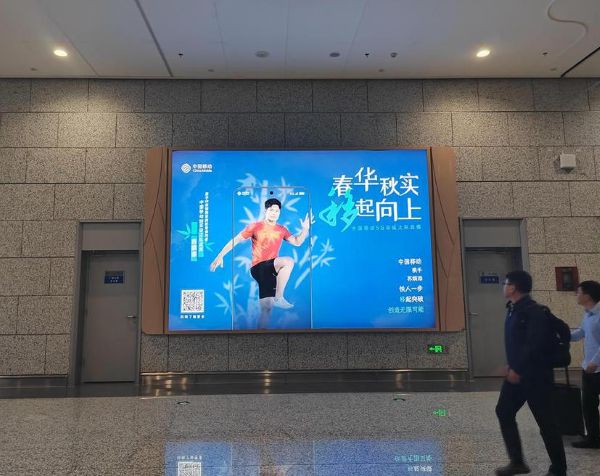
Indoor high‑definition full‑color vertical LED screens are deployed, adapted to airport indoor lighting conditions. They deliver sharp, delicate images with authentic, rich colours, free of reflection and blurriness, and maintain stable playback performance throughout the day. They support diverse content formats such as short videos, festival‑themed materials and event‑driven marketing, flexibly fitting various marketing scenarios including new‑product launches, brand upgrading, milestone campaign building and city promotion. With long‑hour screen illumination and high‑frequency rotation playback, they continuously reinforce brand perception among audiences.