
- Photos
- Specs
- Advantages
- Value
- Media Map
| Area:Guiyang | Type:airport | Frequency:740 |
| Address:Guiyang Longdongbao International Airport | Format:spam bot | Duration:10s |
| Location:T3 arrives at the mezzanine area | Min Qty:14 | Operating Time:7-23o'clock |
| Size:1.21m×2.16m | Min Period:year |
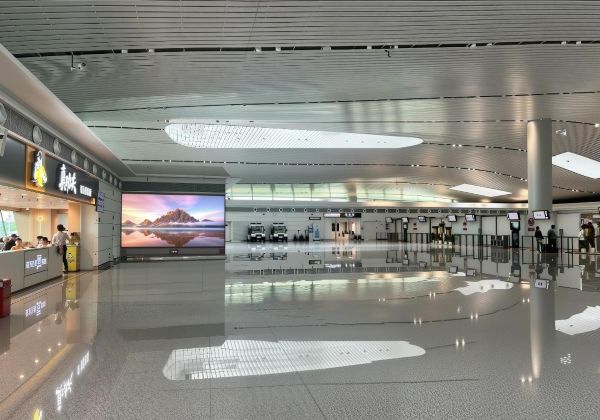
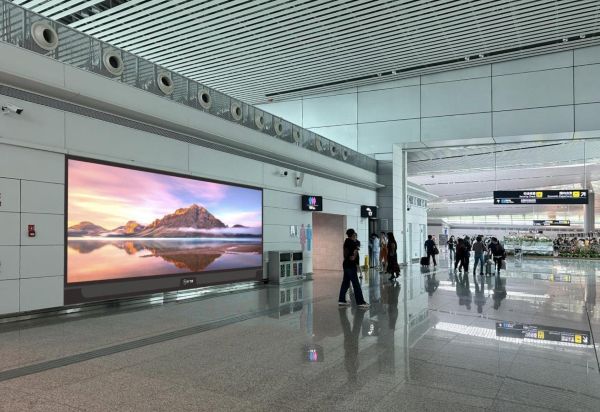
It lies on the mandatory passenger flow route where passengers take the escalator upstairs from the baggage claim hall to the pick‑up area, covering all passengers who need to transfer to ground transportation upon arrival. This area is a semi‑open corridor instead of an enclosed passage. The digital screens mounted on walls on both sides bring dynamic visuals seamlessly into passengers’ field of vision. It features high pedestrian density yet short dwell time (averaging around 15‑20 seconds), representing a "on‑the‑move visual exposure" scenario for powerful brand message delivery.
This spot sits on the core outbound route for arriving passengers. All passengers arriving in Guiyang have to pass through the mezzanine corridor toward the exit after collecting their baggage, making it a critical communication touchpoint before passengers leave the airport. Fourteen digital screens are neatly arranged along the passage to build a continuous advertising sequence. As passengers walk forward at a moderate pace, their line of sight matches the screen height, enabling them to keep receiving advertising visuals and achieving follow‑up repeated exposure throughout their walk.
The arrival mezzanine covers the sole mandatory path for passengers going upstairs from baggage claim to the pick‑up area, with a daily coverage of over 50,000 arriving passengers and an average passage time of approximately 15‑20 seconds. Despite the brief dwell period, thanks to the single‑route layout and unobstructed sightlines, each screen plays up to 740 times per day, and the daily exposure frequency per unit area reaches 3.2 times. Far outperforming the static communication mode of traditional light boxes, it generates a mobile advertising effect characterized by "high frequency, low interference and strong memorability".
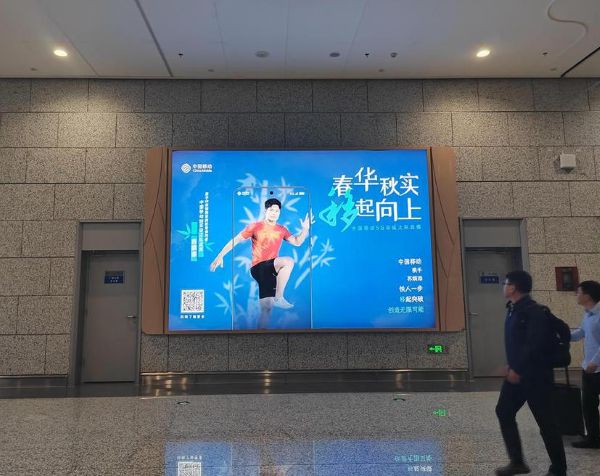
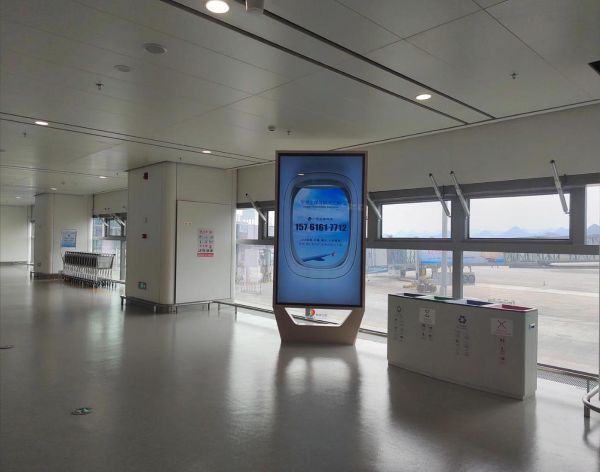
Fourteen vertical digital screen displays are evenly arranged length‑wise along the corridor to form a continuous immersive brand communication gallery. Passengers move slowly through the whole passage and are repeatedly exposed to brand visuals along the way, generating follow‑up chained exposure effects. Featuring vertical high‑definition display design, the screen height matches the human eye‑level viewing perspective. The passage boasts an open and transparent space free of obstruction from columns or equipment, delivering crisp and delicate visuals for close‑up viewing with stable all‑day display performance and a neat, high‑end visual experience.
The locations precisely target incoming non‑local mobile visitors entering Guizhou as well as high‑quality local passenger flows, suitable for brand promotion across categories including alcohol, finance, cultural tourism and more. As a large‑scale digital screen media matrix in the arrival area, it leverages core strengths including a mandatory closed‑loop passenger flow route, chained repeated exposure, relaxed viewing scenarios, high‑definition and stable image quality, and high‑quality audiences across the board. It serves as a vital core communication carrier for landing brands to capture the mind‑share of passengers entering Guizhou and further tap into the local market.
In the era of digital media, static visuals often fail to deliver long‑lasting impact. Supported by high‑definition LCD technology, vivid‑colored and smoothly‑played video content can be presented. In the spacious departure hall and arrival main building, the screens act as glowing windows. Video‑based content can boost brand awareness by over 30%.