- Photos
- Specs
- Advantages
- Value
- Media Map
| Area:Guiyang | Type:airport | Frequency:0 |
| Address:Guiyang Longdongbao International Airport | Format:Light box | Duration:0 |
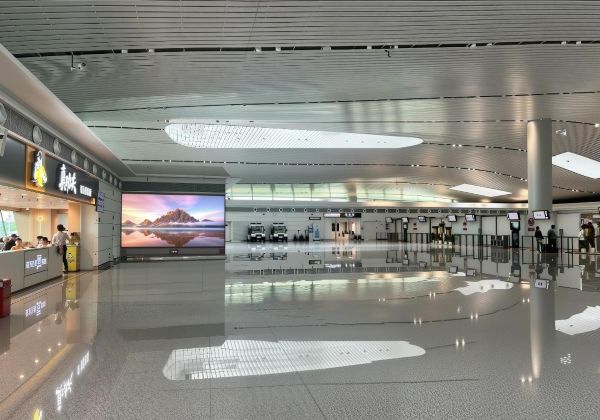
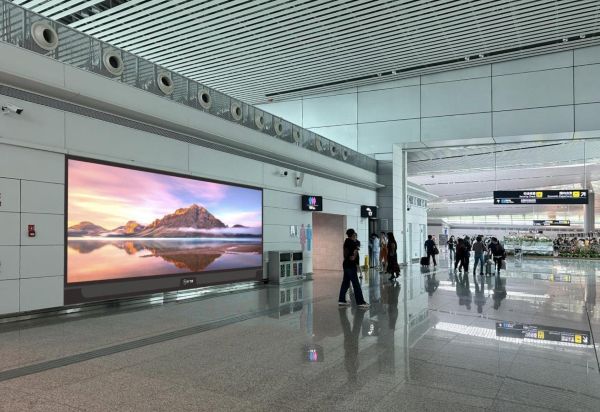
| Location:Above the escalator for remote stand arrivals at Terminal 3 | Min Qty:1 | Operating Time:0-24o'clock |
| Size:13*4.83 | Min Period:year |
The lightbox is positioned directly above the only visual corridor after remote‑stand passengers alight the escalator. It naturally draws eye‑line attention to create a high‑focus, low‑disturbance welcome scenario. Passengers must pass through this spot before collecting baggage, with dwell time concentrated within 5‑8 minutes. Within this enclosed setting, passengers do not use mobile phones, converse with companions, or face competing advertisements, delivering absolute visual exclusivity. Compared with the information‑saturated environment in departure zones, the information reception efficiency is improved by more than three times.
This media sits along the one‑way enclosed passenger flow path that all passengers must take. After remote‑stand passengers arrive at the terminal via shuttle buses, they all descend by escalator into the arrival corridor with no diversion or detours, achieving 100% passenger coverage. Passengers arriving from remote stands are highly concentrated and move at a consistent pace. Their collective field of vision focuses straight ahead of the escalator. The lightbox content faces passengers at eye level, unobstructed by pillars, equipment or crowds, delivering precise visual targeting and highly stable exposure.
This area reaches over 12,000 passengers daily. The straight‑line distance between the lightbox and passengers is merely 3‑5 meters. With such close‑range direct exposure to audiences, there is no long‑distance visual attenuation, so advertising messages can be fully conveyed to every passenger. Thanks to its enclosure, long dwell time and strong audience focus, the remote‑stand area serves as a prime golden spot for brands’ final touchpoint. The media achieves brand exposure first, capturing the last airport communication moment before passengers depart, enabling supplementary coverage that spans the full start‑to‑end travel journey.
It occupies the unavoidable visual focal point for deplaning passengers disembarking from remote stands when they go down the escalator. As passengers descend, their line of sight naturally levels or tilts slightly upward. Dynamic content on the large screen seamlessly enters their field of vision, enabling powerful penetration of brand messages the moment passengers transition from "air‑borne" to "ground‑based". Its unique high‑altitude location and extra‑large size turn the brand into a visual spectacle above the passageway, leaving a deep impression on passengers.
Adopting high‑definition backlit lightbox technology, the media delivers uniform screen brightness and high‑color fidelity for round‑the‑clock high‑definition display. Compared with rotating dynamic screens that divide exposure, static lightboxes keep visuals permanently displayed with continuous posting. Exposure is uninterrupted and will not be replaced or overwritten by competitors, resulting in purer and more textured brand presentation. Featuring an enclosed, independent spot with minimal distractions, a single media unit can create a strong visual anchor with extremely high brand recognition.
Boasting five core strengths — exclusive closed‑loop passenger flow for remote stands, first‑sight landing visibility, unobstructed direct view, relaxed viewing environment, and long‑term static exposure — this spot serves as a scarce high‑quality static lightbox media in the arrival area of Guiyang Airport Terminal 3. It completes the brand communication matrix for the airport arrival side, offering outstanding cost‑effectiveness for brand placement and exclusive scene occupancy. It is an irreplaceable static communication hub on the airport arrival side featuring high closed‑loop traffic and high exposure.