- Photos
- Specs
- Advantages
- Value
- Media Map
| Area:Guiyang | Type:airport | Frequency:0 |
| Address:Guiyang Longdongbao International Airport | Format:Light box | Duration:0 |
| Location:T3 first floor arrival level ramp lane | Min Qty:7 | Operating Time:0-24o'clock |
| Size:4.5m×2.6m=11.7㎡ | Min Period:year |
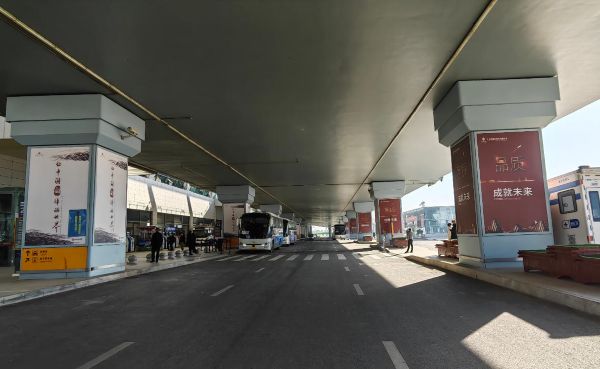
Located on the inner side of the domestic arrival lane on the first floor of T3, arranged linearly along the core passage used by passengers leaving the airport, it is an unavoidable visual focus for passengers taking transportation after arrival. Passenger flow is 100% covered with no possibility of detours, ensuring full advertising exposure with no omissions or interference from other information. The lightbox display provides sufficient effective viewing time for proactive attention, achieving uninterrupted, all-day brand display.
The lane area is relatively enclosed with minimal external interference, making it easier for attention to focus on the advertisement. The lane is the final passage for passengers leaving the terminal and boarding vehicles, with highly concentrated movement and no alternative routes. The advertising spots have no visual obstructions, and both passengers and drivers can naturally view the advertisement during waiting or transit. Effective reach is nearly saturated, with broader exposure and significantly enhanced communication efficiency.
After arriving passengers retrieve their luggage, they must go through this lane area, which ensures long visual dwell time during queuing for pick-up, with no distractions and forced attention. While waiting in the lane area for taxis, passengers are in a relatively enclosed space. The lightboxes are positioned directly in the passengers' path and line of sight while queuing, with large screens, high brightness, no visual obstructions, strong memorability, an open field of view, and moderate viewing distances, making the communication effect intuitive and efficient.
The lightboxes are linearly and continuously arranged along the passage to form a long visual corridor, with multiple screens interacting to greatly enhance brand presence, strengthen visual memory, and deepen communication impact. The forced reach rate is relatively high with no possibility of detours, achieving an efficient conversion from 'passive viewing → active memory'.
After the passenger arrives and gets off the vehicle to wait or find the exit, the path they must take creates an unavoidable visual focal point. The lightboxes arranged along the lane, with their wide visuals and high-brightness backlighting technology, can instantly capture the passenger's attention, achieving almost 100% forced exposure, ensuring that brand information is effectively received immediately, creating a highly penetrating communication advantage and effectively enhancing advertising reach.
The lanes have enclosed spaces with fixed traffic flow, guiding passengers to walk along the corridor from the exit to the boarding area without any diversion or detours. The lightboxes are positioned at eye level in a continuous and unobstructed layout, allowing each exiting passenger and passing vehicle occupants to clearly see the brand images. Featuring high-definition, high-brightness lightboxes with uniform and transparent display and accurate color reproduction, they are suitable for full-frame brand visuals. In scenarios where vehicle and pedestrian traffic intersect, they achieve high-frequency, stable visual exposure.
The T3 arrival lane column lightboxes are one of the most cost-effective outdoor media in the arrival area of Guiyang Airport. With a core location, full coverage, striking visuals, and strong brand exposure, they are suitable for advertisers seeking large-scale, high-frequency, high-quality reach. The lightboxes display content without interference, with high-quality visuals, helping to enhance a premium brand image and achieve dual value enhancement in brand equity and advertising effectiveness.
The high-exposure, long-distance continuous lightbox media on the inner side of the lane precisely covers all arriving passengers and people picking them up. The lane provides a wide space with a visual distance of 30–50 meters; the visuals are complete, clear, and eye-catching, significantly increasing brand exposure frequency.