- Photos
- Specs
- Advantages
- Value
- Media Map
| Area:Tianjin | Type:airport | Frequency:0 |
| Address:Tianjin Binhai Airport | Format:Light box | Duration:0 |
| Location:T2 arrived at the baggage claim exit | Min Qty:2 | Operating Time:0-24o'clock |
| Size:4.23m×4.03m=17.047㎡ | Min Period:year |
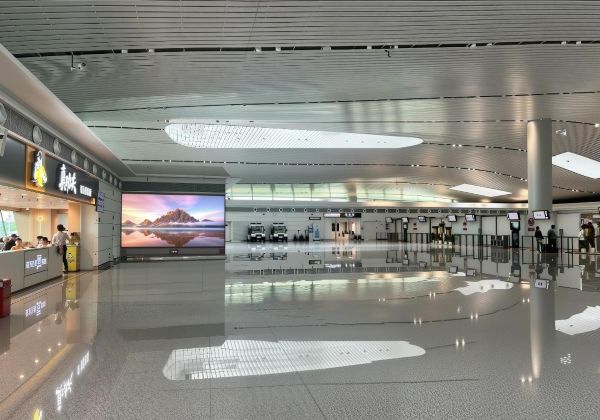
Located at the only main exit of the T2 domestic arrivals baggage hall, all domestic arriving passengers must exit through this point after collecting their luggage, with no possibility of detours or diversion, achieving 100% full coverage without blind spots, forming the ultimate visual focal point of the arrival pathway. Relying on the Binhai Airport’s annual passenger throughput of over 28 million, it handles the main domestic arriving traffic, covering tens of thousands of high-net-worth travelers daily, with stable exposure throughout the year.
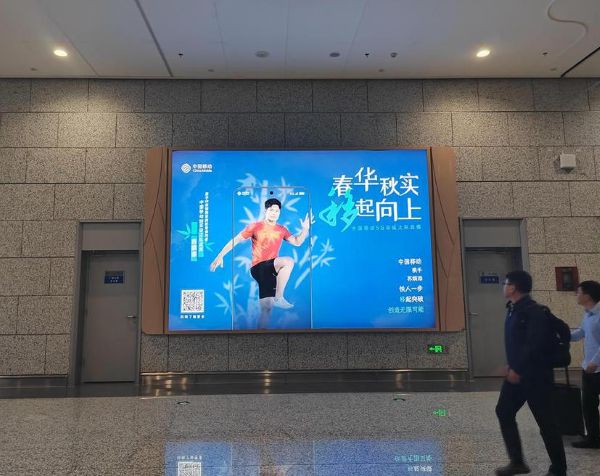
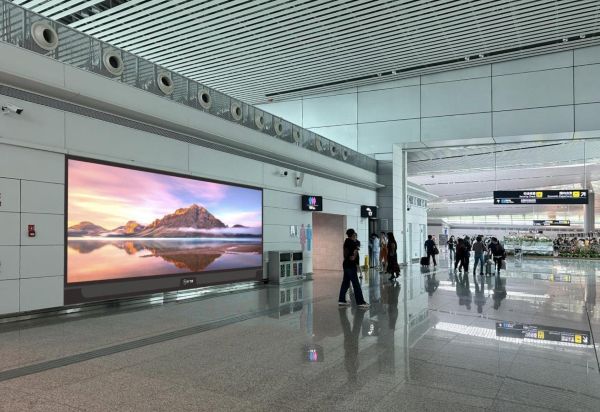
The baggage hall exit is a crucial node that passengers must pass through when leaving, where crowds converge with no diversion possible. After collecting their luggage, passengers’ gaze naturally falls on the lightbox area, ensuring 100% reach and completely avoiding the risk of “being overlooked” like ordinary media. The exposure efficiency and coverage area are benchmarks for similar locations. The lightbox display is at eye-level golden viewing angle, clear and prominent, with unobstructed brand information that can be quickly and deeply received.
The lightbox faces the exit directly, within 3–5 meters of the passenger’s line of sight, unobstructed. The large display is clear, prominent, and forcibly catches the eye, passively received to avoid the behavior of actively skipping ads. Passengers wait an average of 40 minutes to collect their luggage; upon exiting, they are in a relaxed state without information interference, with highly focused attention. The depth of ad recall is far greater than that of ordinary media, with single exposure time 3–5 times that of conventional placements.
The arrival hall environment is quiet with no strong competing advertisements, so passengers have high receptivity to advertising messages and greater memory retention, helping brands achieve the communication loop of “see – remember – convert,” enhancing the premium brand tone and increasing brand trust.
This lightbox is located adjacent to the area where people gather, allowing sufficient viewing time for the audience. The display is clear and eye-catching, with no obvious obstructions, ensuring stable exposure of brand information. It occupies the mandatory exit route of travelers without diversion or missed views, covering 100% of the daily domestic arrivals in Tianjin. The passenger flow is consistently stable, completely avoiding the pain points of normal media such as large traffic fluctuations and uncontrollable reach, enabling precise placement and efficient returns.
As the last concentrated visual advertising space before travelers leave the airport, it serves as the ultimate memory anchor before departure. This creates a 'seen upon exiting, deeply remembered' communication effect, significantly increasing the probability of subsequent conversion. The number of core wall positions at the exit is extremely limited and cannot be added. Long-term stable placement can establish exclusive brand positioning, seizing travelers' minds and forming a differentiated communication advantage with high advertisement attention and memorability.
Arriving travelers usually have clear business or travel purposes and have just completed their journey in the air. They are in a relatively relaxed state and highly sensitive to their surroundings. The lightbox at the exit, at the critical point where travelers are about to leave the airport and step into the city, can precisely capture their attention. This group generally has high consumption capability and social status. The media display here is not only a transmission of information but also an efficient coverage of high-net-worth individuals.