

- Photos
- Specs
- Advantages
- Value
- Media Map
| Area:Wuhan | Type:airport | Frequency:0 |
| Address:Wuhan Tianhe Airport | Format:Light box | Duration:0 |
| Location:T3 Domestic Departure and Arrival Mixed Corridor | Min Qty:3 | Operating Time:0-24o'clock |
| Size:3m×9.28m=27.84m² | Min Period:year |
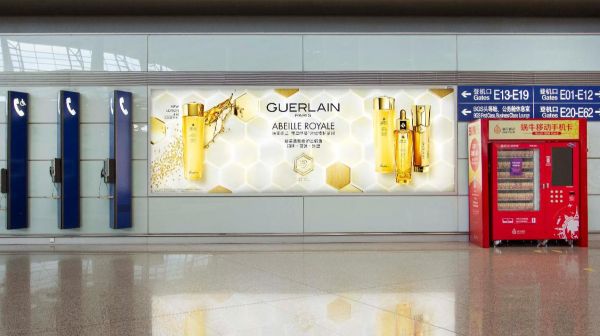
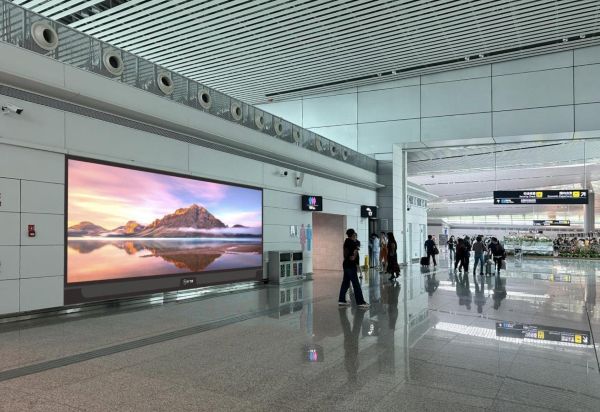
Located in the core area facing the mixed-flow corridor, it is the first visual landing point that passengers must pass through. There are no obstructions or detours, naturally forcing viewers to watch. It covers 100% of domestic departing, arriving, and transit passengers, with media simultaneously reaching the two-way passenger flow. Exposure far exceeds media that only target departures or arrivals. In an open corridor environment, it has a strong presence, with a long visible distance allowing brand information to be memorized at a glance.
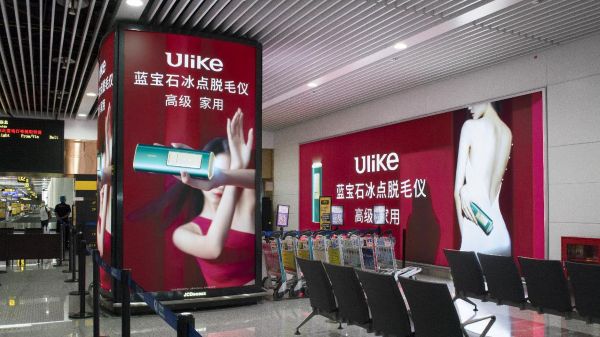
The corridor is open and bright, without interference from other advertisements. Passengers stay an average of 4–6 minutes, ensuring high information reception efficiency. Large lightboxes offer ample display space, complete and expansive visuals, unobstructed across the top of the corridor, long visible distances, clear images, and uniform brightness. The overlapping passenger flows of departures and arrivals allow a single placement to gain two-way exposure, with exposure leaving no blind spots and strong memorability. Advertising reception in the departure area increases by over 60%, and memory retention improves 2.8 times.
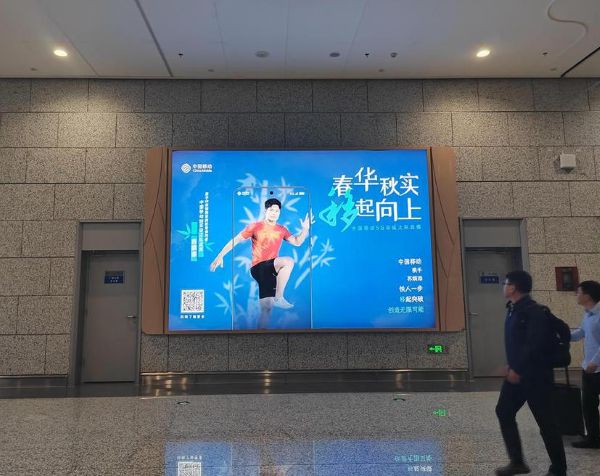
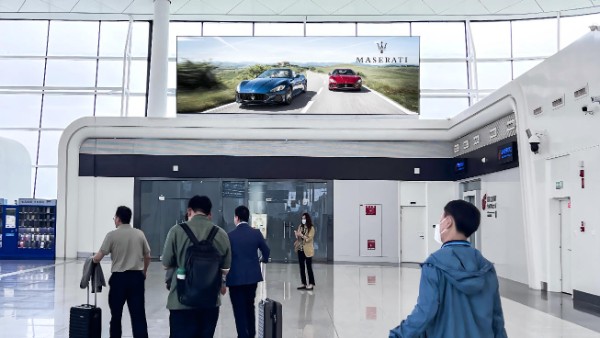
The mixed corridor for departures and arrivals is the only passage passengers must use to reach their boarding gates. Foot traffic is dense, movement patterns are fixed, and eyesight is concentrated. Overhead-hanging lightboxes are positioned high, naturally catching passengers' line of sight at walking level. With no obstructions or blind spots, they achieve high-intensity, forced exposure. The images are high-definition and striking, the atmosphere is unified with strong impact, and they are highly recognizable, amplifying dissemination potential.
With its unique location, outstanding display effect, and stable communication value, it has become the preferred vehicle for brand promotion. Among the audience, 92% are young and middle-aged people aged 25–45, mostly business travelers and high-end consumers, representing the core target audience for brand communication.
This lightbox is precisely positioned at the central location directly facing the corridor, directly facing all passing travelers with no visual obstructions. Regardless of the direction in which travelers walk, they can clearly capture the lightbox display immediately, achieving 100% pathway coverage. The lightbox features a large-size, high-definition backlit design, offering high image resolution and strong color fidelity. Combined with the corridor's spacious and open layout, it creates a strong visual impact, allowing brand information to be quickly imprinted in travelers’ memory during their brief passage.
There are three lightboxes of the same specification in the corridor, displayed consecutively to form a powerful visual array, reinforcing the brand’s presence, deepening the communication effect, and achieving a 1+1+1>3 scale effect. Whether travelers are walking or stopping, with a viewing time of ≥30 seconds, memory retention is high, information is received in-depth, and recall far exceeds that of conventional media, strengthening brand presence and enhancing conversion rates.
Occupying a core hub position, the lightboxes cover a wide audience and have strong communication penetration. They can break regional limitations, allowing brand information to reach travelers nationwide efficiently. They are not just a simple display carrier but an effective bridge connecting the brand and the audience. Through immersive visual engagement, they help elevate brand awareness and expand influence, making them a highly valuable communication choice in the airport environment.
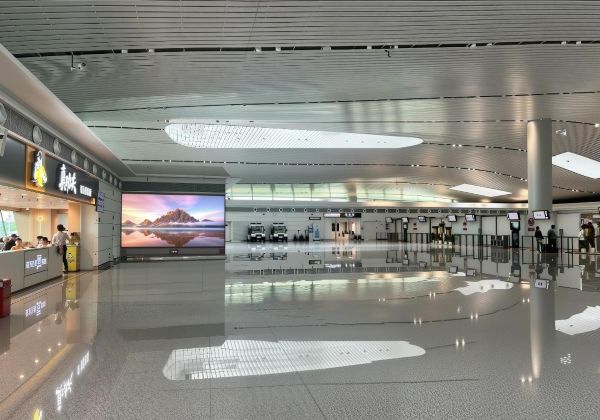
The corridor is spacious and bright, with no columns blocking travelers’ walk. Walking speed is moderate, visibility is long, and dwell time is extended. The advertisement’s recall and attention significantly surpass those of common locations, with no environmental interference. Being on the essential pathway, it achieves an average daily exposure of over ten thousand people. Each placement covers a massive, precise audience effectively reinforcing brand recognition.