
- Photos
- Specs
- Advantages
- Value
- Media Map
| Area:Guangzhou | Type:airport | Frequency:64 |
| Address:Guangzhou Baiyun International Airport | Format:led | Duration:10s |
| Location:T1 Three-level Domestic Departures | Min Qty:58 | Operating Time:0-24o'clock |
| Size:55英寸 | Min Period:week |
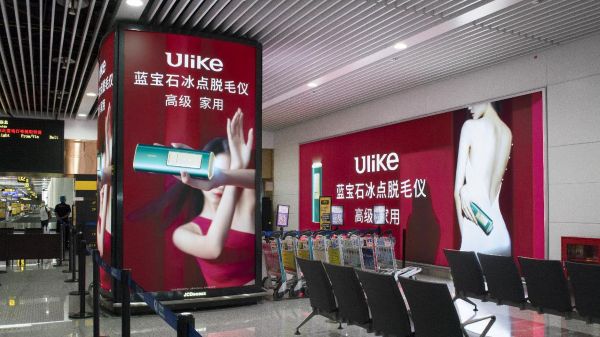
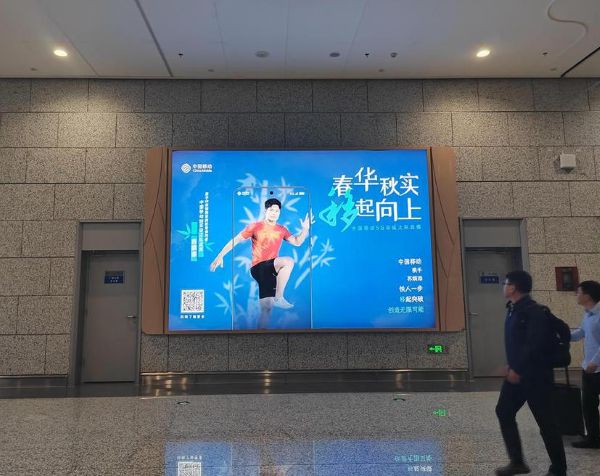
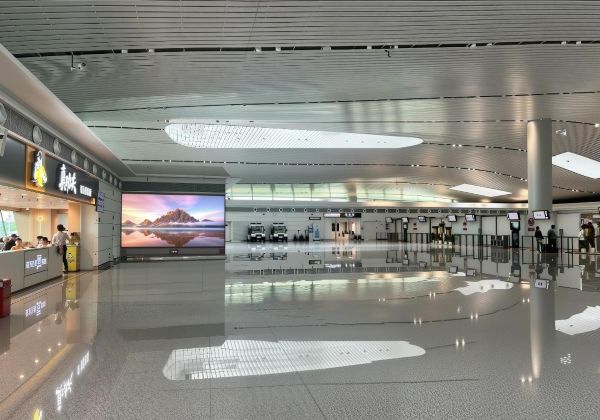
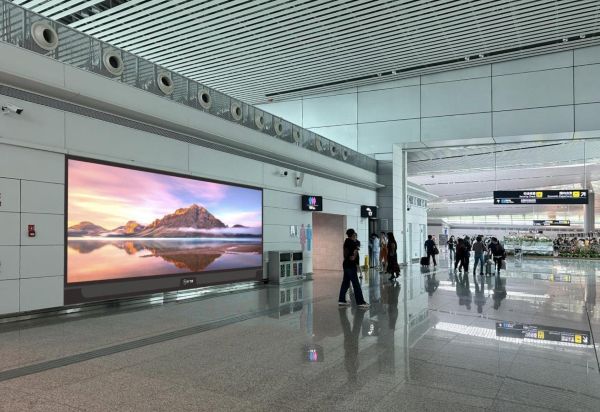
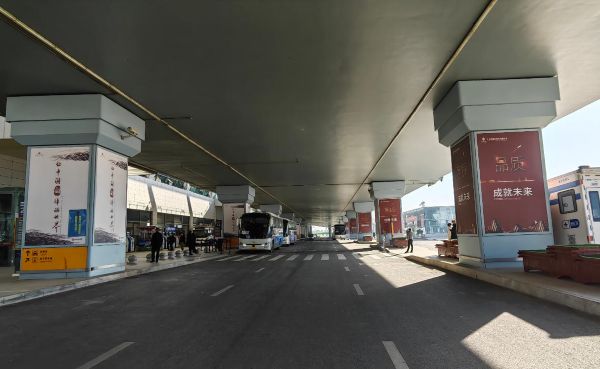
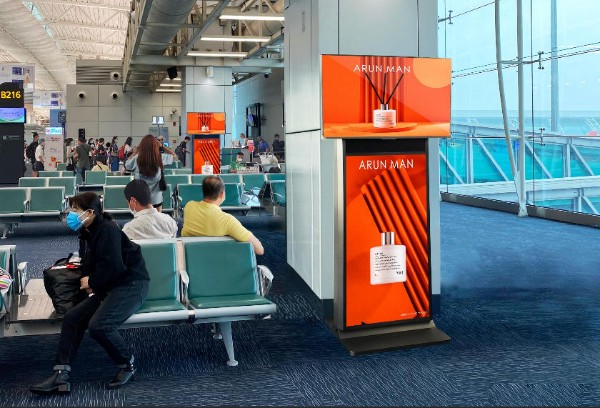
Located in the core area of the domestic departure process, passengers are required to watch the media while checking in, waiting, and heading to security, achieving a media exposure rate of 95%. This creates a 'must-pass path' type of communication, resulting in high brand exposure and memory retention. The 58 devices are evenly distributed with no visual blind spots, covering the entire departure hall 360°, preventing crowd diversion to a single point, and ensuring that the brand information reaches every domestic departing passenger.
The third floor of Terminal 1's domestic departure hall handles an average daily passenger flow of 100,000, making it the busiest airline departure scenario. Passengers spend an average of over 25 minutes during check-in, queuing, and waiting, with an average advertisement viewing time of ≥12 seconds. Weekly contact frequency reaches 6-8 times per person, and memory retention is 40% higher than ordinary media.
The three-floor domestic departure TV in Terminal 1 is precisely located in the public areas of the domestic departure hall, around check-in islands, and along the passages to the security checkpoints, forming a fully covered digital communication network. It is a premium advertising spot for reaching high-traffic domestic departing passengers, an important resource for brand presence in the South China market, and helps enhance regional influence, supporting the brand in establishing leadership in the regional market.
As the core hub where passengers complete check-in and enter security, it gathers a dense concentration of business and travel crowds. With its unique location layout and dynamic communication features, it builds a highly competitive media advantage, becoming a strategic stronghold for brands to reach high-end travelers.
With six core advantages—coverage along prime traffic routes, access to a massive high-net-worth audience, efficient audio-visual communication, flexible placement strategies, authoritative situational endorsement, and high investment return—it has become a media platform that enables brands to reach high-traffic domestic travelers, enhance brand image, and achieve precise marketing. Whether aiming for short-term sales conversion or long-term brand value growth, this media can help brands reach their core target audience cost-effectively.
With 58 full-domain matrix deployments, mandatory exposure during core departure processes, and aggregation of high-net-worth travelers at South China hubs as its core value, it builds a digital communication stronghold for brands to precisely penetrate the domestic travel population. Featuring six core media advantages, it serves as a high cost-effectiveness strategic resource for improving brand conversion efficiency, ensuring repeated exposure of brand information during travelers' journeys and reinforcing memory retention.
Television is a comprehensive investment target characterized by scarcity at transit hubs, high-value audiences, efficient communication, and low investment risk. Its core investment value lies in cost-effectively locking in high-net-worth travelers in the Guangdong-Hong Kong-Macao Greater Bay Area, flexibly adapting strategies to the marketing needs of different industries, and ensuring transparent investment returns through data monitoring.
Travelers in the departure hall are in a travel preparation phase, open-minded, and highly attentive, with a 60% higher receptive rate to brand information compared to ordinary scenarios. It is especially suitable for industries that need to establish 'premium, authoritative' brand associations, enabling an investment outcome where 'reach equals precision, exposure equals conversion'.