A complete guide to advertising placement on Beijing Metro Line 2: from beginner to proficient
2026-02-25Tianci MediaViews:113
Highlights
Beijing Metro Line 2, as the core ring line, passes through golden hubs such as Xizhimen, Dongzhimen, and Jianguomen, and is a strategic location for brands to reach the core population of the capital. This article provides a detailed explanation of the advertising format, S-level placement, price structure, and practical strategies for Line 2. Tianci Media, a professional subway advertising platform, helps you with precise layout and efficient reach!
In the Beijing subway network, there is a special loop line - Line 2. It winds along the outline of the inner city of Beijing, connecting transportation hubs such as Xizhimen, Dongzhimen, Jianguomen, and Fuxingmen, surrounding the Financial Street, the East Second Ring Business Belt, and the cultural core area of old Beijing. As one of the earliest subway lines opened in Beijing, Line 2 carries the city's commuting blood and witnesses countless brands appearing here.
For advertisers, advertising on Beijing Metro Line 2 has unique strategic value. It is different from a new route that runs through the suburbs, nor is it just a radiation line that covers a single commercial district. Instead, it continues to reach the most core business, government, and tourist groups in the capital in the form of a circular line.
This article will systematically break down the entire process of advertising on Line 2 subway, from point value, media form, price composition to practical strategies, to help you make wise decisions on this golden media of the ring road.
1、 The unique value of Beijing Metro Line 2: why is it a strategic location?
The Beijing Metro Line 2 has a total length of 23.1 kilometers and 18 stations, running in a circular pattern through the inner city of Beijing. Its core values are reflected in the following aspects.
Firstly, the core location is irreplaceable. Line 2 passes through stations such as Xizhimen, Chegongzhuang, Fuchengmen, Fuxingmen, Xuanwumen, Hepingmen, Qianmen, Chongwenmen, Jianguomen, Chaoyangmen, Dongsi Shitiao, Dongzhimen, Yonghegong, Andingmen, Jishuitan, etc. Most of these stations are located along the Second Ring Road, surrounded by important functional areas such as Financial Street, East Second Ring Road Central Enterprise Belt, Central Government District, and Old Beijing Cultural Protection Zone.
Secondly, there is a high concentration of high-value individuals. The passenger composition of Line 2 is extremely rich: financial elites from Financial Street, central enterprise employees from the East Second Ring Road, tourists from Qianmen Dashilan, visitors from Yonghe Temple, and transit passengers from major transportation hubs - this diverse population structure provides precise reach for different types of brands.
Thirdly, the transfer hub effect is significant. Line 2 transfers to multiple radiation lines, such as Line 4 and Line 13 at Xizhimen, Line 13 and Airport Line at Dongzhimen, Line 1 at Jianguomen, and Line 5 at Chongwenmen. This transfer hub attribute enables Line 2 advertisements to not only reach passengers along the line, but also radiate the entire network's passenger flow.
Fourthly, the cultural attributes of tourism are prominent. Line 2 passes through cultural landmarks such as Qianmen, Yonghe Temple, and Gulou Street, where a large number of tourists get on and off. For tourism, cultural and creative, and local lifestyle brands, this is a rare window of access.
2、 The main forms and core positions of advertising on Line 2
The advertising forms of Beijing Metro Line 2 are diverse, and can be divided into the following main types based on passenger movement and dwell time.
(1) Station hall and platform advertising
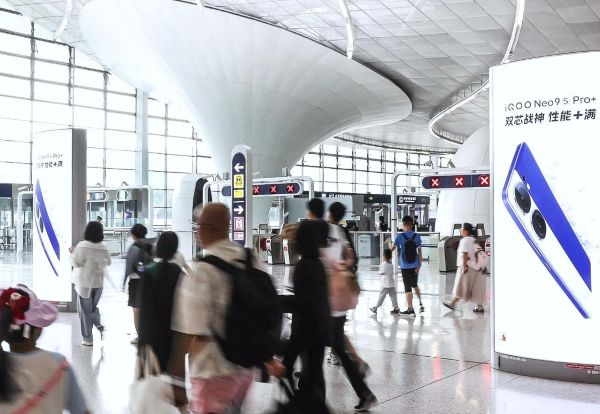
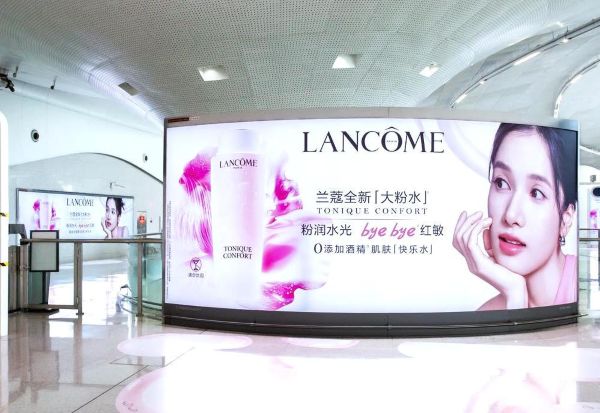
Lightbox advertising: This is the most common form, located on both sides of the station hall, platform, and passage. The standard size twelve light boxes (approximately 3 meters by 1.5 meters) have stable images and are visible 24 hours a day, making them suitable for brand image display and long-term advertising. According to data from a certain media platform, the monthly cost of lightboxes for S-level sites is around tens of thousands of yuan.
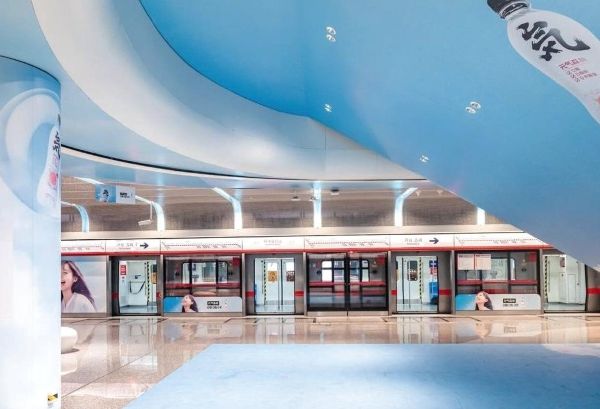
Column advertising: Packaging the entire column inside the station to create a surrounding visual impact. Passengers can see it repeatedly during the journey, and the memory effect is good. The price of column advertising is usually higher than that of lightboxes, and the monthly fee for a single column can reach tens of thousands to over 100000 yuan.
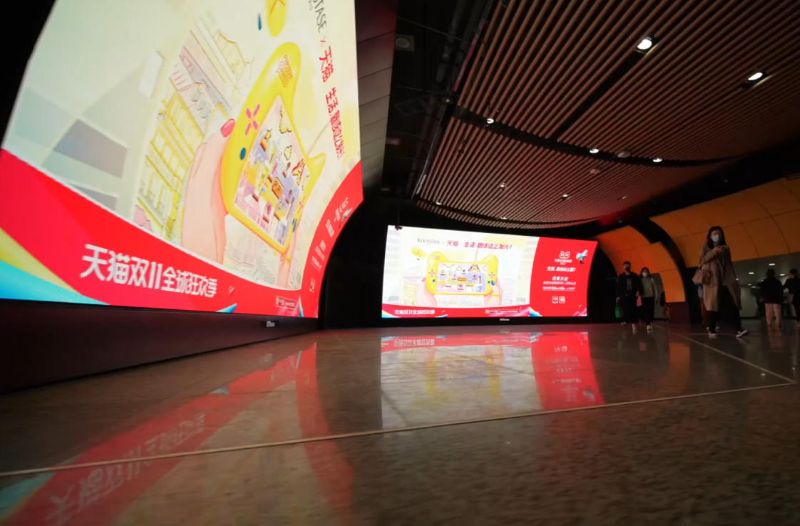
LED large screen: located in core positions such as station halls and transfer passages, playing dynamic video content. Strong visual impact, suitable for scenarios that require quick attention, such as new product launches and promotional events. Some station halls and platforms on certain lines are also equipped with 46 inch LCD screens.
(2) Channel advertising
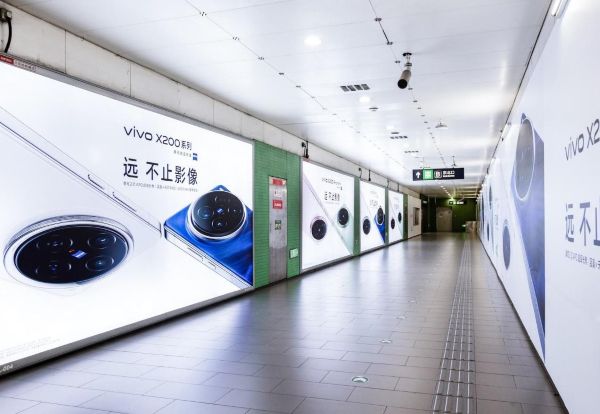
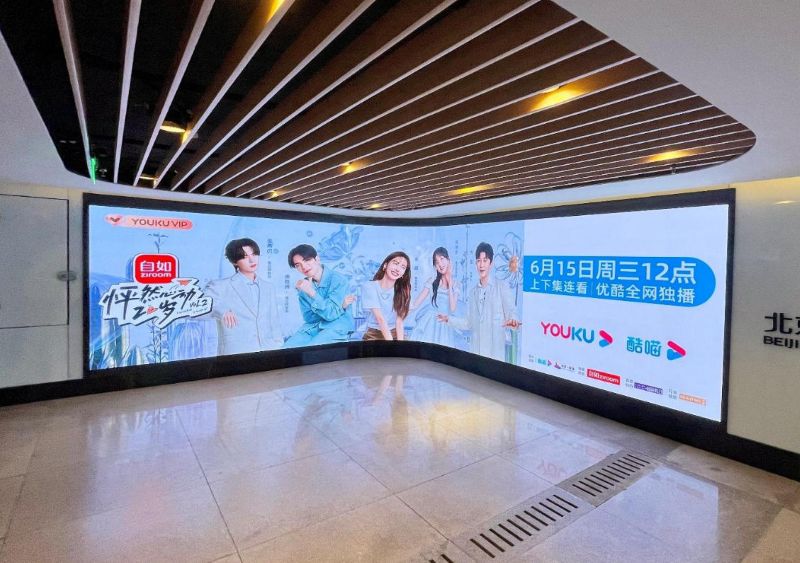
Channel wall stickers: Covering the walls on both sides of the transfer channel, forming a continuous visual enclosure. Passengers have sufficient time to watch advertising content while walking in the aisle. Channel wall stickers are usually sold in the form of "groups" or "packages", with prices ranging from tens of thousands to millions of yuan, depending on the length and site value.
(3) Advertising inside the carriage
Signage inside the carriage: Installed inside the carriage, passengers can read it repeatedly during the ride. Suitable for brand information that requires deep communication.
Car door sticker/handle advertisement: covering the car door or handle, close contact with passengers, high memory.
(4) Television Broadcast Network
Line 2 is one of the coverage lines of Beijing Subway Television Network. LCD screens are installed in the carriages, station halls, and platforms (17 inches in the carriages, 46 inches in the station halls and platforms) to play dynamic content in a loop. According to a procurement announcement in January 2026, a certain cultural and tourism brand will be broadcasted on the Beijing Subway Television Network (including Line 2 and other lines) for 5 months, with a budget of 650000 yuan and an average daily broadcast frequency of 40 times/block, each time lasting 30 seconds. This case can serve as a price reference.
3、 Classification of Station Levels on Line 2: Analysis of S-level Golden Points
According to the commonly used station grading system in the advertising industry of Beijing Metro, each station on Line 2 is classified into different levels, which directly affects advertising prices.
S-level stations (highest level): Dongzhimen, Chaoyangmen, Jianguomen, Chongwenmen, Xuanwumen, Fuxingmen, Xizhimen. These stations are either important transfer hubs (Dongzhimen, Xizhimen), located in core business districts (Jianguomen, Chaoyangmen), or adjacent to tourist hotspots (Chongwenmen, Xuanwumen), with dense and high-value crowds.
A++level stations: Dongsi Shitiao, Beijing Station, Qianmen, Fuchengmen, Chegongzhuang, Gulou Street, Yonghe Temple. These sites also have high value, but are slightly inferior compared to S-level.
A-level stations: Jishuitan, Andingmen, Hepingmen, Changchun Street. These sites are mainly residential or functional areas with relatively low foot traffic.
When choosing a location, S-level sites undoubtedly have the most stunning effect, but they also have the highest price. For brands with limited budgets, high-quality locations on A+or A-level sites can be considered, or multiple locations can be purchased through bundled purchases to balance costs.
4、 The core factors affecting the advertising prices of Line 2
The price of advertisements on Beijing Metro Line 2 is not a fixed number, but is determined by multiple variables.
(1) Site level and foot traffic
This is the primary pricing factor. The advertising price of S-level sites (such as Xizhimen and Jianguomen) is several times higher than that of A-level sites. The passenger flow data is the basis for pricing, and the average daily passenger flow at core transfer stations can reach hundreds of thousands of people.
(2) Advertising format and positioning
The same lightbox is located at the "golden viewpoint" directly facing the escalator on the platform, with a higher price than the ordinary position at the end of the passage. LED large screens are priced higher than static light boxes due to their dynamic effects and technical costs. The price of channel wall stickers is at a high level due to their large coverage area and strong immersion.
(3) Placement cycle and season
Long term advertising (3 months, 6 months, 1 year) can earn more favorable unit prices than short-term advertising. During holidays and major events, there is a strong demand for advertising, and prices may rise.
(4) Production and installation costs
In addition to media release fees, advertising image production fees and nighttime installation fees also need to be considered. The production cost of large wall stickers or columns can reach thousands to tens of thousands of yuan, and the installation cost is relatively high due to the need for night construction (after the subway is shut down).
(5) Media company channels
Different agency companies have different resource segments and pricing strategies. Cooperating with Tianci Media, a professional subway advertising platform that deeply cultivates Beijing subway resources, often results in more competitive package prices and professional advertising recommendations.
5、 Practical Placement: Five Step Process from Planning to Publication
Step 1: Clarify marketing objectives and audience
Is your goal to build brand image, launch new products, or attract traffic for offline activities? Select matching sites and formats based on the objectives. For example, financial brands can prioritize covering Fuxingmen and Fuchengmen around the Financial Street; Tourism brands can focus on the layout of Qianmen and Yonghe Temple.
Step 2: Filter potential sites and locations
Based on the audience profile, select 3-5 core target stations from the 18 stations on Line 2. Based on the site level and surrounding environment, determine the specific location (such as station hall lightboxes, channel wall stickers, etc.).
Step 3: Obtain quotation and comparison
Request quotations from 2-3 media companies, including detailed quotes for media publishing fees, production fees, installation fees, and taxes. Compare the cost per thousand (CPM) at different locations and choose the most cost-effective solution.
Step 4: Creative Design and Review
Customize creativity based on the characteristics of the selected location. Lightbox advertising should follow the "3-second principle": the brand logo should be large, the core information should be short, and the color contrast should be strong. All advertising content must undergo compliance review by the subway operator.
Step 5: Publication Execution and Effect Tracking
After confirming the publication time, promptly request photos or videos of the publication for verification. Track interactive effects through exclusive QR codes, discount codes, and other methods to accumulate data for subsequent advertising.
6、 Common Misconceptions and Avoiding Pits Guide
Misconception 1: Only focusing on site level, ignoring the quality of specific locations
The effect of the light box at the end of the platform and the light box facing the escalator is vastly different for S-level stations. It is essential to request the media company to provide the specific location and real-life photos of the location.
Misconception 2: Underestimating the cost of production and installation
The media release fee on the quotation often does not include production and installation. The production cost of large wall stickers can be as high as tens of thousands of yuan, and the installation cost at night can also be several thousand yuan, so it is necessary to reserve it in the budget.
Misconception 3: Short term advertising expecting miracles
The brand building effect of subway advertising needs time to ferment. The effect of advertising for 1-2 weeks is limited. It is recommended to use at least monthly units to accumulate brand awareness.
Misconception 4: Ignoring Contract Details
Clearly define terms such as publication time, playback frequency, fault compensation, and cost including items. Request to provide publication monitoring services to ensure accurate execution.
Misconception 5: Exploring alone without collaborating with professional companies
The advertising resources of Line 2 are complex, involving multiple stages such as site selection, price negotiation, and publication execution. Collaborating with a professional advertising platform like Tianci Media can achieve twice the result with half the effort.
7、Conclusion
The advertising of Beijing Metro Line 2, as a circular media in the inner city of the capital, has become a strategic highland for brand communication due to its unique location advantage, dense high-value audience, and diverse media forms.
From the transportation hub of Xizhimen to the business core of Jianguomen, from the cultural landmark of Qianmen to the tourist hotspot of Yonghe Palace, every station of Line 2 contains opportunities to reach its target audience. The key lies in scientific planning: clear goals, selected locations, reasonable budget, creative adaptation, and professional execution.
For beginners, it is recommended to start with small-scale testing, choose 1-2 core S-level sites, and deploy them for 1-3 months to verify their effectiveness before gradually scaling up. With the assistance of professional partners, every loop of Line 2 becomes an accelerator for brand communication.