- Photos
- Specs
- Advantages
- Value
- Media Map
| Area:Guiyang | Type:airport | Frequency:0 |
| Address:Guiyang Longdongbao International Airport | Format:Hanging Banner | Duration:0 |
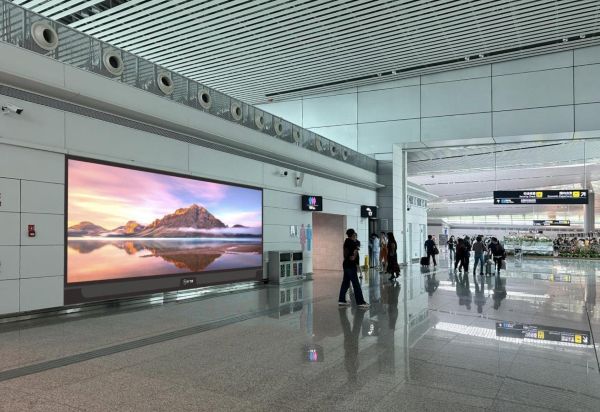
| Location:Above the domestic departure waiting area of Terminal 2 | Min Qty:4 | Operating Time:0-24o'clock |
| Size:6.25×2×2(面) | Min Period:year |
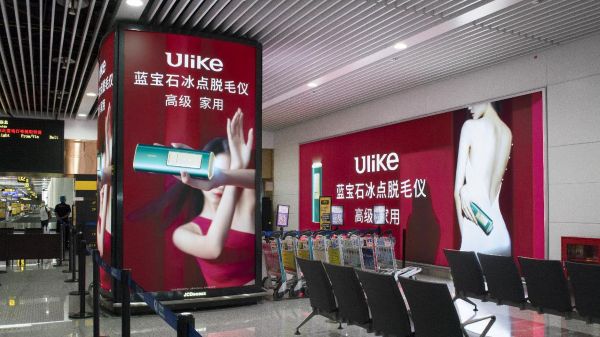
High‑altitude hanging banners deliver stronger scene atmosphere and visual dominance, enabling them to quickly capture the core visual focus of the passage. Passengers spend ample waiting time in T2 Terminal and travel back and forth frequently, which supports long‑duration, immersive and high‑frequency brand exposure. It subtly builds brand awareness and effectively deepens passengers’ memory of the brand. Multi‑spot connected placement can create an omnipresent brand visual atmosphere across the entire passage, achieving immersive scene‑dominant display and greatly boosting brand recognition and communication influence.
Positioned at a height of 4‑5 meters within upward‑looking sightlines, the banners naturally form an "aerial advertising screen", matching people’s psychological tendency to prioritize top‑of‑view spaces. This area is a one‑way straight passage with no diverging routes or detours. All departing passengers must pass beneath the hanging banners, delivering a theoretical 100% exposure rate. Passengers stay in the T2 passage area for an average of 25‑40 minutes, far longer than their waiting time at boarding gates (10‑15 minutes), and are in a low‑stress, high‑observation state.
The media advantages stem from its spatial layout, cultural depth, audience reach and commercial evidence. Static media achieves an average gaze duration of 8.4 seconds during passengers’ stay, significantly higher than that of digital screens (3.1 seconds). As high‑resolution static carriers, hanging banners feature high memory‑retention potential. Passengers receive an average of 4‑6 instances of unconscious repeated exposure, well above the memory‑retention threshold for single‑point advertisements.
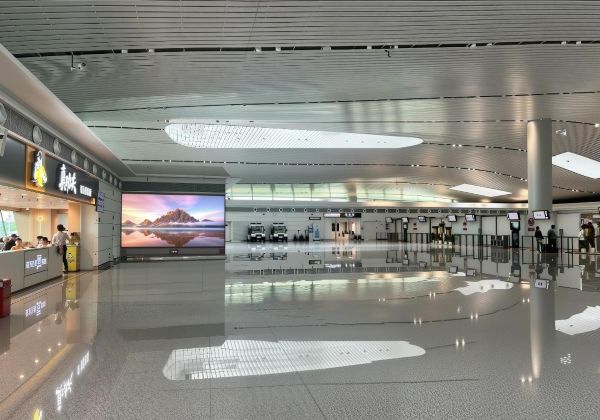
A closed‑loop channel covering 100% of all passenger flow in the domestic departure isolation area. The media is installed in the departure corridor after security check. All domestic‑departure passengers who have cleared security, regardless of their boarding gate, must pass through this corridor with zero passenger omission. Four groups of hanging banners are arranged in a continuous sequence. When fully deployed, they form a cohesive and unified brand visual matrix, creating an immersive corridor atmosphere with far‑stronger advertising appeal than single‑spot flat media.
The corridor where the site is located features spacious and transparent space with excellent lighting. It covers all passengers for T2 domestic departure flights, including business travelers, tourists, and government‑enterprise official travelers. Passengers are walking toward boarding gates at a relaxed pace with ample viewing time. The media naturally catches passengers’ eyes, delivering brand exposure without requiring them to stop deliberately and ensuring brand messages reach core target audiences directly.
This media is suitable for brand image building, new‑product pre‑heating and investment promotion, as well as regional cultural‑tourism promotion. It has potential for offline event communication and secondary social‑media dissemination. Passengers may take casual photos for social check‑ins, generating online outreach and delivering dual benefits of "offline airport exposure + secondary social‑platform communication". Long‑term placement can continuously build user perception in Southwest China; short‑term campaign placement can leverage heavy holiday travel traffic to achieve rapid brand‑awareness surges.