
- Photos
- Specs
- Advantages
- Value
- Media Map
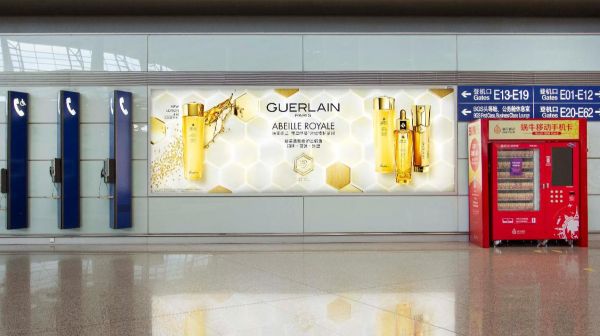
| Area:Beijing | Type:airport | Frequency:0 |
| Address:Beijing Capital Airport | Format:Light box | Duration:0 |
| Location:T3C Domestic Arrival Baggage Claim | Min Qty:2 | Operating Time:0-24o'clock |
| Size:1.488×3.194 | Min Period:month |
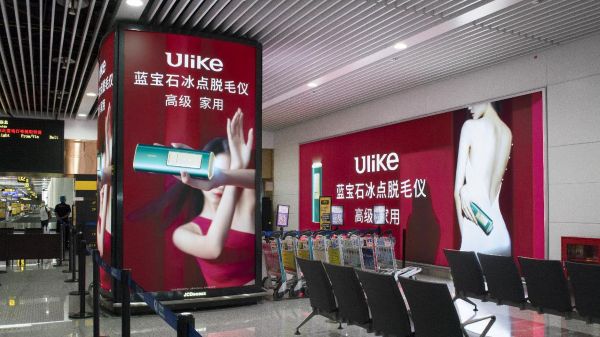
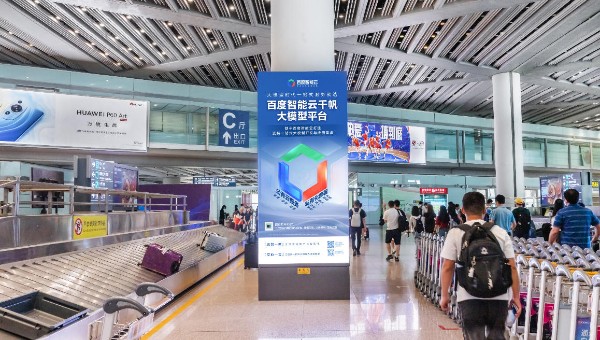
Located in the T3-C domestic arrivals baggage claim hall, it is the only, mandatory, and undivided core scenario for all domestic arriving passengers. With a strong dwell time and high attention, passengers typically spend 5–15 minutes here in a low-interference, highly focused state, passively receiving and being forced to view advertisements. The totem unit layout is arranged in rows, connecting and covering all baggage carousels, aisles, and exits, forming a 360° circular information network for repeated, multi-directional passenger exposure and deep penetration.
The domestic arrivals' only baggage claim area is a place all passengers must pass through, with no interference and high attention, resulting in an effective advertisement reach rate of over 95%. Totem units are symmetrically positioned along the baggage carousels and passenger passageways, providing 360° no-dead-angle coverage, and combined with the super light boxes in the baggage claim area for integrated communication.
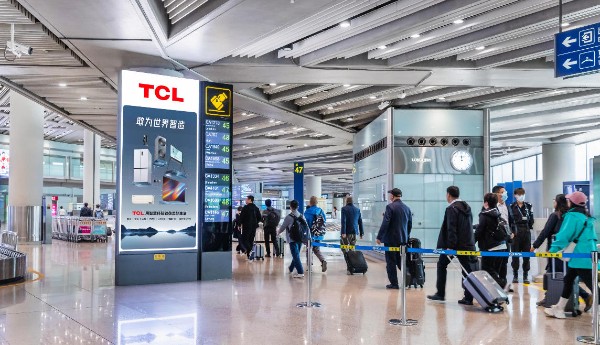
Totem light boxes are usually strategically placed around the perimeter of the baggage carousels or on the isolation strips between carousels. When passengers walk around the carousels to retrieve their luggage, they must pass these light boxes from various angles. Regardless of which gate passengers arrive from, they will ultimately converge at the corresponding baggage carousel.
Passengers move back and forth and view from multiple angles within the baggage area, with average exposure per passenger being 3–5 times. The memorability far exceeds that of single media, with conversion rates higher than departure or corridor media. The light boxes are aligned with adult eye level, with a visible distance of 5–15 meters, providing complete and impactful visuals. Daily reach is 190,000 passengers, offering high coverage, high conversion, and high return. This can be linked with departure, corridor, and reception hall media to form full-process coverage from departure to arrival to dwell time, doubling brand presence and market penetration.
Located at the end of the passenger's flight journey, by utilizing independently landed three-dimensional structures and matrix-style regional monopoly, it creates a powerful brand presence during the golden idle period when passengers are waiting for their luggage. With its spatial advantage of compulsory stay, 360-degree visual dominance, precise reach to high-end audiences, and the exclusivity of regional monopoly, it becomes a top-tier tool for brands to establish image and occupy minds at aviation hubs.
The baggage claim area is a space that passengers must stay in after disembarking and cannot bypass. While waiting, passengers’ gaze instinctively wanders around the carousel searching for luggage. Totem lightboxes erected next to the carousel or in the center of passageways naturally fall within the core radius of vision that cannot be ignored, ensuring extremely high attention and reading completion rates, significantly enhancing brand favorability and memorability.
The lightbox sets are top-tier media resources on the arrival level of Capital Airport. Leveraging four core advantages—primer location, high-end passenger flow, striking visuals, and comprehensive coverage—they become the preferred medium for brands to reach high-net-worth individuals, strengthen high-end image, and increase national influence. Their media value and conversion efficiency far exceed ordinary airport media, creating continuous visual impact. Compared with single lightbox exposure, it increases exposure 3-5 times, significantly enhancing brand recall.