- Photos
- Specs
- Advantages
- Value
- Media Map
| Area:Beijing | Type:airport | Frequency:0 |
| Address:Beijing Daxing Airport | Format:Light box | Duration:0 |
| Location:After security check on the third floor departure | Min Qty:2 | Operating Time:0-24o'clock |
| Size:2.2×5×2 | Min Period:year |
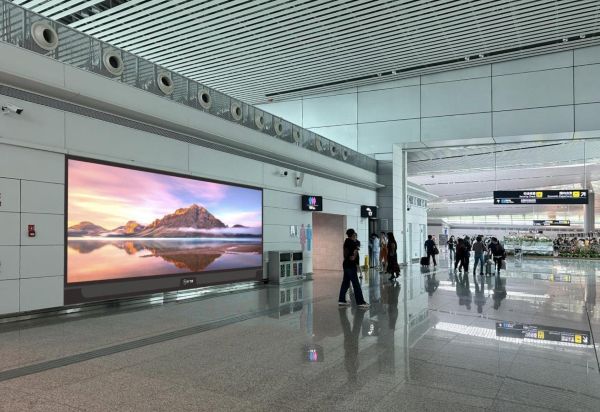
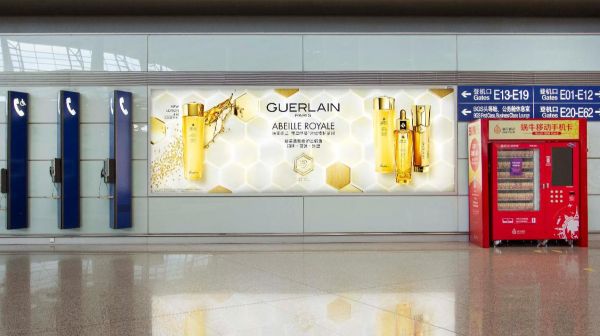
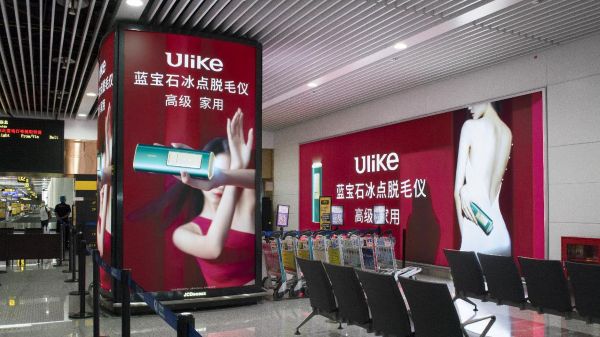
Located in the only lightbox area before passengers complete security checks and proceed to the departure hall/gate, with no bypass routes, the reach rate is nearly 100%. After security, passengers are relaxed and their focus on information reception is significantly enhanced. The lightbox is unobstructed, visually striking, with minimal media interference in the area, achieving long-term exposure of static brand images. The lightboxes can be themed uniformly to form a brand corridor, reinforcing visual memory with high-frequency reach.
Passengers stay on average 30–45 minutes from security check to boarding gate, and the lightbox is positioned at the starting point of their natural line of sight. Each person sees it repeatedly ≥3 times, forming a dual reinforcement of “first impression and lasting memory.” The lightbox is estimated to reach ≥12,000 people per day, and a combination of 2 side-by-side units exceeds 480,000 daily exposures, making it one of the static media with the highest unit-area exposure density within the airport.
The main passage after departure security is the only route all domestic passengers take to the departure hall and boarding gate, with no detours or split-flow; advertising exposure has no blind spots. After security, passengers are relaxed, walking at a steady pace, free from check-in line anxiety, significantly increasing their attention to the surrounding environment. Advertising messages are received more actively and remembered more deeply, effectively avoiding mobile phone distractions and enabling immersive exposure.
The lightbox displays 24 hours continuously, allowing passengers walking through the corridor, waiting for flights, or returning from shops to see it multiple times, repeatedly reinforcing brand impressions. It is suitable for long-term image presence and in-depth communication. The media format is uniform and quantity controllable, without cluttered information interference, making brand visuals more prominent and achieving strong visual exclusivity in the area.
With its unique 'enclosed scene' and 'golden waiting period,' it constitutes one of the most valuable segments in the airport advertising ecosystem. Lightbox media is not just an advertising space; it is a super marketing environment that combines high traffic, high net worth, and high attention. By utilizing travelers' 'golden empty time' before boarding, it achieves deep engagement and mental capture of core consumer groups within an enclosed space through high-quality visual presentations, helping brands establish a high-end image.
This lightbox is the core media for high-net-worth traffic, exclusive strong scenarios, and high conversion efficiency. Its investment value is concentrated in five dimensions: traffic certainty, brand premium, ROI efficiency, strategic positioning, and asset accumulation, making it a golden choice for long-term placement by high-end brands. The core audience consists of business professionals and high-spending families, with an annual income of 300,000 RMB, accounting for a high proportion, and spending power 2–3 times that of ordinary commercial areas.
As a 'static landmark' in airports for long-term placement, it can create a strong association of Daxing Airport with high-end brands, becoming intangible brand assets. It is suitable for strategic-level campaigns such as market entry, new product launches, image upgrades, and foreign investment in China. The daily reach frequency is 5–8 times, with a memory retention rate 30% higher than subway ads. It can be linked with other media within the airport to form a 'point-line-area' full-domain communication matrix, amplifying brand visibility.
The lightbox is located at the natural starting point of the line of sight, with an average repeated viewing per person of ≥3 times, forming a communication loop of 'first impression reinforcement and continuous memory penetration.' Compared to the instant impact of dynamic screens, static lightboxes provide stable presentation without interference, rotation, or technical failures, achieving deep internalization of brand information.