- Photos
- Specs
- Advantages
- Value
- Media Map
| Area:Guangzhou | Type:airport | Frequency:0 |
| Address:Guangzhou Baiyun International Airport | Format:Light box | Duration:0 |
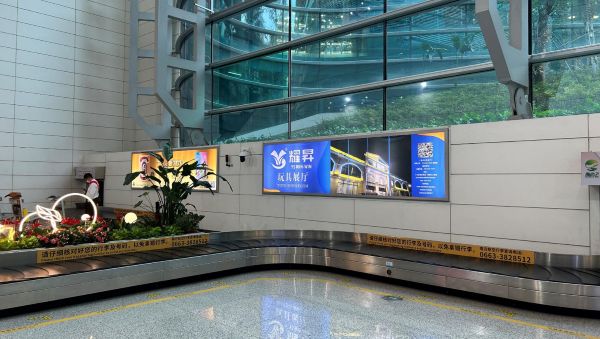
| Location:T2 International Baggage Hall | Min Qty:2 | Operating Time:0-24o'clock |
| Size:2.4×5.9×4面 | Min Period:month |
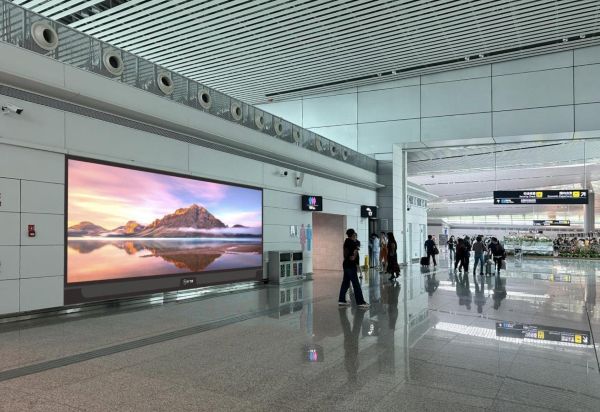
The lightbox set leverages the core flow lines of international arrivals and high-value passenger traffic to create a high-end media platform that combines mandatory exposure, in-depth communication, and brand empowerment. All passengers arriving on international flights at T2 must enter the baggage claim hall to wait for and collect their checked luggage after completing immigration. This area operates as a closed, one-way pathway with no alternative exits or detours. Lightboxes are installed around the carousel and along the main passageways, ensuring 100% of passengers pass by them.
Passengers stay in the baggage hall for an average of 15–30 minutes, frequently scanning the carousel and surrounding environment, showing a high sensitivity to advertising content. This creates a golden window for low-mobility, high-attention communication, significantly enhancing brand recall and conversion potential. The lightboxes are strategically positioned at multiple points to create continuous visual guidance, effectively extending the duration of brand exposure and strengthening memory retention.
With a 100% mandatory exposure rate, the lightboxes reach over 800,000 cross-border passengers monthly. Their design naturally integrates with the modernized décor of the terminal, providing an unobstructed and harmonious display that allows brand messages to embed in passengers’ memories without interruption, achieving a shift from passive viewing to active retention.
The four-dimensional advantages of the T2 International Baggage Hall lightbox set do not exist independently; they form a synergistic cycle of scenario-driven traffic, audience targeting, communication efficiency, and value accumulation. This makes it particularly suitable for brands looking to expand into international markets, engage high-end clientele, and elevate brand positioning, making it a preferred medium for high-end cross-border marketing in South China.
Its core competitiveness does not lie in a single dimension of exposure, but in the coordinated empowerment of four dimensions: scenario as the foundation, audience as the core, communication as the carrier, and value as the goal. This builds a complete communication loop of mandatory reach, precise conversion, deep retention, and long-term value enhancement, making it a rare lightbox resource for high-end brands to connect with international high-net-worth clients and solidify an internationalized tone, distinguishing it from the generalized communication attributes of ordinary outdoor and other airport terminal lightboxes.
With its six-in-one core advantages of exclusive channels, premium audience, extended dwell time, first mind impression, strong visual impact, and global reach, it has become a strategic media platform for global brand communication and high-end market expansion. For enterprises aiming to accurately reach high-net-worth audiences, establish an international brand image, and enhance global influence, its media resources are considered one of the highest return-on-investment forms of outdoor advertising.
This media can capture brand association in the mind first, increasing it by 35%, establishing a first-impression advantage. The enclosed space of the baggage hall and long dwell time reduce ad interference to a minimum, effectively raising information reception rates by 47%, creating an immersive communication experience, and becoming a strategic media platform for global brand communication and high-end market expansion.
The lightboxes not only occupy the three golden elements of people, location, and timing, but also serve as a key medium for brands to establish recognition, shape image, and drive conversion at the first touchpoint upon entry, thanks to their high-quality carriers and strategic locations. Their investment value far exceeds that of traditional media, reflected in multiple dimensions such as traffic quality, exclusivity of the scenario, and stability of brand premium capability.