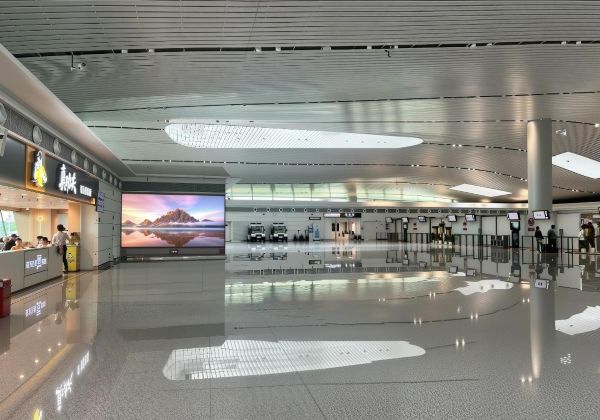
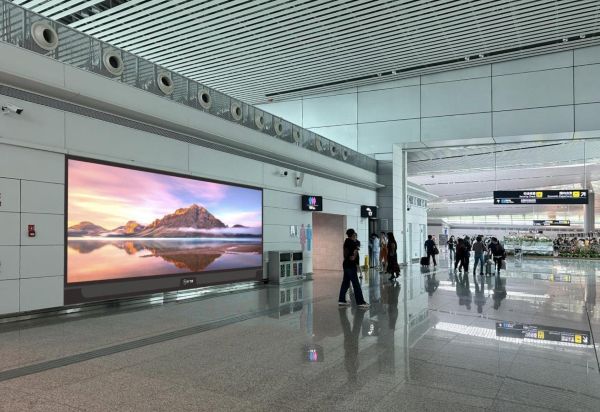
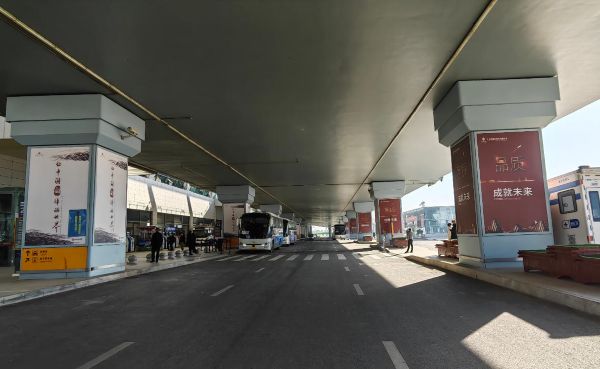
Which location of airport advertising offers the best value for money? Practical Guide for Newcomers to Avoid Pits and Choose Points in 2026
2026-02-12Tianci MediaViews:131
Highlights
Which location of airport advertising offers the best value for money?
Airport advertising is expensive, which is almost everyone's consensus.
But few people tell you that the waste rate of airport advertising can vary by more than 10 times between different locations. The cost per thousand people at point A in the same terminal may be five times that of point B, but the effective memory is only one-third of the latter.
For novice marketers who are new to airport advertising, 'where to invest' is ten thousand times more important than 'how much to invest'. There is no standard answer to the question of which location offers the best cost-effectiveness for airport advertising, but there is a systematic decision-making method.
This guide will thoroughly dissect the value logic of airport advertising spaces for you, starting from typical hubs such as Beijing Daxing Airport and Capital International Airport, teaching you to use ROI thinking to identify real "value troughs" and spend every budget on the cutting edge.
Chapter 1: Understand the pricing logic of airport advertising - why are some expensive and some cheap?
To find a cost-effective location, one must first understand the pricing mechanism of airport advertising. Simply put, price=passenger flow x dwell time x visual exclusivity x identity tag.
1.1 Four core variables that determine the price of advertising space
Variable Explanation: Typical High Price Points, Typical Low Price Points
The number of people passing through the main entrance, security checkpoint, remote boarding gate, and office area channel per unit time of passenger flow
The average length of stay for passengers in this area is in the baggage claim hall, waiting area expressway, and automatic walkway
Visual exclusivity: The number of competing advertisements within the same field of view. The cluster area of lightboxes directly opposite the luggage carousel
Identity tag: The "gold value" of passengers in this area. International first-class lounge, domestic low-cost airline, remote seat
The core formula for cost-effectiveness is: (passenger flow x dwell time x attention share) ÷ price.
Many beginners only focus on foot traffic, but overlook the importance of dwell time and attention share - this is the treasure map of high cost-effective points.
1.2 Eliminating the cognitive misconception that 'the most expensive is the best'
Taking T3 at Capital International Airport as an example:
LED screen at the departure level security checkpoint: the price is the highest, but passengers are currently in a state of tension and rushing, with almost no line of sight on either side.
Domestic arrival luggage claim hall lightbox: The price is about 60% of the former, but passengers have an average mandatory waiting time of 3-5 minutes, concentration, and natural eye contact.
The cost-effectiveness of the latter is usually much higher than that of the former - this is the watershed between professional buyers and beginners.
Chapter 2: In depth breakdown of cost-effectiveness of airport scenic spots
We divide the airport passenger flow into three stages and analyze the value and cost-effectiveness ratings of each point one by one.
2.1 Departure Stage: Before Security Check vs. After Security Check
Pre security area (public hall)
Typical locations: LED above check-in island, entrance light box, and drop off channel.
Passenger status: rushing, anxious, looking for counters, queuing for check-in. Lack of attention, looking down or forward.
Cost effectiveness rating: ★★☆☆☆☆
Applicable scenarios: Creating a presence for local luxury brands or advertising local services for airport drop off customers (such as hotels near airports).
Post security area (within the quarantine zone)
Typical locations: the light box directly opposite the security checkpoint and on both sides of the departure passage.
Passenger status: Passed customs, reduced tension, entering 'waiting mode'.
Cost effectiveness rating: ★★★☆☆☆
Selection strategy: Prioritize selecting the location directly opposite the security checkpoint - this is the first visual landing point for passengers to look up after completing the security check, with strong exclusivity and a price much lower than the main screen in the departure hall.
2.2 Waiting stage: There is also a contempt chain at the boarding gate
Core business district style waiting area
Typical locations: Central Business District of Daxing Airport, T3-E International Zone of Capital Airport.
Passenger status: shopping, dining, strolling, relaxed mindset, long stay.
Cost effectiveness rating: ★★★★☆☆
Tip for selection: You don't necessarily have to grab the largest screen. The light box above the dining area and the screen flashing machine across from the rest area are priced at only 50% -60% of the main screen in the aisle, but passengers have ample time to read while waiting for meals or resting.
Remote parking/shuttle bus boarding gate
Passenger status: Forced to wait for a long time, usually with rudimentary facilities and minimal visual interference.
Cost effectiveness rating: ★★★☆☆ (specific scenario)
Applicable scenario: If your budget is very limited and you want to enter the airport, this is the "lowest threshold" admission ticket. However, it should be noted that some remote seat passengers are mainly tour group and budget airline passengers, and their identity tags need to be matched.
2.3 Arrival stage: severely undervalued gold value zone
Baggage claim hall
Typical locations: LED above/directly opposite the turntable, and light boxes around the turntable.
Passenger status: Forced stay for 3-8 minutes, with natural gaze directed towards the turntable and the screen above. Mentality is the relaxation and anticipation of reaching the destination.
Cost effectiveness rating: ★★★★★★
Core logic: This is the only scene in the entire airport where passengers are both forcibly stranded and have a positive attitude. The price is usually only 50% -70% of the core location in the departure hall, but the effective attention time is more than three times that.
Real case: A certain tourism platform has continuously placed QR codes in the domestic arrival luggage hall of Daxing Airport, with a scanning volume 4.2 times that of the same budget departure hall location.
Arrival channel/reception hall
Typical locations: LED lights on both sides of the exit and above the airport access point.
Passenger status: The pick-up crowd has a clear target and their attention is focused on the exit; The arriving passengers are eager to find a pick-up person.
Cost effectiveness rating: ★★★☆☆☆
Point selection strategy: Suitable for brands targeting local consumers (real estate, automotive, high-end services), as airport pickups are usually local residents.
Chapter 3: Four Step Practical Method - Find Your 'Highest Cost Performance Point'
Step 1: Set goals first, then choose a location
Brand exposure type (I want many people to see):
The preferred option is the LED located directly opposite the luggage claim hall turntable, which provides dual protection of flow rate and dwell time.
After the secondary security check, the main channel light box has a high flow rate and is suitable for broad-spectrum exposure.
Effect conversion type (I want to scan the code/leave a message):
Preferred luggage claim hall light box+QR code - with a stay time and a relaxed scanning environment.
Screen flashing machine in the waiting area of the second choice boarding gate - close range, can be repeatedly touched.
Identity endorsement type (I want to appear high-end):
You can consider the international first-class flight channel or VIP lounge entrance - although expensive, the target audience is precise and the tone matches.
Step 2: Re evaluate the price using "attention share"
Don't just look at the absolute price, look at the exclusivity coefficient.
Assuming two points:
Point A: Price of 100000 yuan, with 4 competitor ads in the same field of view → Attention share=20%
Point B: Price of 70000 yuan, only 1 competitor advertisement in the same field of view → Attention share=50%
The actual cost efficiency of A=100000 ÷ 20%=500000/unit attention
The actual cost efficiency of B=70000 ÷ 50%=140000/unit attention
The cost-effectiveness of B is 3.6 times that of A.
Field survey technique: Stand in front of the advertising space, rotate 360 degrees, and count how many commercial advertisements can be seen within a few seconds. The more interference there is, the greater the value discount.
Step 3: Learn to use "combination thinking" to reduce costs and increase efficiency
High cost-effectiveness ≠ only buying the cheapest spot, but achieving the goal with a reasonable combination.
Classic cost-effective combination solution:
The combination logic of plan points is applicable to the budget
1 1 main screen in the luggage claim hall+3 light boxes in the same area detonated at the core point, with peripheral auxiliary memory enhancement of 300000 to 800000 yuan
2 domestic arrival channel lightbox sets cover the entire channel, forming a brand corridor of 200000 to 500000 yuan
3-Gate Digital Screen Network Multi Point, Short Cycle, Flexible Testing 100000 to 300000 RMB
Step 4: Utilize professional platforms to achieve "information equality"
The airport advertising market is a highly information asymmetric market. At the same location, prices obtained through different channels may differ by more than 30%.
For beginners, collaborating with professional organizations like Tianci Media is the most efficient choice. Tianci Media is a professional airport advertising placement company, whose core values lie in:
Cross airport price comparison database: Real time monitoring of transaction price ranges at Daxing Airport, Capital International Airport, and major national hubs to avoid being misled by "published prices".
Historical effect data precipitation: Based on thousands of past cases, it can tell you which point has a high scanning rate and which point is more suitable for brand exposure.
Combination packaging capability: It can package and negotiate resources from different airports and locations to obtain discounts that cannot be obtained by a single customer.
Beginner's first lesson on avoiding pitfalls: Don't bargain with the published price, negotiate with the transaction price.
Chapter 4: Three major "pseudo cost-effectiveness" traps that must be guarded against
Trap 1: misled by the "traffic uniqueness theory" and buying expensive ineffective exposure
Typical scenario: A novice spends a lot of money to buy a large screen in the center of the departure hall, thinking it occupies the "C seat". As a result of on-site monitoring, it was found that 90% of passengers hurriedly looked down at their phones, and although the advertising positions were conspicuous, no one was watching them at all.
Truth: Traffic is the foundation, dwell time is the soul. A medium flow point that allows passengers to stay for 5 minutes is much more valuable than a super high flow point that allows passengers to travel at high speed for 3 seconds.
Trap 2: Ignoring the mismatch of "identity tags", although the traffic is large, it is ineffective
Typical scenario: A high-end education brand has heavily invested in domestic remote seats at the Capital International Airport, and the prices are indeed cheap. However, passengers in this area are mainly engaged in business trips and returning home for work, which does not overlap with the target audience of high-end children's English training.
Truth: Cheap traffic is 100% wasted if it's not targeted at your audience. The crowd portraits in different areas of the airport vary greatly and must be finely matched.
Trap 3: Paying too high a premium for technical gimmicks such as "full screen interaction"
Typical scenario: A certain brand was moved by new technological concepts such as "AR interaction" and "facial recognition", and paid three times the price of a regular point to purchase a certain interactive large screen. Due to the noisy airport environment and hurried passengers, the actual interaction rate was less than 0.1%.
Truth: Technology is a means, not an end. Pursuing complex interactions in areas where traffic is predominant is a typical scenario mismatch. To achieve high cost-effectiveness, the first step is to maximize the basic exposure efficiency, and then consider technical bonuses.
Conclusion: The Ultimate Mind Method for Airport Advertising Placement
Returning to the original question: Which location of airport advertising offers the best value for money?
The answer is: the LED or light box directly opposite/above the luggage claim hall turntable.
This is the only point in the entire airport scene that simultaneously meets the four conditions of "high traffic+long stay+low interference+positive attitude". The price is in the middle to high range, but the attention capture efficiency per unit cost far exceeds other regions.
But this does not mean that all brands should only invest here. The true 'best value for money' is the combination of points that best match your marketing goals.
For beginners, the safest starting strategy is:
Priority should be given to luggage claim halls - with the highest fault tolerance and beginner friendliness.
Bargain with the mindset of "attention share" - don't just look at traffic, look at exclusivity.
Refuse to pay for pure gimmicks - do not touch complex technology until the core requirements are met.
Find a professional platform to get the transaction price - companies like Tianci Media can help you smooth out the information gap.
Airport advertising is not gambling, it is a science that can be calculated and optimized. When you learn to use ROI thinking to examine every point, you will grow from a "buyer guided by sales" to a "professional advertiser with decision-making initiative".
Now, with this guide, go to the airport for a real "site survey" - this time, what you will see will no longer be bright screens, but price tags marked with real value.