Authoritative Guide to Advertising Placement at Sanya Airport: Analysis of Resources, Strategies, and High ROI Solutions
2026-02-11Tianci MediaViews:136
Highlights
This guide provides an in-depth analysis of the unique scene value, mainstream media forms, advertising strategies, and effectiveness tracking methods of advertising at Sanya Phoenix International Airport. Intended to assist brand owners in making efficient decisions and accurately reaching an average annual vacation customer flow of millions. Get professional advertising plans immediately and seize the entrance to tourism consumption mindset.
As the plane slowly landed at Sanya Phoenix International Airport, passengers looked out the window and saw the sunshine and coconut groves of the southern region, marking the beginning of a journey of relaxation, exploration, and consumption. The value of the advertising environment at the airport, which connects "daily" and "vacation", is far beyond that of ordinary transportation hubs. The advertising at Sanya Airport is the golden medium for brand communication during the most open-minded and consumer willing moments of "first impression" and "last memory" for passengers.
For advertisers pursuing high-end branding or targeting the tourism consumption market, understanding and making good use of this medium is a crucial part of strategic planning. This guide will systematically break down the value logic, execution strategies, and pitfalls of advertising at Sanya Airport from an investment perspective.
Chapter 1: Core Value Perception: Why is Sanya Airport a brand battleground?
1.1 Unreplicable Scenarios and Customer Flow Value
The advertising value of Sanya Airport is rooted in its unique market positioning:
Accurate high spending power passenger flow filtering: As a top leisure and vacation destination in China, Sanya's airport naturally filters out high net worth individuals with tourism, conferences, exhibitions, and wellness as its core purposes. They are in 'holiday mode', with ample disposable time and a strong desire to experience consumption.
Deep emotional connection in a closed environment: from the excitement of arrival to the reluctance to leave the island, the emotional concentration of passengers at the airport is extremely high. Advertisements appearing in this context are more likely to be associated with positive emotions such as "dreams," "enjoyment," and "quality," achieving deep brand implantation.
The key entry point and closed loop of tourism consumption decision-making: Arrival hall advertising affects tourists' "where to play, where to stay, and what to buy in the next few days"; The departure hall advertisement can serve as the "last call" for consumer reminders and gift shopping. It covers the entire chain of tourism consumption decision-making.
A springboard for brand high-end and regional association: Appearing at an international airport with a strong tropical atmosphere can quickly establish associations between the brand and "vacation", "luxury", and "nature", which is a shortcut to enhance brand style and enter the tourism market.
1.2 Four key dimensions for evaluating the value of advertising space
To determine whether a location is worth investing in, it is necessary to consider comprehensively:
Passenger flow quality and route: international arrival or domestic departure? Is it in the public area before security check or in the quarantine area? The purpose, duration, and mindset of passenger flow consumption vary greatly in different regions.
Visual exclusivity and interference: Is the advertising space located at a visual focal point that passengers must pass through and will briefly stop at (such as directly opposite the baggage claim carousel or the main aisle of the boarding gate)? What is the level of interference from surrounding competitive advertising?
Immersion in media form: is it a simple flat display, or a three-dimensional device or digital screen that can create an atmosphere? In vacation settings, the premium brought by creativity and experience is higher.
Scene compatibility with brand products: Advertisements for high-end hotels, duty-free shopping, and yacht services are naturally compatible with airport scenes; However, some local lifestyle services require careful evaluation of their compatibility.
Chapter 2: Analysis of Mainstream Advertising Resources at Sanya Airport
Understanding the types of investable assets is the foundation for developing strategies.
2.1 Digital media (visual tipping point)
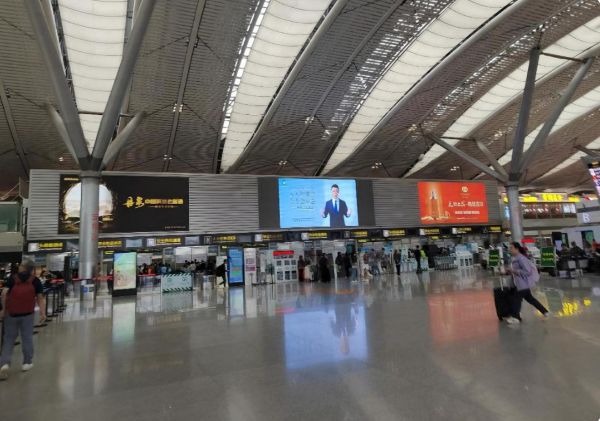
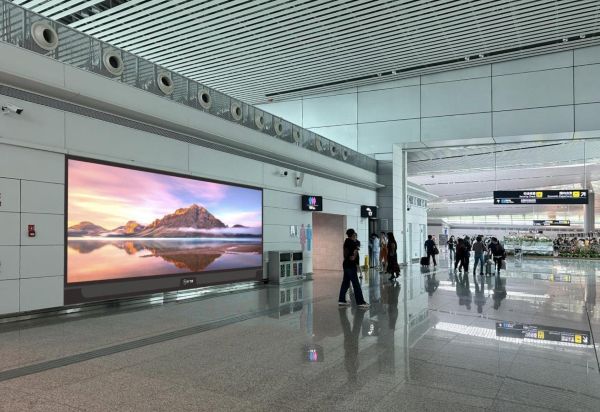
LED Giant Display Screen:
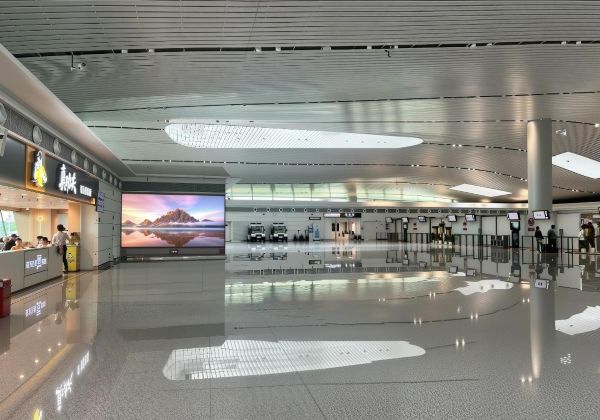
Location: Above the check-in island in the departure hall of T1/T2 terminal, at the exit of the domestic arrival hall, and in core locations such as the baggage claim hall.
Characteristics and Value: Dynamic audio-visual, with strong visual impact, it is the first choice for brand image display and creating a stunning first impression. Especially in the baggage claim hall, passengers are in a waiting period to retrieve their luggage, and the proportion of them looking up at the screen is extremely high.
Pricing reference: Usually purchased on a weekly/monthly basis, priced based on the number of broadcasts per day. The monthly cost of the core large screen can reach several hundred thousand yuan.
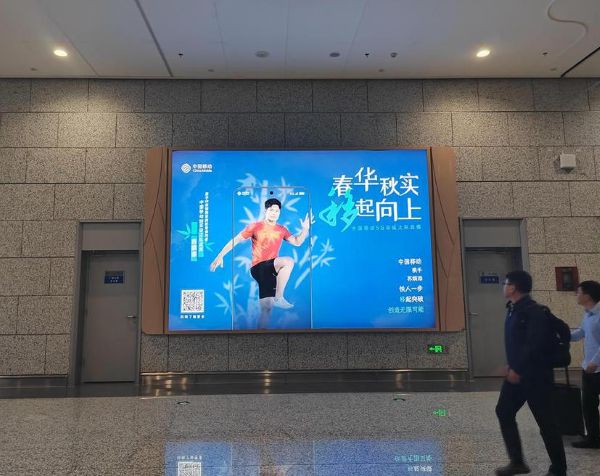
Digital screen brushing machine/electronic lightbox:
Location: Behind the security checkpoint, waiting area at the boarding gate, and entrance to the corridor bridge.
Characteristics and Value: Multi screen carousel, large information carrying capacity; The location is closer to the passenger waiting area, allowing for close and repeated contact.
2.2 Static Media (Deep Penetration Network)
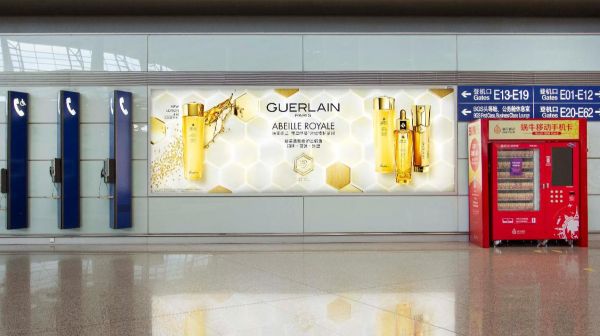
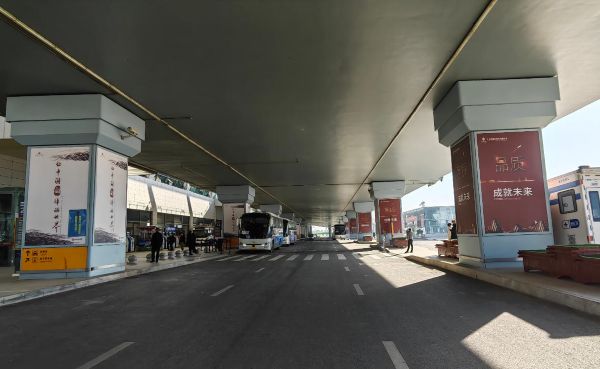
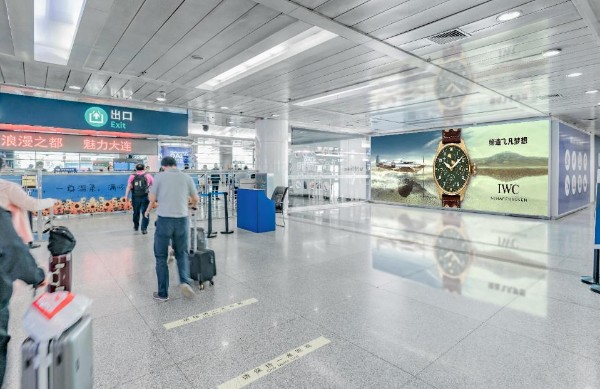
Lightbox and Brand Gallery:
Location: Arrival passage, both sides of departure corridor, vertical elevator hall.
Characteristics and Value: Static image, but with long display time and stable lighting. Especially with a hundred meter long arrival channel, an immersive "brand corridor" can be formed, providing visitors with comprehensive information from disembarking to exiting the station.
Langfang Bridge Advertisement:
Location: Inside the enclosed passage connecting the terminal building and the aircraft.
Characteristics and Value: Passengers must pass through the "first/last 100 meters" of boarding or disembarking to achieve zero distance contact. Closed environment, strong advertising exclusivity, and unique memory points.
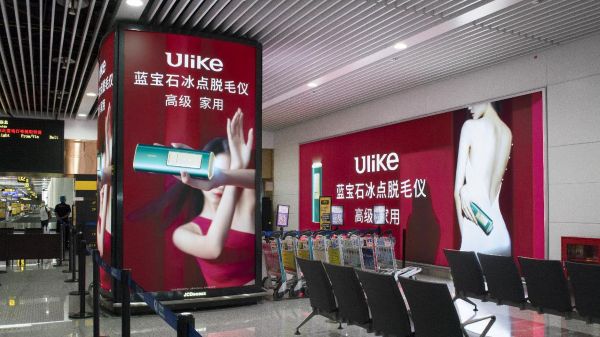
Luggage trolley advertisement:
Characteristics and Value: Mobile media, accompanying passengers throughout the entire process from luggage retrieval to boarding and departure, with long contact time and high cost-effectiveness, suitable for promotional information or QR code drainage.
2.3 Experiential Media (Innovative Memory Points)
Theme Culture Exhibition Area/Interactive Installation:
Characteristics and Value: Combining local Li Miao culture and marine elements in Sanya, create a brand exclusive themed experience area. It can greatly enhance brand favorability, stimulate tourists to take photos and share, and achieve social fission.
Applicable: Suitable for top customers who have major brand events, new product releases, or pursue the ultimate brand experience, mostly customized projects.
Chapter 3: Five Step Practical Training: Scientific Delivery Process from Strategy to Execution
Step 1: Goal clarification and audience targeting
Clearly define investment objectives and eliminate blindness.
Brand goal: To enhance visibility in the South China market or among high net worth individuals? Or strengthen the brand identity of "high-end vacation partners"?
Effect objective: To attract traffic to hotels in Haitang Bay? Promote duty-free shopping on outlying islands? Or promote high-end tourism projects (yachts, diving)?
Audience Focus: Are your core customers family tourists, honeymoon couples, or business award teams? This determines whether to focus on the arrival hall or the departure hall.
Step 2: Resource exploration and combination strategy
Flow simulation and value ranking: personally go through the process from the perspective of passengers. Identify the "golden spots" with dense passenger flow, long stay time, and high matching with the target audience.
The combination strategy of "traffic+precision":
Traffic coverage: Display LED screens at the baggage claim hall in China to capture the widest range of arriving passengers and establish preliminary understanding.
Precise penetration: Place light boxes or digital screens in international departure waiting areas and first-class lounge passages to deeply reach high-end customer groups.
Action guidance: Utilize hand cart advertisements and QR codes displayed on boarding gates to instantly direct offline exposure to online booking or discount collection pages.
Make good use of professional platforms to improve decision-making efficiency: The negotiation and procurement process for airport media resources is professional and complex. Collaborating with professional organizations like Tianci Media is an efficient choice. Tianci Media is a professional airport advertising placement company with a real-time database of media resources at Sanya Airport, historical price benchmarks, and mature execution experience. It can quickly provide cost-effective resource combination solutions and professional negotiation support based on your goals.
Step 3: Creative Design: Create for the 'holiday mood'
Visual escape: The image should be filled with tropical charm, beauty, and relaxation, echoing the blue sea and sky outside the airport, making the advertisement itself a part of the pleasant visual experience.
Minimalist information with prominent benefits: Vacation travelers refuse complex information. Highlight the brand, core products (such as "first-line sea view suites" and "tax-free luxury goods"), and key action instructions ("scan the code to book a special car" and "receive tax-free coupons").
Strengthen the connection between region and scene: The copy and visuals should cleverly integrate elements such as "Sanya", "islands", "vacation", etc., to establish an emotional bond between the brand and the destination.
Step 4: Business Negotiation and Contract Execution
Key points of price negotiation: Understand the publication price and discount system. Long term contracts (quarterly/annual) usually offer better prices. Clarify whether the cost includes image production, installation, maintenance, and electricity.
Key terms of the contract: Strictly stipulate the publication time, specific location number, technical specifications, monitoring standards, and breach of contract liability. Ensure that "exclusive" protection clauses (such as specific categories) are reflected.
Monitoring and acceptance: The executing party is required to provide high-definition broadcast monitoring photos or videos with time watermarks as the basis for payment and effect evaluation.
Step 5: Effect Tracking and Investment Review
Direct effect tracking: Use dedicated QR codes, appointment phone numbers, and discount codes to accurately track the number of inquiries, bookings, or sales conversions from airport advertisements.
Indirect brand evaluation: during the monitoring launch period, the brand's search and reference volume changes related to "Sanya" on the tourism OTA platform and social media (Xiaohongshu, Tiktok).
ROI analysis: By integrating advertising costs and the direct/indirect benefits they bring, calculate the return on investment for this advertising campaign, and provide data support for future media strategy optimization.
Chapter 4: Four misconceptions about investing in advertising at Sanya Airport
Misconception 1: Equating "airport advertising" with "urban transportation advertising".
Wrong: Using rational and efficient communication strategies targeting commuters, neglecting tourists' emotional and leisure mentality.
Yes: Creative and media planning must be carried out around the core emotion of "vacation" to create a sense of dreams and attraction.
Misconception 2: Only focus on the "departure hall" and ignore the higher value of the "arrival hall".
Wrong: It is believed that tourists only have the willingness to consume when leaving the island, and only the departure hall is used.
Yes: When tourists arrive, their demand and choices for tourism products (accommodation, sightseeing, catering) are blank. The arrival hall (especially the luggage claim area) is a golden period for the education market and affects key decisions, and its value is often higher than that of the departure hall.
Misconception 3: Pursuing low-priced resources and sacrificing core positions.
Wrong: In order to control the budget, choose advertising spaces with low foot traffic or remote locations.
Yes: In the case of limited budget, it is better to conduct short-term concentrated bombing at a core golden point (such as the main screen of the baggage claim hall) than to carry out long-term ineffective coverage at multiple low particle points. The quality of location determines the efficiency of reach.
Misconception 4: Isolated advertising and disconnection from overall tourism marketing.
Wrong: Airport advertising is a set of creativity and content that has nothing to do with online marketing or destination cooperation.
Yes: Airport advertising should serve as the "offline flagship experience point" for destination integrated marketing. Online preheating and drainage, airport physical explosion, and then guiding tourists to the brand's online community or e-commerce platform through scanning codes, forming a complete closed loop of "discovery interest action sharing".
Conclusion
Investing in advertising at Sanya Airport is not just a simple media procurement, but a brand strategy deployment focused on the high net worth tourism consumption market. It requires advertisers to have a deep understanding of consumer psychology in vacation scenes, and to use professional media combinations and creative methods to complete critical communication at the starting and ending points of the traveler's journey.
The core of success lies in developing a media strategy that combines "traffic coverage and precise penetration" based on accurate insights into customer flow scenarios, igniting vacation aspirations with highly infectious creativity, and verifying and optimizing investment returns through rigorous data tracking. In this process, collaborating with partners such as Tianci Media who have a national airport resource network, professional mobilization capabilities, and full process support services can greatly reduce decision-making risks and execution costs, ensuring that your brand wins the most precious passenger attention and intellectual share under the tropical sunshine of Sanya.