- Photos
- Specs
- Advantages
- Value
- Media Map
| Area:Guangzhou | Type:airport | Frequency:0 |
| Address:Guangzhou Baiyun International Airport | Format:Light box | Duration:0 |
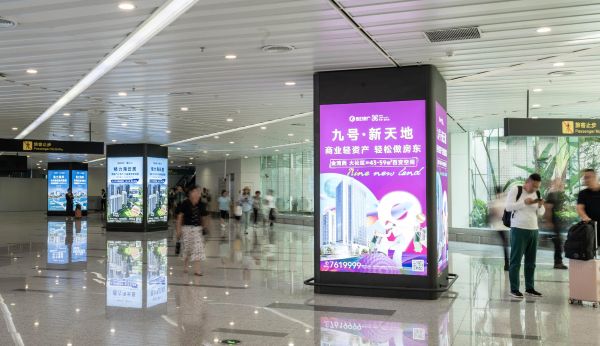
| Location:T2 Domestic Departure and Arrival Mixed Zone | Min Qty:3 | Operating Time:0-24o'clock |
| Size:2.4×5.9×4面 | Min Period:month |
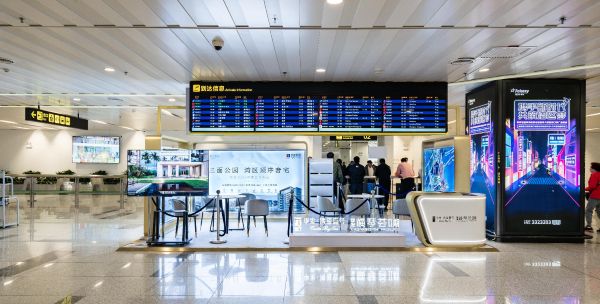
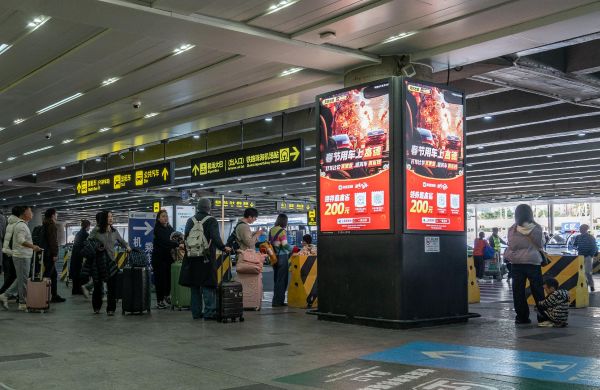
The spacious and open layout of Terminal 2 allows the column lightboxes, with their floor-to-ceiling vertical installations, to naturally integrate into the modern architectural context. In an environment without competing displays, they create a strong visual presence. The high-definition backlit images, combined with a constant-brightness system, ensure clear visibility at all times, effectively carrying brand key visuals, core slogans, or product images.
The mixed domestic departure and arrival column lightbox set, with its coverage of bidirectional passenger flow, 360° no-dead-angle display, extra-large three-dimensional area, and high-quality scene integration, becomes a strategic offline media resource for brands to achieve efficient exposure and deep communication. As a three-dimensional advertising medium in the airport's core traffic routes, it leverages its unique spatial position, passenger flow routes, and display format to build multidimensional media advntages.
The column lightbox set leverages five major advantages—bidirectional passenger flow, full-dimensional visibility, massive impact, high-quality audience, and pure environment—to create a one-of-a-kind three-dimensional brand display space. It is not just an ad space but also a strategic point for brands to establish a high-end image and achieve deep communication at the South China air gateway, particularly suitable for industries with high demands for communication quality and user value.
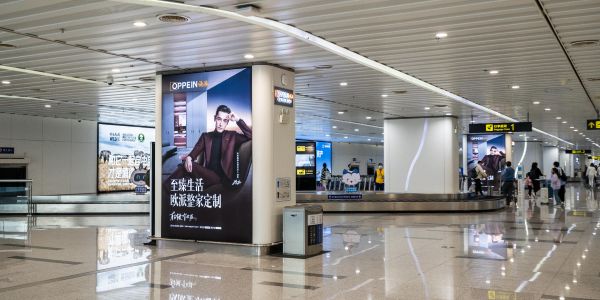
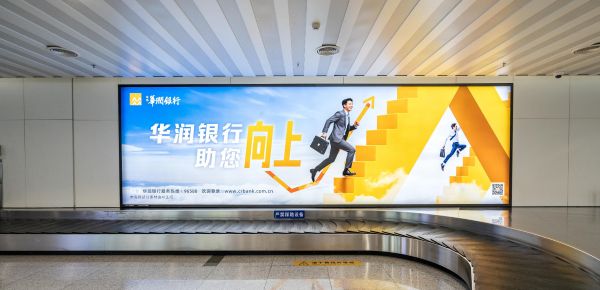
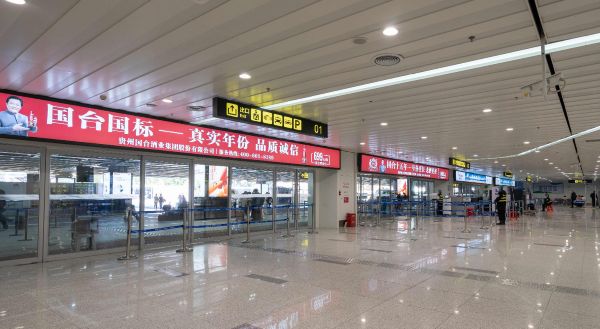
The lightbox set is a premium advertising media resource located in the Terminal 2 of Baiyun International Airport. The mixed domestic departure and arrival area on the 2nd floor of Terminal 2 covers both departing passengers who have completed check-in and security and are heading to the boarding gate, as well as arriving passengers coming to the baggage claim area in Guangzhou, making it a prime advertising location in the airport’s core passenger flow channels.
The pillar-backlit lightbox package has become a premium resource in airport advertising media due to its prime location, 360-degree panoramic display, extra-large advertising space, and coverage of high-end audiences. It provides brands with an efficient communication platform, offering investment value far beyond ordinary outdoor media. By integrating high-certainty traffic, two-way quality audience, three-dimensional display forms, and non-renewable spatial attributes, it forms a high-value asset for long-term brand allocation.
As the inevitable path for passengers from the check-in and security area to the boarding gate, and from landing to the baggage claim hall, the lightboxes are precisely positioned in prime flow channels. Leveraging their unique situational advantage, they maximize communication effectiveness. Over 60% of the audience are business travelers, who have strong purchasing power and high brand loyalty, laying a high-end foundation for the impact of airport lightbox advertising and achieving efficient coverage with one campaign and triple reach.
As one of the largest single-terminal airports in China, its advertising media resources have extremely high commercial value. The pillar-backlit lightbox packages in the mixed zones of domestic departures and arrivals are premium media resources among them. With their superior geographic location, high traffic, unique media characteristics, and target high-quality audience, they are an ideal choice for brand promotion.
They integrate brand communication into the travel scenarios of passengers, achieving precise reach in a natural, non-intrusive way. The combination of prime location, panoramic display, and high-end audience ensures that every advertising placement translates into visible brand value, making it a preferred media resource for high-end marketing in South China.